

[비즈한국] Obesity is no longer just a matter of individual willpower. It is a ‘structural disaster’ resulting in 15 trillion won in socioeconomic losses annually. Biz Hankook set out to find fundamental solutions for the massive obesity bill facing our society. We examine the collapsed nutritional environment for children and adolescents, and explore the sharp policy dilemmas surrounding the coverage of obesity drugs under health insurance and the introduction of a sugar tax. Furthermore, we shed light on the innovation front of K-Bio, which aims to go beyond the limits of medication-centered thinking and shift the landscape of the 100 trillion won global market.
While there are growing arguments to expand health insurance coverage for obesity drugs like Wegovy and Mounjaro, it is not easy to realize in practice. This is because health insurance funds are already depleting rapidly. Consequently, a plan to impose a so-called ‘sugar tax’ on sweetened beverages has recently gained renewed attention. However, there is significant opposition, arguing for caution as the burden could be passed on to consumers.
The Price of Addiction to Sweetness… Childhood Obesity Surges 81% in 10 Years
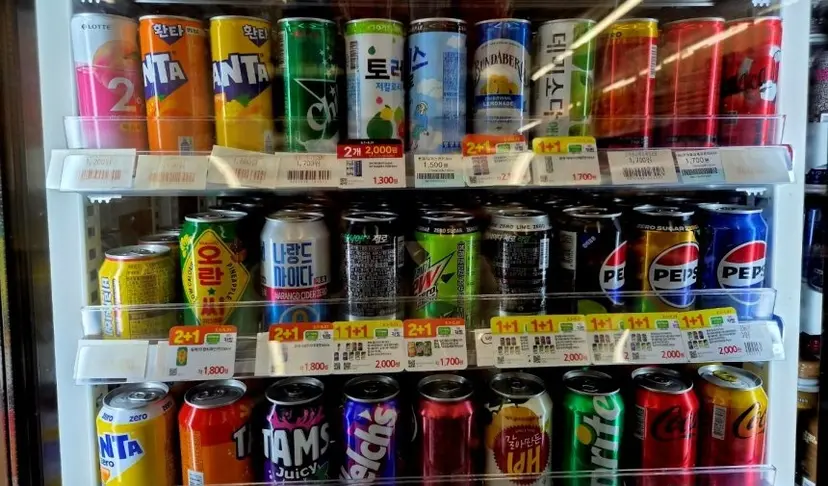
The trend of increasing sugar intake among the young population in their 10s and 20s has exceeded dangerous levels. According to a survey by the Ministry of Food and Drug Safety, the ratio of sugar intake to total calories for those in their 10s and 20s in Korea has already reached the limit of ‘within 10% of total calories,’ which is the recommendation of the World Health Organization (WHO).
In particular, for women, the WHO recommended upper limit was exceeded in the 6–11 (10.2%), 12–18 (11.1%), and 19–29 (10.5%) age groups.
This appears to have led to an increase in obesity prevalence. According to the ‘2024 National Health and Nutrition Examination Survey’ by the Korea Disease Control and Prevention Agency, the prevalence of obesity in children and adolescents has exploded over the last 10 years. The prevalence of childhood obesity among 6–11 year olds, which was only 8.7% in 2013–2015, jumped by 56.3% to 13.6% in 2022–2024. Notably, the obesity rate for boys in the same age group surged by 81.7%, from 9.3% to 16.9% during the same period. The obesity rate for male adolescents aged 12–18 also rose from 12.7% to 18.5%.
At this point, a sugar tax is considered an alternative to protect the health of future generations and defend health insurance finances. The logic is to impose a sugar tax to induce voluntary reductions in sugar usage by the food and beverage industry, and use the tax revenue secured from the sugar tax as a source for funding treatments for obesity patients.
Industry Backlash and the “Tax Hike on the Working Class” Controversy… Overcoming ‘Regressivity’ is Key
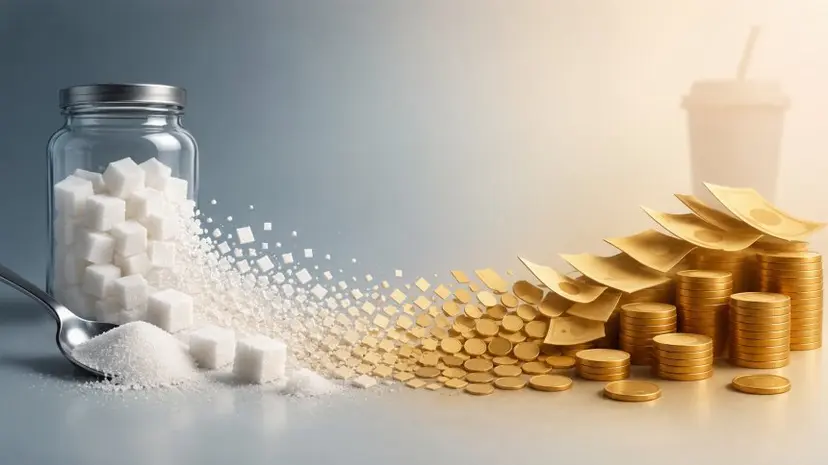
However, discussions on a sugar tax in Korea have repeatedly collapsed under the argument that it is effectively a tax hike. Even in the 21st National Assembly, there were movements to amend the National Health Promotion Act to impose a national health promotion levy on sweetened beverages, but it failed to cross the threshold of the standing committee and was scrapped.
The biggest barrier is the fierce opposition from the food and beverage industry. The industry fears that if a sugar tax is introduced, costs will rise, leading to higher product prices, which would excessively infringe on consumers' choices and shrink the entire related industry.
A sugar tax carries a heavy political burden as it could be a harsher tax for low-income groups. Even if the sugar tax is imposed on manufacturers or importers, it will eventually be passed on to consumers, which could increase the financial burden on low-income households that consume more sweetened beverages or cheap processed foods. Given that grocery prices are skyrocketing in the aftermath of global inflation, including the recent Middle East crisis, many point out that introducing a sugar tax is premature. Cho Kyoo-hong, Minister of Health and Welfare, also replied to a question regarding the introduction of a sugar tax at a plenary session of the National Assembly's Special Committee on Budget and Accounts last month, stating, "Experts are discussing it, but we are not considering it (introduction) at the moment."
On the other hand, the discussion on introducing a sugar tax is heating up in academia. At a policy forum on the ‘Sweetened Beverage Sugar Levy’ jointly hosted by the Korea Rural Economic Institute and the Korea Institute of Public Finance on the 7th of last month, a plan was discussed to impose 225 won per liter if the sugar content per 100ml of beverage is 5–8g, and 300 won per liter if it exceeds 8g.
Despite concerns about tax resistance, scholars agree that price policies are essential to fundamentally improve the obesity-inducing environment. In the current environment where we are exposed to high-calorie delivery food and sweet desserts 24/7, simple health education or individual restraint is insufficient to control obesity. Hwang Ji-yoon, a professor of Food and Nutrition at Sangmyung University, also suggested at the Korean Society for the Study of Obesity's spring academic conference on March 13, "A sugar tax will be a powerful tool to change the environment itself by inducing companies to lower sugar content on their own," adding, "The tax revenue secured from the sugar tax should not just end with collection, but should be given as subsidies to vulnerable groups who have difficulty buying healthy food or reinvested as a resource for the treatment of obesity patients."
Furthermore, some in the industry argue that taxes should also be imposed on artificial sweeteners contained in zero-calorie beverages, such as aspartame and sucralose. The reason is that even if they have no calories, if one does not fix the dietary habit of being addicted to sweetness itself, it is difficult to expect fundamental health promotion effects such as obesity prevention. In fact, some countries like France even impose taxes on zero beverages containing artificial sweeteners like aspartame and sucralose. An industry insider said cautiously, "There is a growing perception that not only sugar but also artificial sweeteners are not free from various controversies," adding, "In this respect, shouldn't companies that make sweeteners that replace sugar now move away from a passive position and start taking some social responsibility in terms of public health, such as obesity prevention?"

Introduced in About 50 Countries Including France… UK Kills Two Birds with One Stone: Securing Tax Revenue and Reducing Obesity
Major overseas countries are already actively using the sugar tax as a key weapon in the fight against obesity. The WHO recommended introducing a sugar tax or levy through a report titled ‘Fiscal Policies for Diet and Prevention of Noncommunicable Diseases’ released in 2016. The logic is that if a tax is imposed on sweetened beverages to raise prices by more than 20%, consumption will decrease accordingly, which can reduce obesity, type 2 diabetes, and tooth decay. In 2022, the WHO also published a ‘Manual for the Introduction of a Sugar-Sweetened Beverage Tax,’ covering how governments should actually design and introduce taxes on sweetened beverages. Accepting this, about 50 countries, including France, Norway, Mexico, and Chile, have now introduced a sugar tax.
The UK is considered the country that has utilized the sugar tax best. In 2018, the UK introduced the ‘Soft Drinks Industry Levy,’ which imposes a tax of 18 pence (357 won) per liter on manufacturers or importers if the sugar content per 100ml of beverage is 5–8g, and 24 pence (476 won) if it exceeds 8g.
The effects appear clear. Global beverage manufacturers like Coca-Cola significantly reduced the sugar content of their products, resulting in an average sugar content reduction of about 47% in carbonated drinks in the UK within just one year of the system's introduction. They collected 300 million to 350 million pounds (593.8 billion to 692.8 billion won) in sugar tax annually and used this money to support school meal programs and physical activity. As a result, tangible health improvement effects appeared, such as a decrease in the annual incidence of obesity among female adolescents aged 10–11 by up to 5,000 cases. It is evaluated as having caught two birds with one stone: securing tax revenue and improving public health.
As the results have been proven, the German government, which had been passive about introducing a sugar tax, has also shifted its stance. At the cabinet meeting on the 29th of last month, it was decided to prepare a bill to impose a levy on sweetened beverages based on sugar content, with the goal of implementation in 2028. The bill includes imposing a levy of 26 cents (380 won) per liter on beverages with a sugar content of 5–8g per 100ml, and 32 cents (468 won) for those exceeding 8g. It is predicted that if a sugar tax is introduced in Germany as well, 450 million euros (769 billion won) will be collected in annual tax revenue, and health insurance spending will be reduced by 20 million to 170 million euros (34.2 billion to 290.5 billion won) due to disease prevention effects.
Ultimately, the introduction of a sugar tax in Korea is a matter of time. Although blocked for now by concerns over tax resistance and inflation, the rapidly growing obesity bill cannot be ignored. Postponing the introduction of a sugar tax could be considered a dereliction of duty toward future generations. The key is how precisely the sugar tax system is designed, as proven by the UK and others.
![[The 15 Trillion Won Obesity Bill] ① School lunch trays ruined by 'complaints', children's health ruined by 'algorithms'](https://s.bizhankook.com/attachments_thumb/2026/05/98376_thumb.webp)
![[The 15 Trillion Won Obesity Bill] ② A society fattened by delivery apps: Medication alone is not a cure](https://s.bizhankook.com/attachments_thumb/2026/05/98333_thumb.webp)
![[15 Trillion Won Obesity Bill] ③ Is Covering Wegovy and Mounjaro a Benefit or a Burden to National Health Insurance?](https://s.bizhankook.com/attachments_thumb/2026/05/98389_thumb.webp)
![[15 Trillion Won Obesity Bill] ④ “Use Sugar Tax for Obesity Drug Subsidies,” Checking the Feasibility…](https://s.bizhankook.com/attachments_thumb/2026/05/98452_thumb.webp)
![[15 Trillion Won Obesity Bill] ⑤ "Eat, Patch, Lasts a Month": The Current Status of Localizing Obesity Treatments](https://s.bizhankook.com/attachments_thumb/2026/05/98465_thumb.webp)