

[비즈한국] A banker in their mid-30s, referred to as A, began considering a property purchase three to four months before their apartment lease expired in September. Ultimately, concluding that house prices were rising, they decided to buy last weekend. They decided to purchase a Seoul apartment for just over 1 billion won by combining 300 million won in "jeonse" (lump-sum housing deposit) funds, personal savings, and support from parents. Although their budget is stretched thin, requiring not only a mortgage but also a company loan, the sight of properties being snatched up quickly fueled their anxiety.
A confided, "I heard that an apartment in Singil-dong, Seoul, which I had been watching as a candidate, was listed in the high 900-million-won range, so I went there immediately. But after hearing it had been sold just an hour after being listed, I ended up buying a different apartment elsewhere. I had received a lot of advice not to buy at a record-high price, but since everyone insisted they wouldn't sell unless it was a record high, I ultimately bought the home at a record-high price."
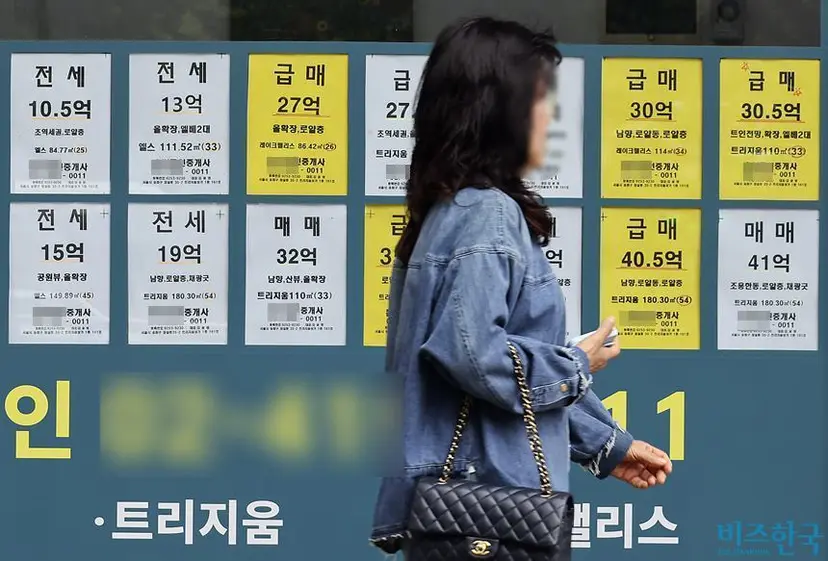
B, a retiree in their mid-60s who worked as a banker, owns two apartments in Seoul, including one in Gangseo-gu gifted by their mother over 20 years ago. During the Moon Jae-in administration, they registered as a rental housing provider and completed the mandatory 8-year period. Recently, B agonized over the Gangseo-gu apartment but decided not to sell. They concluded that while selling at current market prices would trigger capital gains tax of just over 100 million won, the recent upward trend in house prices is significant.
Although concerned about the holding tax on the remaining unit, they decided to convert part of it to monthly rent when the jeonse term ends in October. They plan to cover the holding tax by turning the apartment currently leased for 500 million won into a partial monthly rent arrangement of about 800,000 won per month at the current market value (700 million won). B explained, "Tax policies will change, but I judged that apartment prices would rise by more than 200 million won within two to three years. Even if I have to pay additional taxes, it's not a segment where the capital gains tax bracket increases drastically, so I figured I would only need to bear about 40%, and decided to hold onto it and endure."
The Fluctuating Seoul Apartment Market
The Seoul apartment market is fluctuating once again. With the implementation of the capital gains tax hike on May 10 just around the corner, a strange phenomenon is occurring where those who want to sell are pulling their listings, while those who want to buy are lining up even at record-high prices. In particular, analysts suggest that urgent listings in the 1 billion to 1.5 billion won range in Seoul and the metropolitan area have already been exhausted.
In fact, according to the real estate big data platform 'Asil (Apartment Real Price),' the volume of apartment and officetel trades in Seoul has decreased sharply. As of the 2nd, Seoul apartment listings totaled 70,897, a 5.9% decrease from ten days prior (75,313). This is an 11.5% drop compared to March 21, when listings peaked at over 80,000. By district, the decrease was most notable in areas where properties around 1 billion won are common, such as Jungnang-gu (-20.6%), Guro-gu (-19.6%), Gangbuk-gu and Nowon-gu (-18.4%), Seongbuk-gu (-16.6%), and Gangseo-gu (-16.1%).
A explained, "The news says house prices are falling, but wherever I looked for a Seoul apartment around 1 billion won, the sellers wouldn't even budge 5 million won, and there were lines of people wanting to buy. I just wanted to look into buying a home casually, but my anxiety grew so much that I ended up buying it, even though I have to pay over 3 million won in principal and interest every month."
"If Enduring Doesn't Work, Gift to Children"
Gifting and direct transactions have also increased. According to the Supreme Court's Registry Information Plaza, the number of registrations for gifting of collective buildings in Seoul last month was 1,988, an increase of 44.1% from the previous month. This is the highest figure in 3 years and 4 months since December 2022. According to the Ministry of Land, Infrastructure and Transport's real transaction price system, the number of direct apartment transactions in Seoul also recorded 179 in February, 221 in March, and 239 in April. As the reporting period for April remains, this number could increase further. This is why observers say that those looking to sell to avoid the capital gains tax hike have already sold their properties at urgent prices or have completed their "preparations" by gifting them to related parties such as children.
B mentioned earlier, "There is talk that capital gains or holding taxes could increase significantly, so I'm thinking of gifting it to my children within a year or two as a contingency measure. Since the apartment is in the 1.2 to 1.3 billion won range, I've set up 'Plan B' to pass it on once my children's assets grow enough to receive it with the jeonse lease intact."
A real estate agent in Mok-dong, Seoul, explained, "For apartments under 1.5 billion won where you can get a loan of up to 600 million won, if they are cheap based on the latest transaction price, they sell quickly, and even record-high listings sell easily if they are in a preferred building or floor. While it's not easy to trade apartments in Mok-dong complexes over 2 billion won, the atmosphere is that a seller's market has formed for apartments under 1.5 billion won."