

[비즈한국] On Labor Day, which regained its original name after 63 years, the labor sector demonstrated its presence through large-scale rallies. On the 1st, the two major labor federations held rallies across the country to pressure the government and the management, demanding 'guarantees of basic labor rights' and 'fair compensation' commensurate with their performance. In particular, conflict surrounding wages and performance bonuses is escalating, highlighted by Samsung Biologics207940's first-ever full-scale strike since its founding and the demands of SK Hynix000660 subcontractor workers for direct negotiations with the prime contractor.
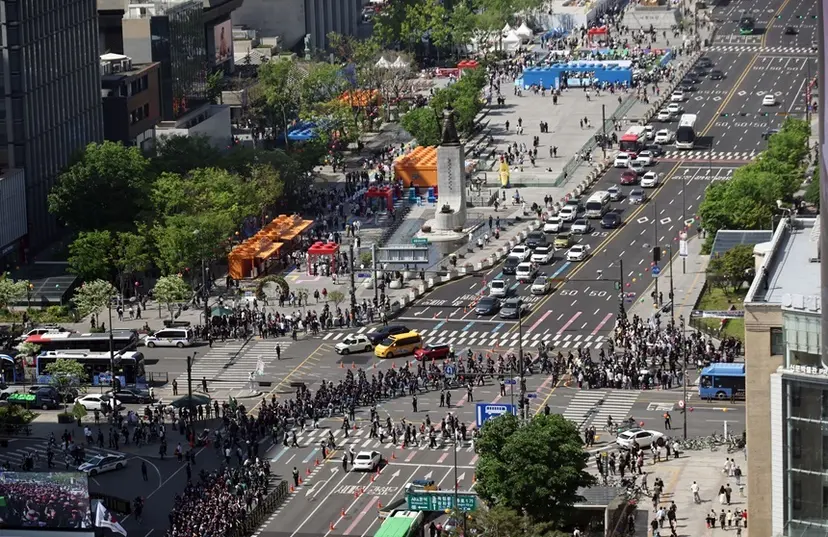
This year's Labor Day held significant symbolic meaning as it was the first year the name was restored, 63 years after it was changed to 'Workers' Day' in 1963. The Federation of Korean Trade Unions (FKTU) held a national workers' rally in the Yeouidaero area of Yeouido, Seoul, at 2 p.m. that day, with organizers estimating an attendance of 30,000. The Korean Confederation of Trade Unions (KCTU) also held the '2026 World Labor Day Rally' at Sejong-daero, Gwanghwamun, at 3 p.m., with about 10,000 participants. The two major federations spoke with one voice, urging for "guarantees of basic labor rights and the resolution of inequality" and demanding a shift in labor policy.
The issue of industrial accidents also took center stage. The Gyeongnam regional branch of the KCTU held a Labor Day rally at the CU logistics center in Jinju, South Gyeongsang Province, to condemn a recent fatal accident. On the 20th of last month, a union member was killed and two others were injured while trying to block a cargo truck during a protest calling for negotiations in front of the warehouse. At a press conference in front of the Gyeongnam Provincial Police Agency in Changwon, the Cargo Workers Union demanded an apology from the police and held a memorial service for the victims. After several rounds of negotiations, the Cargo Workers Union and BGF Logistics signed a collective agreement at the Jinju branch of the Ministry of Employment and Labor on the 30th of last month.
Another pillar of this year's Labor Day is the labor-management conflict surrounding 'fair compensation.' The conflict is surfacing especially in key export industries such as semiconductors and bio, showing signs of spreading across the entire industry.
The Samsung Biologics labor union has launched a full-scale strike for the first time since the company's inception in 2011. According to organizers, about 2,800 of the 4,000 members are participating in the strike, which involves taking annual leave and refusing holiday work. The union is demanding an average wage increase of 14% and a bonus of 30 million won per person, but the company states it cannot accept this due to financial capacity and investment plans.
The two sides have held 13 rounds of negotiations since the end of last year but have yet to find common ground. Due to the nature of the biopharmaceutical industry, where stopping production could lead to the disposal of entire batches, there are growing concerns about the scale of potential damage. The company estimates the loss from the full-scale strike to be at least 640 billion won. Labor and management are scheduled to resume negotiations on the 4th under the arbitration of the Labor Office, but the outcome remains uncertain.
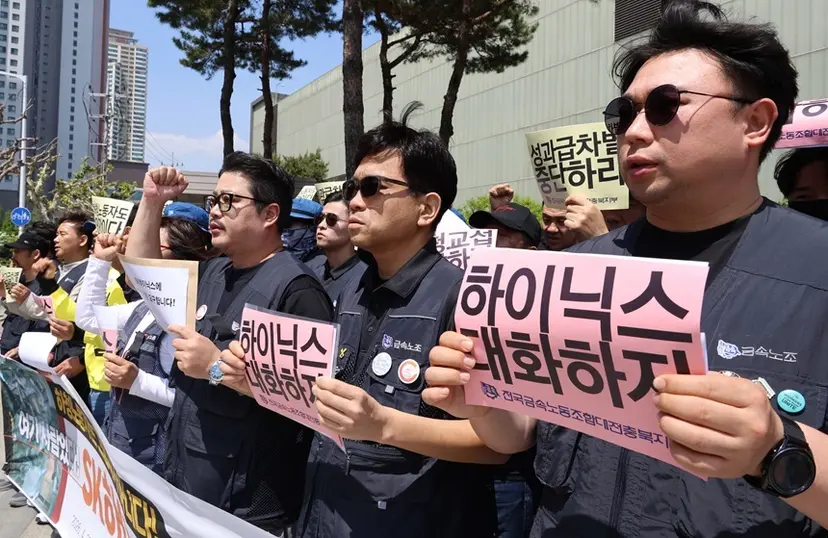
A similar trend is expanding in the semiconductor industry. The labor union of P&S Logistics, a subcontractor handling logistics for SK Hynix, held a press conference in front of the SK Hynix Plant 3 in Cheongju on the 30th of last month, demanding direct negotiations with the prime contractor. They argued, "Despite record-high performance, there is extreme discrimination in performance bonuses," and urged for an improvement in the profit-sharing structure.
They claim that while SK Hynix employees are expected to receive large bonuses next year, the performance distribution criteria applied to subcontractor workers are unfair. SK Hynix recorded an operating profit of 37 trillion won and an operating profit margin of 72% in the first quarter of this year. Employees are expected to receive hundreds of millions of won each through the Profit Sharing (PS) system, which distributes 10% of operating profits.
The union pointed to the gap between their position and the 5 to 6 million won "win-win incentive" payment, stating, "Even though we created brilliant results together, they treat subcontractor workers as disposable goods." If SK Hynix does not agree to negotiate, the union plans to take legal action, including filing a correction request with the Local Labor Relations Commission.
The government has presented 'labor safety, fair compensation, and universal protection' as its policy direction. Minister of Employment and Labor Kim Young-hoon stated at the 'Everyone's Labor Day Street Festival' held at Cheonggye Plaza on the 1st, "We will create a country where people do not get hurt while working and are compensated fairly for their work," adding, "We will protect the dignity of all working people, regardless of their employment status, such as regular, non-regular, or freelance workers."
The labor sector's demands seem to be moving beyond wage increases to a multi-layered set of issues including profit distribution, prime-subcontractor relationships, and responsibility for industrial accidents. Discussions regarding the scope of collective bargaining and the entities responsible have also intensified following the implementation of the 'Yellow Envelope Law'.
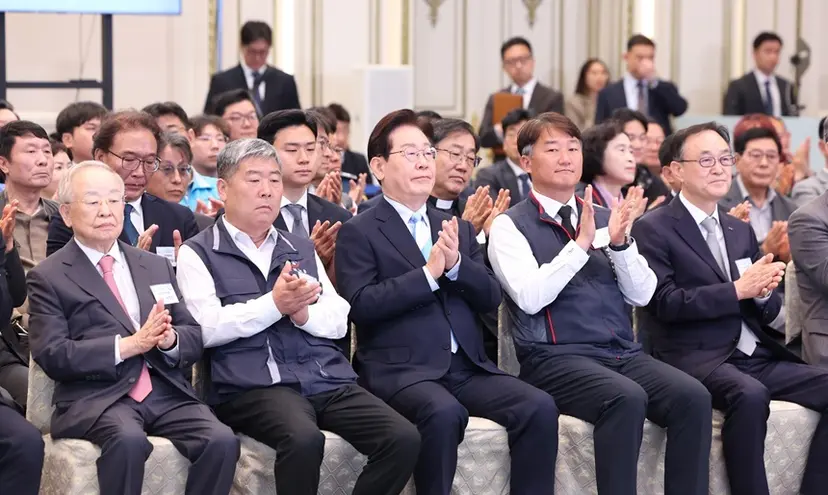
This year's Labor Day ceremony was held at the Blue House for the first time in history. President Lee Jae-myung, who attended the ceremony on the 1st, said, "We will realize true growth where labor and enterprise, fairness and innovation, and growth and distribution create a virtuous cycle," adding, "Only when we break this old dichotomy that pro-labor means anti-business and pro-business means anti-labor can we finally move toward a better future."
The ceremony was attended by the heads of the FKTU and KCTU from the labor sector, and the Chairman of the Korea Enterprises Federation from the management sector.