[비즈한국] Despite the headwinds of the prolonged conflict in the Middle East, South Korean exports have achieved an unprecedented milestone, surpassing $80 billion for two consecutive months and maintaining a record-breaking boom. While the semiconductor super-cycle fueled by the artificial intelligence (AI) craze has been the primary driver of these export results, the trade balance has also recorded a surplus for 15 consecutive months, serving as a pillar of the Korean economy. However, concerns regarding future volatility have been raised, given that the export growth is heavily reliant on rising unit prices rather than volume.
Highest Performance for Any April on Record… 11th Consecutive Month of Growth
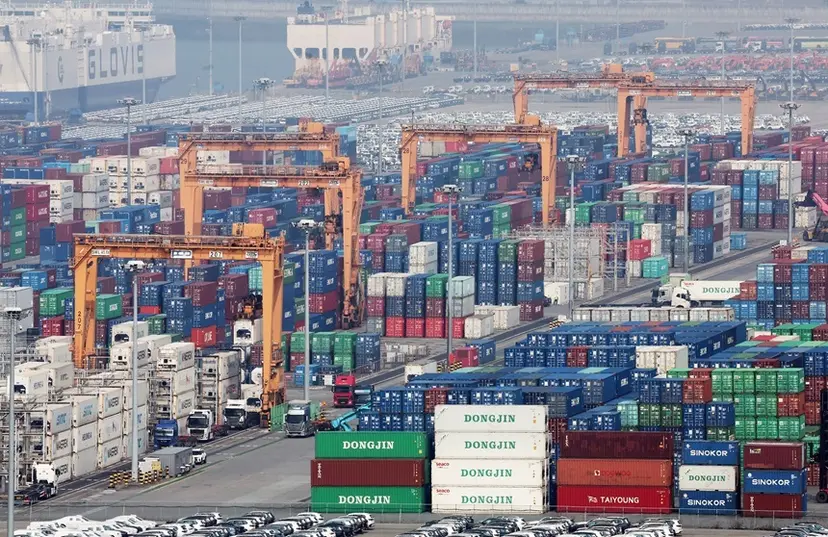
According to the export and import trends for April released by the Ministry of Trade, Industry and Energy on the 1st, last month's exports reached $85.89 billion, a 48.0% surge compared to the same month last year. This is the second-highest monthly export figure ever recorded, following the all-time high in March ($86.6 billion). Exports have continued their growth trend for 11 consecutive months since June of last year.
The average daily export value, considering the number of working days, was $3.58 billion, an increase of 48.0% year-on-year, exceeding $3 billion for the third consecutive month. Imports rose 16.7% to $62.11 billion. The trade balance recorded a surplus of $23.77 billion, the largest for any April in history.
Minister of Trade, Industry and Energy Kim Jeong-kwan stated, "With the Middle East conflict continuing for over two months, we have recorded over $80 billion in exports and over $20 billion in trade surplus for two consecutive months for the first time in history." He added, "This is a result made possible because our companies proactively secured supply chains amidst global AI investment expansion and rising prices of petroleum products due to higher oil prices."
The primary driver of the export growth is undoubtedly semiconductors. Semiconductor exports in April surged 173.5% year-on-year to $31.9 billion. This marks the 13th consecutive month of record-breaking performance for that month, accounting for 37.1% of total exports. The impact was significant, as prices for DDR4 8Gb and NAND flash rose several times over compared to the previous year due to increased demand for high-performance memory driven by AI server investment.
Computer exports also rose 515.8% year-on-year to $4.08 billion, fueled by expanding demand centered on SSDs, breaking monthly records for two consecutive months. Additionally, 8 out of the 15 major export items showed growth, including ships (43.8%), bio-health (18.6%), and wireless communication devices (11.6%).