

[비즈한국] It is no longer an exaggeration to say that the atmosphere in the German automotive industry is not what it used to be. Once the symbol of 'Made in Germany,' the automotive sector still possesses world-class technology and brand power, but it is simultaneously facing multiple pressures: the transition to electric vehicles (EVs), intensifying competition in the Chinese market, high production costs, and supply chain restructuring.
In particular, changes in the Chinese market reveal a painful reality for German automakers. According to the German Economic Institute (IW), Germany's exports of automobiles and auto parts to China fell from nearly 30 billion euros (51.9 trillion KRW) in 2022 to 13.6 billion euros (23.5 trillion KRW) in 2025. This represents a decline of over 54% in three years. The German Association of the Automotive Industry (VDA) has also warned of shrinking investment among mid-sized and small German auto supply chain companies. According to a VDA survey reported in early 2026, 72% of respondent companies said they plan to reduce investment within Germany.
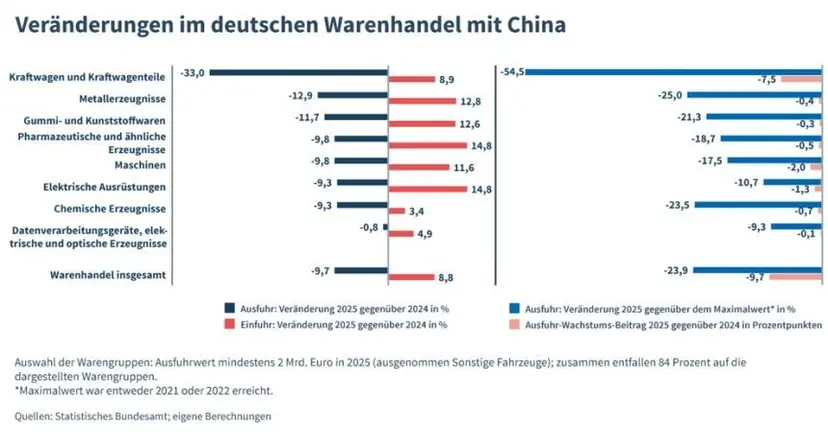
This change goes beyond the ups and downs of individual companies, leading to a restructuring of the industrial framework. Erich Jaeger, a German auto parts manufacturer with over 90 years of history, filed for bankruptcy in April 2026, and filter manufacturer MANN+HUMMEL announced plans to close its Speyer plant. These are examples showing how the German automotive supply chain is being re-adjusted amid cost pressures and shifting demand.
However, it is difficult to describe the German automotive industry simply as being in decline. Rather, the current changes are closer to a process where traditional manufacturing firms are redesigning their methods of innovation. Finished-vehicle manufacturers no longer view cars merely as mechanical assemblies. Software, AI, batteries, semiconductors, robotics, and circular economy technologies are emerging as core elements determining the competitiveness of automotive companies.
A development that illustrates this trend is the announcement of a $300 million new fund by BMW i Ventures in April 2026.
What the $300 Million Fund from BMW i Ventures Means
On April 29, 2026, BMW Group's corporate venture capital (CVC) arm, BMW i Ventures, officially announced its third fund (Fund III) worth $300 million (443.9 billion KRW). Fully funded by the BMW Group, this fund invests in startups ranging from Seed to Series B stages in North America and Europe, focusing on core areas such as physical AI, agentic AI, industrial software, manufacturing technology, supply chain technology, and advanced materials.
What is noteworthy in the announcement is that BMW did not limit its investment targets to EVs or autonomous driving vehicles. BMW i Ventures views AI as an 'operating layer' for the entire automotive industry. It plans to invest based on whether AI can actually boost productivity and decision-making speed across factory floors, logistics networks, engineering, and global supply chains.
Since its founding in 2011, BMW i Ventures has invested in over 90 companies and recorded over 30 exits. Looking at its major investment and exit cases, one can confirm that its investment scope has expanded widely to include power semiconductors, charging infrastructure, manufacturing platforms, autonomous trucking, satellite connectivity, industrial logistics automation, automotive retail software, and engineering AI.
GaN Systems, a gallium nitride (GaN) power semiconductor company based in Ottawa, Canada, possessed high-efficiency power conversion semiconductor technology and was acquired by Infineon for $830 million (1.2 trillion KRW). California-based EV charging network company ChargePoint, Maryland-based on-demand manufacturing marketplace Xometry, and California-based autonomous truck technology company Kodiak Robotics are cited as examples of IPOs.
The current portfolio includes Skylo, a California-based direct-to-device satellite communication company; Embotech, a Zurich-based autonomous logistics solution company; Tekion, a California-based automotive retail and dealer management platform; and Synera, a Bremen-based engineering automation and AI agent company. With the establishment of Fund III, BMW i Ventures' assets under management reached $1.1 billion (1.6 trillion KRW).
Another key pillar is the circular economy. BMW i Ventures stated it would continue to invest in recycling, key material recovery, and resource-efficient new material technologies to reduce geopolitical risks in battery and core material supply chains. This is not just an ESG-focused approach but a strategy to secure raw material access and industrial resilience.
The Dilemma of the Big Three German Automakers
BMW recorded relatively stable sales performance in 2025. The BMW Group delivered 2,463,715 vehicles worldwide in 2025, a 0.5% increase compared to the previous year. Pure EV sales rose by 3.6% to 442,072 units, with a notable 28.2% increase in pure EV sales within Europe. However, sales in the Chinese market declined by 12.5%. The group posted a pre-tax profit of 10.2 billion euros (17.6 trillion KRW) and revenue of 133.5 billion euros (230 trillion KRW) in 2025.
The situation for Mercedes-Benz was more difficult. In 2025, group revenue fell to 132.2 billion euros (228 trillion KRW) from 145.6 billion euros (251 trillion KRW) the previous year, and adjusted EBIT decreased to 8.2 billion euros (14 trillion KRW) compared to 13.7 billion euros (23 trillion KRW) in 2024. Adjusted EBIT in the passenger car division also dropped to 4.8 billion euros (8 trillion KRW) from 8.7 billion euros (15 trillion KRW) the previous year. The company cited sluggish sales in China, price pressure, tariffs, and exchange rate effects as major factors. In EV sales, 2025 passenger pure EV sales decreased by 9% year-on-year to 168,800 units.
Volkswagen Group delivered 8.98 million vehicles worldwide in 2025, a 0.5% decrease compared to the previous year, maintaining a generally stable level. However, regionally, while it grew in Europe and South America, it saw an 8% decline in China. Pure EV deliveries increased by 32% to 983,000 units, clearly showing the results of its electrification transition. Yet, due to intensifying competition in China, the company is lowering strategic targets, reducing production capacity, and reorganizing plants. According to Reuters, Volkswagen has cut its production capacity in China by 1.5 million units since 2023 and has sold, closed, or repurposed several plants in Nanjing, Urumqi, and Anting.
How Do German Automakers Invest in Startups?
Recent startup investment patterns by German automakers can be broadly divided into three types. First, the method of investing in long-term technology trends through an independent CVC, like BMW. Second, the method of forming large-scale strategic equity investments and joint ventures to fill specific technology gaps, like Volkswagen. Third, the method of combining startup collaboration platforms, strategic minority stake investments, and internal technology spin-offs, like Mercedes-Benz.
BMW operates the most typical CVC model through BMW i Ventures. The $300 million Fund III is significant in that it goes beyond existing mobility investments to expand the scope to manufacturing AI, industrial software, robotics, supply chains, and advanced materials. This shows that automakers are utilizing external startups not just as partners, but as sensors to read future industrial structures.
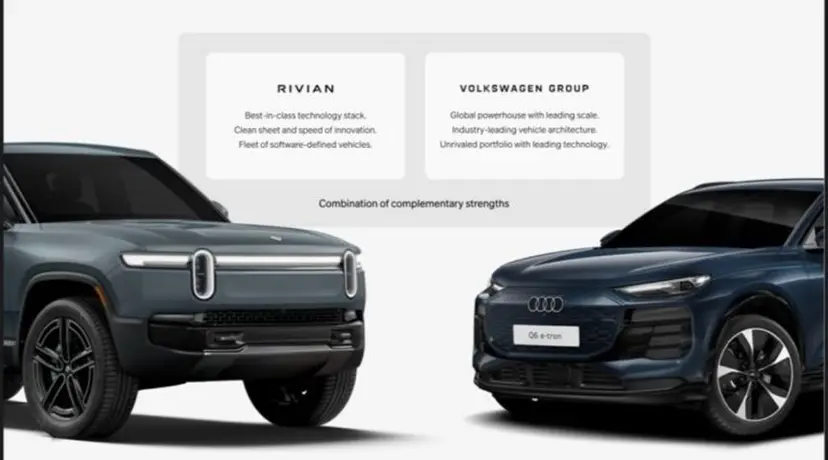
Volkswagen Group has seen prominent large-scale strategic investments over the last three years. In 2023, Volkswagen invested approximately $700 million (1 trillion KRW) in Chinese EV maker Xpeng to secure a 4.99% stake and began joint development of intelligent EVs for the Chinese market. In 2024, it launched a joint venture with American EV maker Rivian to develop a software-defined vehicle (SDV) platform, announcing plans to invest up to $5.8 billion (8.5 trillion KRW) in Rivian and the joint venture by 2027. This is a representative case of shifting toward actively adopting external technology following difficulties with its own software organization, CARIAD.
Within Volkswagen Group, Porsche’s venture investment activities also deserve separate attention. Porsche Ventures is Porsche's CVC organization that has been active since 2016, operating with bases in Stuttgart, Berlin, Tel Aviv, Palo Alto, and Shanghai. According to Porsche, the organization holds stakes in approximately 30 companies, with an annual investment framework of 150 million euros (259.4 billion KRW).
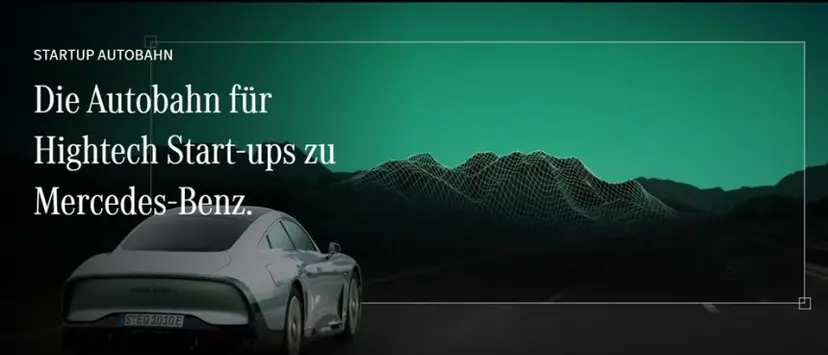
Rather than putting a large-scale CVC fund at the forefront like BMW, Mercedes-Benz is combining startup collaboration platforms with strategic technology investments. Mercedes uses the STARTUP AUTOBAHN platform to discover startup technologies and uses a proof-of-concept (PoC) process to connect them with actual business units. A recent example is its cooperation with American humanoid robot firm Apptronik. Mercedes-Benz is testing Apptronik’s Apollo robot on the production floor at its Berlin-Marienfelde digital factory campus and announced a tens of millions of euros investment in 2025. In 2026, it also participated as an existing investor in Apptronik's $520 million (899.4 billion KRW) investment round.
Furthermore, in 2025, Mercedes-Benz spun off its Silicon Valley-based autonomous driving semiconductor development team into an independent company called Athos Silicon. This company develops low-power, high-reliability semiconductor technology applicable to autonomous vehicles and drones; Mercedes chose a structure of providing significant investment along with IP transfer while retaining a minority stake.
Why Do Automotive Companies Invest in Startups?
Looking at these trends, startup investments by German automakers are no longer just for promotional open innovation. The purpose of investment and collaboration is relatively clear.
First, it is to quickly secure software capabilities from external sources. As cars change to software-defined vehicles, it is difficult to keep up with the speed using only existing development methods of finished-vehicle companies. Volkswagen’s investment in Rivian and cooperation with Xpeng illustrate this.
Second, it is to increase productivity on the manufacturing floor. BMW i Ventures’ AI fund and the Mercedes-Benz collaboration with Apptronik are all attempts to utilize AI and robotics in factories, logistics, quality control, and engineering.
Third, it is to reduce supply chain risks. Batteries, rare metals, semiconductors, and advanced materials have become strategic vulnerabilities for automotive firms. BMW’s presentation of the circular economy and advanced materials as investment pillars can be understood in this context.
Fourth, it is a response to the Chinese market. German automakers view China not merely as a sales market, but as a market where technological competition unfolds most rapidly. Reuters reported that VDA President Hildegard Müller assessed the Chinese auto market as the 'most competitive market in the world' ahead of the 2026 Beijing Auto Show.

German Automotive Industry Transition Still Underway
The German automotive industry stands at the midpoint between crisis and transition. Competitive edge centered on traditional internal combustion engines is weakening, and dominance in the Chinese market is no longer guaranteed as it once was. However, at the same time, BMW, Volkswagen, and Mercedes-Benz are responding by bringing in external innovation in fields such as AI, software, robotics, advanced materials, and the circular economy.
The $300 million fund from BMW i Ventures is a symbolic case of this change. It shows that automakers are transforming into companies that must design not just cars, but manufacturing operating systems, supply chain intelligence, and material circulation structures.
This is also where Korean companies and startups should focus. What German automakers are currently looking for are not just companies that compete directly with finished-vehicle makers. They are looking for technologies that change the invisible foundations of the automotive industry, such as AI that increases factory productivity, engineering automation, industrial robotics, supply chain optimization, battery recycling, advanced materials, and in-vehicle software and data infrastructure. For Korean startups to collaborate with the European automotive industry, they need to describe themselves beyond the narrow definition of 'technology for cars' as B2B technology companies that solve the cost, speed, and supply chain problems of manufacturing as a whole.
The author, Lee Eun-seo, majored in law in Korea and studied theater in Berlin. Based in Berlin, a city of art and a European startup hub, she leads '123 Factory,' which connects the startup ecosystems of Korea and Germany while growing alongside the city.