

[비즈한국] Cell therapy, often called a 'dream anti-cancer drug'—which involves extracting a patient's immune cells, retraining them to attack cancer, and reintroducing them into the body—is showing signs of a revival in South Korea. Following the Hwang Woo-suk scandal and the 'Invossa' incident, approvals for new drugs in this field had been suspended for nearly nine years. However, the atmosphere has changed recently as domestic companies have successively achieved meaningful results. Curocell372320 has received approval for the first domestic CAR-T therapy, while Vaxcell-Bio308080 has become the protagonist of the first case under the 'Advanced Regenerative Bio Act,' allowing the use of therapy on patients even before formal approval.
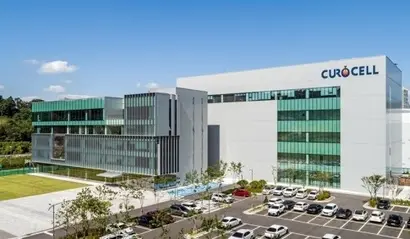
Curocell, 'First Domestic CAR-T' Anbalcabtagene Autoleucel Approved
On the 29th, Curocell received product approval from the Ministry of Food and Drug Safety (MFDS) for its CAR-T therapy, 'Anbalcabtagene autoleucel'. As a treatment for rare adult diseases such as relapsed or refractory diffuse large B-cell lymphoma (DLBCL) and primary mediastinal large B-cell lymphoma (PMBCL) following two or more systemic treatments, it has been named the 42nd domestically produced new drug.
CAR-T therapy works by genetically modifying T-cells (immune cells) collected from an cancer patient's blood to equip them with CAR (chimeric antigen receptors) that target only cancer cells, then mass-culturing them and reintroducing them into the patient's body to destroy tumors. It is a personalized treatment that can be expected to offer near-curative effects for terminal blood cancer patients with just a single administration.
However, the manufacturing process is extremely complex, and a single dose costs hundreds of millions of won. The upper limit for insurance coverage for Novartis' Kymriah, which was approved by the MFDS in March 2021 prior to Anbalcabtagene autoleucel, exceeds 360 million won. Patients only need to pay about 6 million won thanks to the National Health Insurance special calculation (5% co-pay) and the co-pay ceiling system, but the government must cover the remainder, creating a significant burden on the national health insurance budget.
The approval of Anbalcabtagene autoleucel is also expected to help alleviate this health insurance financial burden. Industry experts and analysts believe the drug price for the late-comer Anbalcabtagene autoleucel will be set between 320 million and 360 million won, not exceeding that of Kymriah. The MFDS, which approved the drug, expects it to provide stable treatment opportunities to patients without other options, as the country can now directly produce and supply CAR-T therapy that previously relied solely on expensive foreign imports.
Anbalcabtagene autoleucel is drawing high expectations from the industry and patients, as it has shown treatment efficacy equal to or better than Kymriah and Gilead's 'Yescarta', with significantly lower side effects. According to data presented at the European Hematology Association (EHA) and Curocell, the Complete Remission (CR) rate for Anbalcabtagene autoleucel is 67%, higher than Kymriah's 40% and Yescarta's 54%. The Objective Response Rate (ORR) is 75%, which is lower than Yescarta's 83% but higher than Kymriah's 52%. It also showed excellent competitiveness in safety indicators. The incidence of Grade 3 or higher severe cytokine release syndrome, a representative side effect of CAR-T therapy, was 9% for Anbalcabtagene autoleucel, lower than Kymriah's 22% and Yescarta's 11%. Severe brain and nervous system abnormalities were also limited to 4% in the Anbalcabtagene autoleucel group, compared to 12% for Kymriah and 33% for Yescarta.
Vaxcell-Bio-Yeouido St. Mary's Hospital, First Approval Under Revised Advanced Regenerative Bio Act
Vaxcell-Bio has also become the first company to be applied under the Act on the Safety and Support of Advanced Regenerative Medicine and Advanced Biopharmaceuticals (Advanced Regenerative Bio Act). This is because the Ministry of Health and Welfare accepted the advanced regenerative medical treatment requested by the Catholic University of Korea Yeouido St. Mary's Hospital on the 23rd for the treatment of 15 patients with EBV (Epstein-Barr virus)-positive extranodal NK/T-cell lymphoma who are at high risk of relapse after complete remission. This marks the first case of approval for advanced regenerative medical treatment in the year and two months since the revised Act—which allows treatments to be used even before formal product approval for patients with severe/rare intractable diseases—went into effect in February last year.
The treatment Yeouido St. Mary's Hospital will use for the advanced regenerative medical treatment is Vaxcell-Bio's 'VT-EBV-N'. VT-EBV-N is an autologous blood-derived antigen-specific T-cell therapy that recognizes the core antigen of EBV, a type of virus. Vaxcell-Bio is preparing to apply for conditional approval and technology export after proving statistical significance in improving 2-year progression-free survival, its primary endpoint, through Phase 2 clinical trials.
For Vaxcell-Bio, this approval allows them to accumulate real-world usage data of VT-EBV-N in clinical settings. In essence, they have secured favorable conditions for technology export by proving the value of the treatment.
Furthermore, although it is not the full cost of the treatment, they can charge a portion of the expenses to patients, opening a path to generate actual revenue even before formal approval. The cost of VT-EBV-N treatment per patient, as calculated by the Deliberative Committee on Advanced Regenerative Medicine and Advanced Biopharmaceuticals, is approximately 76.2 million won.
K-Cell Therapy Breaks Through the Regulatory Ice Age
The approval of Anbalcabtagene autoleucel and the use of VT-EBV-N for advanced regenerative medical treatment based on the Advanced Regenerative Bio Act are like rain during a drought for the domestic cell therapy industry. Starting with Dr. Hwang Woo-suk's stem cell paper fabrication scandal in 2005, distrust in cell therapies grew following the component mix-up of Kolon TissueGene950160's osteoarthritis gene therapy 'Invossa-K (Invossa)'. Consequently, MFDS evaluations became much stricter than before, and no domestic cell therapy had been approved in the 9 years since Invossa in 2017. In 2023, Naturecell007390's stem cell therapy for severe knee osteoarthritis, 'Jointstem', was rejected by the MFDS due to a lack of clinical significance.
The capital market, including venture capital (VC) and private equity funds (PEF), also became passive in investment due to concerns over regulatory risks regarding cell therapy. Because of this, domestic cell therapy developers had to endure the double hardship of difficulties in raising R&D funds and strict regulations. During this period, global pharmaceutical companies like Novartis and Gilead received approvals one after another.
The industry is cautiously hoping that these successive achievements will invigorate research and development for cell therapy. This is because these domestic accomplishments can lend strength to entry into the global market through technology exports or overseas partnering. Having endured the harsh winter of regulation, attention is now focused on whether continued interest and investment in domestic cell therapy developers will allow cell therapy to become another weapon for K-Bio.