

[비즈한국] Paradoxically, the semiconductor boom has brought unprecedented tension to the labor and management of Samsung Electronics005930. A majority union emerged, growing its influence while grievances stemming from compensation gaps with competitors reached a breaking point. Having secured the legal status of an employee representative, the union pursues pragmatism, claiming they will focus solely on the interests of employees rather than relying on upper-level labor organizations. Amid record-breaking performance, skepticism regarding compensation principles and the rise of a union armed with pragmatic interests—where will this strike head on a path Samsung has never walked before?
As the date for the total strike announced by the Samsung Electronics inter-company union approaches, market attention is shifting toward industrial risks. The scenario of Samsung Electronics' semiconductor production sites coming to a halt is being interpreted as an event capable of shaking the entire global supply chain. Projections suggest that if semiconductor exports, which account for 38.1% of South Korea's total exports (as of March this year), were to decrease by 10%, the country's Gross Domestic Product (GDP) could drop by approximately 0.8%. The view is that if the strike becomes a reality, it will not just be a production setback for a single company, but could spread into a macroeconomic variable for the entire nation.
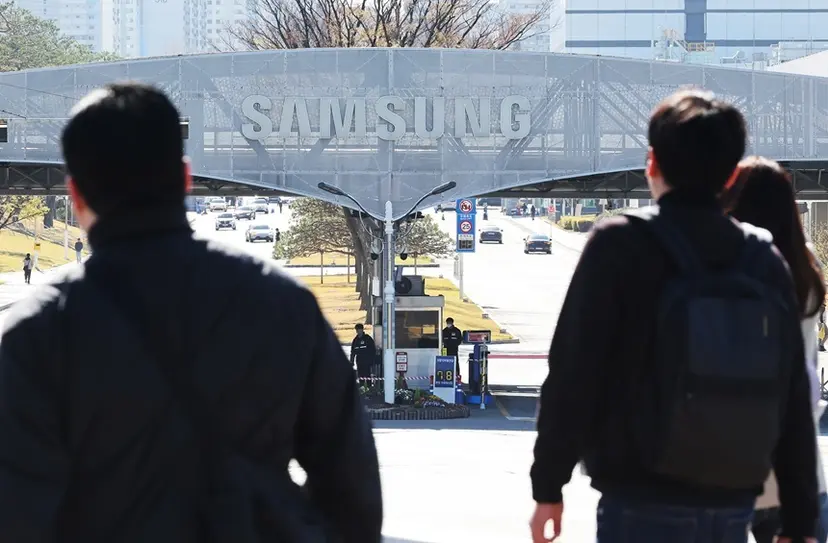
Billions evaporating per minute… Technical recovery takes twice as long as the strike duration
The industry estimates that if Samsung Electronics' semiconductor factory operations are suspended, production losses alone would amount to approximately 1 trillion won per day. The union, which has announced an 18-day strike from May 21 to June 7, also argues that the potential loss could reach at least 18 trillion won.
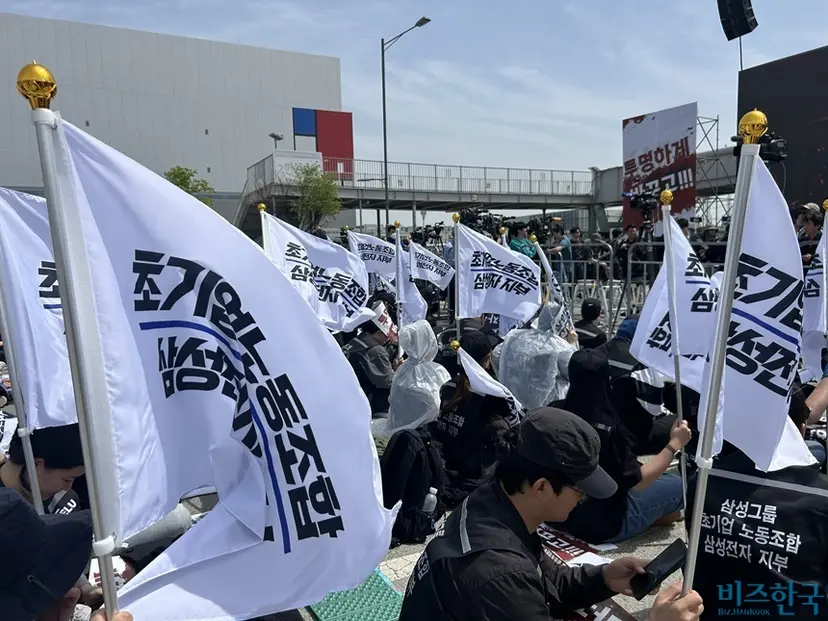
The union stated that the wafer transfer volume (a production indicator) by the night shift, starting from 10 p.m. on the day of the rally on the 23rd, had decreased. Production in the Foundry division fell by approximately 58.1% compared to normal times. The numbers show sharp declines, with the S1 (Giheung) line down 74.3%, S3 (Hwaseong) down 67.8%, and S5 (Pyeongtaek) down 42.7%. Memory production performance indicators decreased by 18.4%. Although the rally lasted about 2 hours and 30 minutes, the fact that employees took annual leave to participate had a significant impact on actual production indicators.
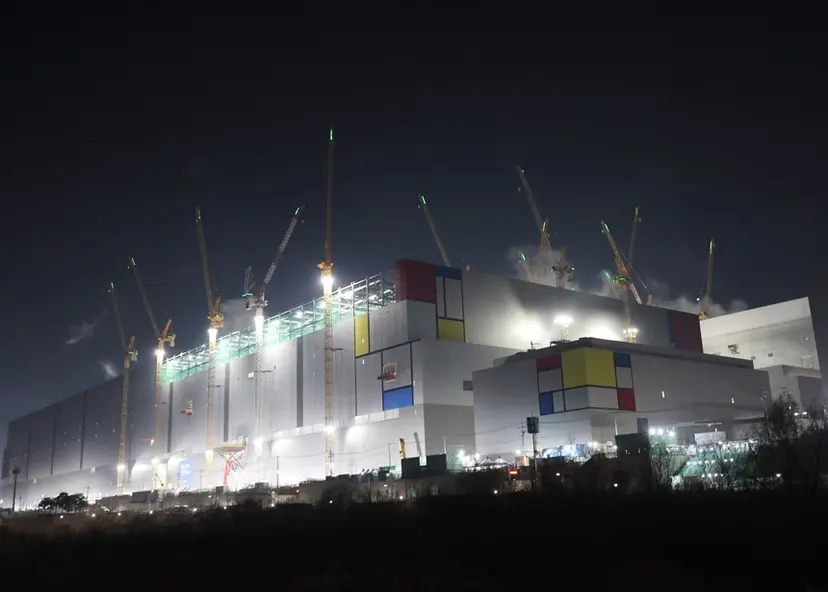
Due to the nature of semiconductor manufacturing, losses are not limited to the duration of the strike. The moment an abnormal shutdown occurs in a cleanroom where highly precise equipment operates in tandem, all wafers currently in process are discarded. Restoring the constant temperature and humidity environment takes at least 2 to 3 days, and if chemical pipes solidify, replacing the equipment itself becomes inevitable. KB Securities estimated that if a strike occurs, global DRAM supply would decrease by 3–4%, and NAND supply by 2–3%. It typically takes twice as long as the strike duration to normalize the yield of a fab once it has been stopped.
“Trust is competence”… Spotlight on rivals gaining from Samsung’s void
Experts note that this production gap leads to pressure for supply chain restructuring. In the semiconductor market, supply stability is as important a variable as price or performance. This is especially true in areas where deadlines and reliability are core, such as AI server memory, where even a small crack can trigger a change in the transaction structure, making the ripple effect even greater.
Song Heon-jae, a professor in the Department of Economics at the University of Seoul, stated at an Anmin Policy Forum seminar on the 23rd, "In the semiconductor industry, especially in the foundry and high-performance memory markets, the most important criteria for clients choosing a supplier are trust and stability, not price." He added, "(A large-scale strike) is not merely a shift in volume, but an act that makes a fatal crack in the 'on-time delivery' reputation Samsung has built over the past decades."
He explained that global big tech clients want to receive stable supplies through multi-year contracts, so if the production line stops due to a strike and supply uncertainty grows, they will immediately consider alternative suppliers like TSMC to diversify risk.
Professor Song pointed out the risk that the strike's impact would not end with a temporary revenue drop but could become entrenched, stating, "It takes enormous system construction costs and process verification time for a semiconductor client to switch suppliers, but once the transition is complete, the incentive for the client to return is very low even if production normalizes after the strike ends."
As the semiconductor industry is currently in a period of fierce competition for orders from major clients ahead of the transition to HBM4 mass production, the repercussions are difficult to predict. With 'who can supply stably' being considered the key competitiveness beyond performance, foreign media in places like Taiwan also appear to be weighing the possibility of gaining competitive advantages, such as increased price negotiation power.
Kim Yong-seok, a distinguished professor at Gachon University's College of Semiconductor, emphasized, "It could be a direct trigger for increasing order allocation ratios to competitors like Micron or SK Hynix000660. It's not just a matter of immediate market share; if you miss out on order opportunities, it doesn't end with one quarter's loss, but leads to losing market dominance for the next 2 to 3 years."
Stopping a foundry process, where the production of customized semiconductors is its lifeblood, is far more fatal than it is for memory. Professor Kim noted, "There won't be any fabless (semiconductor design specialty) companies willing to entrust manufacturing to a firm with production disruptions. If memory is a 'ready-to-wear' market where standardized products can be made and stocked in advance, the foundry market is a 'custom-made' market that strictly follows customer orders, making the impact of a strike incomparably greater."
Concerns over 'structural damage' including 1,700 partner companies
The possibility of strike risks spreading to partner companies is also being discussed. About 1,700 parts, equipment, and material suppliers are connected to Samsung Electronics' semiconductor production chain. In the case of the Pyeongtaek campus, it is understood that each production line has an employment effect of about 30,000 people, and if operations stop, a chain reaction leading to lower operating rates and delivery delays for partner companies is expected.
The government is also closely watching the situation. Minister of Trade, Industry and Energy Kim Jung-gwan expressed the government's first official stance during a press conference on the 27th. Minister Kim said, "The semiconductor industry is a structure that cannot survive without continuous large-scale investment, not something that ends once a profit is made. A balance is needed between how much profit to enjoy at the current stage and how much to pass on to future generations, and maintaining future competitiveness."
The approval rate for the Samsung Electronics union's industrial action exceeded 93%. The union is targeting the participation of more than 20,000 members, which is over half of the total membership, in this strike. It is known that a large number of process and equipment engineers, who are the core of semiconductor production, are included in the ranks of the strike, and the general consensus is that even if the company deploys substitute personnel, maintaining normal operations is realistically impossible.
Professor Kim stated, "In the current situation where memory supply and demand are very tight, Samsung's exit would disrupt the AI data center expansion plans of global big tech companies," and added, "Repercussions are also expected across all industry sectors that use semiconductors as core components, from smartphones and PCs to the automotive industry (automotive semiconductors)."
![[Deconstructing the Samsung Strike] ① Samsung Electronics and Bio Performance Bonus Strikes: What are the Decisive Issues?](https://s.bizhankook.com/attachments_thumb/2026/05/98301_thumb.webp)
![[In-depth Analysis of Samsung Strikes] ② Samsung Biologics Union Rally Features Pop Songs and Selfies: "Trust Over Performance Bonuses"](https://s.bizhankook.com/attachments_thumb/2026/05/98306_thumb.webp)
![[In-depth Analysis of Samsung Strike] ③ [On the Scene] The 'Giant' Ball Set in Motion by Hynix Shakes Samsung](https://s.bizhankook.com/attachments_thumb/2026/05/98335_thumb.webp)
![[In-depth Analysis of Samsung Strike] ④ The Shockwaves the Strike Will Bring to the Semiconductor Market During the 'HBM4 Golden Time'](https://s.bizhankook.com/attachments_thumb/2026/05/98412_thumb.webp)
![[Samsung Strike Analysis] ⑤ The Root of 'Relative Deprivation' Felt by Six-Figure Earners](https://s.bizhankook.com/attachments_thumb/2026/05/98425_thumb.webp)