

[비즈한국] Obesity is no longer a matter of personal willpower. It is a 'structural disaster' that incurs 15 trillion won in socioeconomic losses annually. Bizhankook has set out to find fundamental solutions to the massive obesity bill facing our society. We examine the crumbling nutritional environment for children and adolescents, and explore the sharp policy dilemmas surrounding the coverage of obesity drugs and the introduction of a sugar tax. Furthermore, we look beyond the limits of medication-centered solutions to highlight the innovations of K-Bio that are set to shift the landscape of the 100-trillion-won global market.
The wealth gap is clearly evident even in weight loss. To take Wegovy or Mounjaro, which have been released domestically, one needs approximately 300,000 to 600,000 won per month. These obesity drugs, which reduce body weight by about 15% through a once-weekly injection, are non-covered prescriptions, meaning the patient must bear the full cost of the expensive medication. Consequently, voices are growing—primarily from patients and parts of the medical community—to include obesity drugs under national health insurance coverage.
However, given the deteriorating financial state of the national health insurance fund, this faces the difficult question of whether it is justifiable to prioritize funding weight-loss drugs over patients suffering from critical, life-threatening diseases.

"Anti-cancer and Rare Disease Drugs Are Waiting in Line..." Equity Controversy
The first issue raised by those expressing caution about covering obesity drugs is the 'equity in the allocation of medical resources.' Currently, the National Health Insurance fund is on the brink of a crisis due to rapid demographic shifts—specifically low birth rates and an aging population—and increased medical usage. According to analyses by the National Assembly Budget Office and health authorities, the health insurance fund is effectively expected to turn into a deficit starting this year, and the nearly 30 trillion won in reserves could be completely depleted by 2028 at the earliest, or 2030 at the latest. This is because red flags have been raised regarding the sustainability of the insurance fund amidst the 'population cliff,' where the working-age population paying premiums is shrinking while the elderly population consuming medical expenses is skyrocketing.
As a result, 'selection and concentration' based on priorities is inevitable. Currently, the list of treatments awaiting health insurance review by health authorities is stacked with drugs for severe cancers or rare intractable diseases that pose direct threats to life. It is not uncommon for patients and their families to fall into debt or give up on treatment because, regardless of a drug's efficacy, it fails to meet the cost-effectiveness evaluation threshold of the Health Insurance Review & Assessment Service.
Thus, there is strong resistance to the idea of prioritizing trillions of won of insurance funds for obesity drugs. Unlike rare diseases, which affect very few people, potential candidates for obesity drugs number in the millions. Simply covering a drug that costs hundreds of thousands of won per dose could be a lethal blow to the insurance fund. This is why critics argue that it is difficult to reach a social consensus on spending taxpayer money on weight-loss drugs while neglecting critical patients whose lives are hanging in the balance.
15 Trillion Won in Socioeconomic Costs: "Proactive Investment Needed"
On the other hand, those working in clinical settings specializing in obesity treatment have an entirely different perspective. They argue that obesity should not be viewed merely as being overweight, but as the root cause of chronic diseases that trigger numerous complications.
According to the Korea Disease Control and Prevention Agency and the National Health Insurance Service, the socioeconomic costs of obesity are estimated to exceed 15 trillion won annually. The National Health Insurance Service notes that if obesity is left untreated, the risk of developing type 2 diabetes increases 5 to 13 times, hypertension 2.5 to 4 times, and cardiovascular disease 1.5 to 2 times. Obesity is identified as a major factor in the incidence of colorectal, liver, pancreatic, biliary tract, and breast cancers. Some research suggests that the risk of death from thyroid cancer in the morbidly obese increases by up to 3.2 times, and the risk of death from pulmonary embolism by up to 2.7 times.
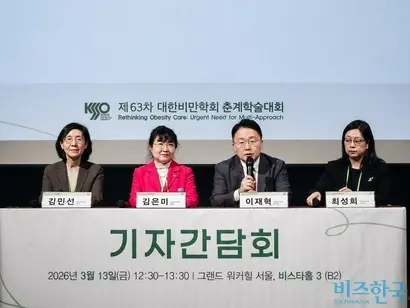
Therefore, some argue that considering the insurance funds that will be spent on treating various complications later, it is actually more advantageous for the nation to cover obesity drugs early to help patients lose weight. Kim Min-seon, Chairperson of the Korean Society for the Study of Obesity (Professor of Endocrinology at Asan Medical Center), emphasized at the society's spring conference on the 13th of last month, "Obese children and adolescents in Korea are increasing rapidly. In 10 or 20 years, when they become adults and middle-aged, they will suffer from various metabolic diseases. If these are covered by health insurance, it will ultimately become a problem for all of us."
'Pinpoint Coverage' for Obesity Disease: Look at Neighboring Japan
Some argue that the key to solving the realistic financial problem of health insurance is 'pinpoint coverage'—clearly distinguishing between simple obesity and obesity-related diseases that require urgent medical intervention. The logic is that patients trying to lose weight simply for aesthetic or body management reasons should not be placed in the same category as patients whose survival is threatened by morbid obesity accompanied by diabetes or hypertension.
Modern medicine views even healthy obesity without immediate complications as a ticking time bomb that will cause metabolic diseases in the long term. While it would be ideal to treat all obese patients proactively, it is necessary to establish priorities given the health insurance fund's risk of depletion by 2030.
A great reference for this kind of pinpoint support is our neighbor, Japan. While Japan recognizes Wegovy as an insurance-covered item, it has set stringent criteria. Coverage is strictly limited to morbidly obese patients with a Body Mass Index (BMI) of 35 or higher who suffer from at least one condition among hypertension, dyslipidemia, or type 2 diabetes, or patients with a BMI of 27 or higher accompanied by two or more obesity-related complications.
The domestic medical community is also starting the process of setting priorities. The Korean Society for the Study of Obesity is actively leading discussions to separate simple weight gain from obesity as a disease and to clearly establish medical criteria for 'obesity disease' that should be the top priority for insurance benefits. Lee Jae-hyeok, Executive Director of the Korean Society for the Study of Obesity (Professor of Endocrinology at Myongji Hospital), stated, "While it is difficult for insurance coverage for obesity drugs to become generalized, we are discussing with the government to at least start with some areas this year. We will strive to officially announce the criteria for distinguishing between obesity and obesity disease within the first half of the year following internal public hearings and consensus with relevant agencies."
National finances are not infinite. Because they are limited, adjusting priorities is inevitable. We cannot just blindly blame individuals for the obesity bill that has ballooned to 15 trillion won, nor can we indiscriminately open the empty coffers of the health insurance fund. Ultimately, the time has come to accelerate discussions toward a social consensus on where and how the nation should draw the line between obesity and obesity disease, and to whom it should extend a helping hand first.
![[The 15 Trillion Won Obesity Bill] ① School lunch trays ruined by 'complaints', children's health ruined by 'algorithms'](https://s.bizhankook.com/attachments_thumb/2026/05/98376_thumb.webp)
![[The 15 Trillion Won Obesity Bill] ② A society fattened by delivery apps: Medication alone is not a cure](https://s.bizhankook.com/attachments_thumb/2026/05/98333_thumb.webp)
![[15 Trillion Won Obesity Bill] ③ Is Covering Wegovy and Mounjaro a Benefit or a Burden to National Health Insurance?](https://s.bizhankook.com/attachments_thumb/2026/05/98389_thumb.webp)
![[15 Trillion Won Obesity Bill] ④ “Use Sugar Tax for Obesity Drug Subsidies,” Checking the Feasibility…](https://s.bizhankook.com/attachments_thumb/2026/05/98452_thumb.webp)
![[15 Trillion Won Obesity Bill] ⑤ "Eat, Patch, Lasts a Month": The Current Status of Localizing Obesity Treatments](https://s.bizhankook.com/attachments_thumb/2026/05/98465_thumb.webp)