

[비즈한국] The global financial market is now moving beyond simple 'eco-friendly' slogans to demand substantive change. In particular, core industries supporting the Korean economy, such as steel, petrochemicals, and automobiles, are facing a massive test of 'decarbonization transition.' Moving past the old approach of simply excluding high-carbon-emitting industries from portfolios, 'transition finance'—which helps high-emission industries land softly into a low-carbon system—has emerged as a key topic.
Bizhankook covered the 3rd Climate Week and Green Transition International Week held by the United Nations Framework Convention on Climate Change (UNFCCC) in Yeosu, South Jeolla Province, on the 23rd. There, we met Robert D. Patalano, an LSE professor and Managing Director of CETEx, and Antonina Scheer, Policy Deputy Director at the TPI Centre. The two served as a panel discussion chair and presenter (participating virtually), respectively, at the seminar titled 'Synergy between National and Corporate Transition Plans: Spotlighting the Korean Case.' We spoke with them in depth about South Korea's decarbonization transition following the seminar.
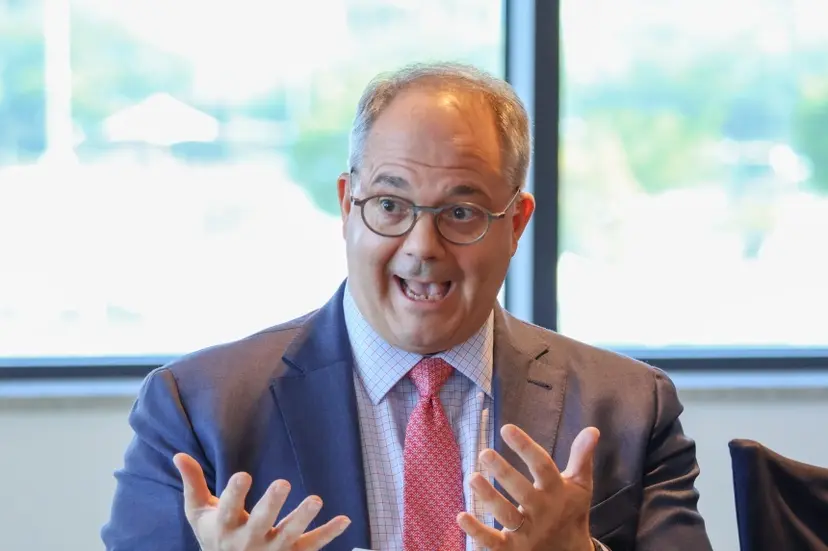
Professor Robert Patalano is a financial policy expert who previously served as the Head of the Financial Markets Division at the OECD and as a manager of market intelligence and analysis at the Bank of England. Professor Patalano issued a stern warning to South Korea's carbon-intensive industrial sectors, which must simultaneously undergo restructuring and decarbonization. He explained the consequences if the Korean steel industry chooses traditional restructuring over the next 5 to 10 years instead of innovation for a green transition.
"Even looking at it purely from a competitiveness perspective, excluding environmental factors, the situation is serious," Professor Patalano explained. "China, Scandinavian countries, and Europe, including the UK, are already making astronomical investments in clean technologies like hydrogen." He pointed out, "If Korea fails to secure a technological edge as these technologies gradually become cheaper, Korean steel companies will lose their competitiveness in the international market and ultimately become a massive economic burden on the nation."
He also emphasized, "Technological improvement in high-carbon industries is essential to respond to international geopolitical risks that cause energy price fluctuations. This is also the clear answer in terms of protecting shareholder value and social efficiency."
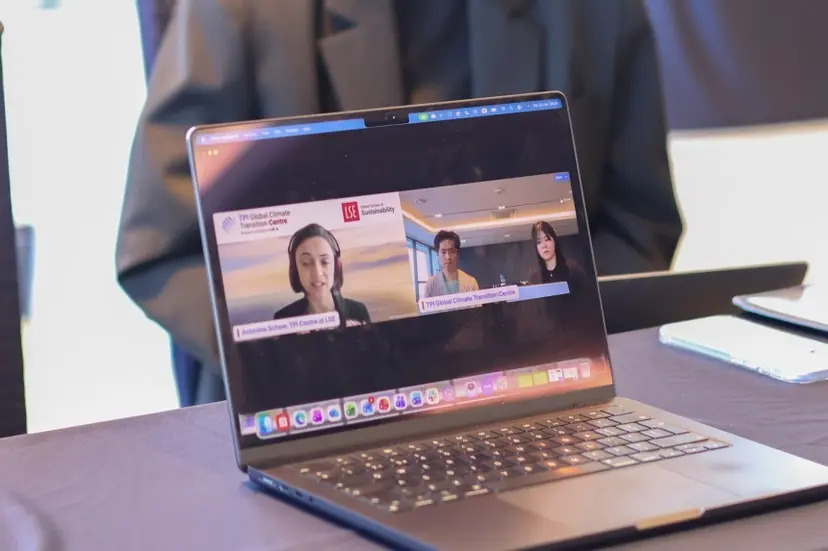
Deputy Director Antonina Scheer advised that transition finance must go beyond simple capital injection and flow toward improving the fundamental health of companies. In the past, investors preferred simply divesting from high-emission companies to lower their portfolio's carbon footprint, but her analysis is that this was merely 'paper decarbonization' that did not contribute to actual emission reductions.
"True transition finance focuses on high-emission industries and measures whether a company's future-oriented goals align with the scientific standard of a 1.5-degree pathway," Scheer explained. She added that while the petrochemical sector is particularly complex to evaluate, recently introduced methodologies must be used to strictly assess whether a company's goals and R&D investments are genuinely aligned.
She also expressed a critical view of Korea's sustainability disclosure system. Scheer raised concerns about the gap between Korea's draft disclosures and global standards set by the International Sustainability Standards Board (ISSB), particularly regarding delays in 'Scope 3 (entire supply chain emissions)' and 'transition plan' disclosures. Investors prioritize Scope 3 data, which accounts for 70-90% of emissions, to identify exposure to transition risks within the supply chain.
She pointed out, "For industries like automobile manufacturing or fossil-fuel-based sectors, the share of Scope 3 is very large, so if this information is missing, Korean companies are highly likely to be disadvantaged in the global investment market."
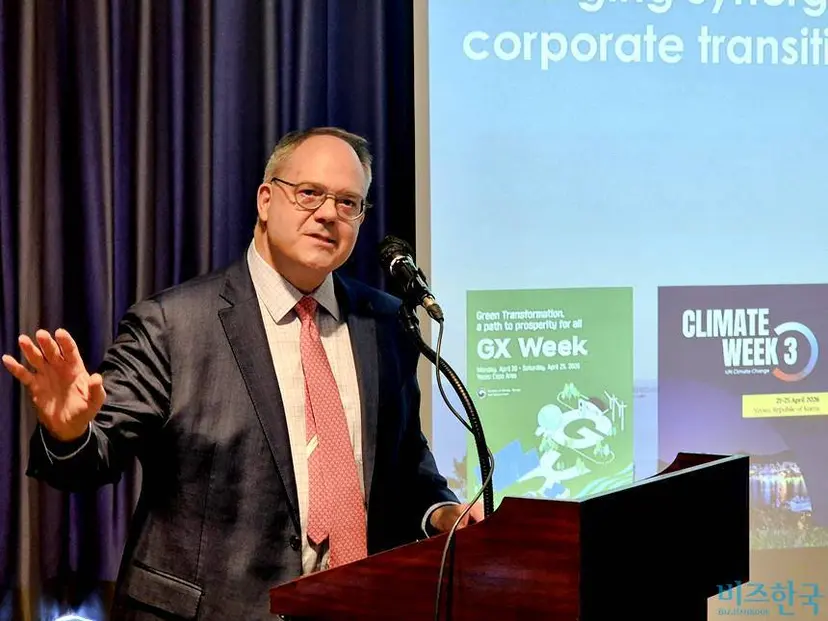
Concluding the interview, Professor Patalano identified the leadership of the central bank as the final piece of the puzzle for the successful decarbonization of the Korean economy. He expressed optimism about Shin Hyun-song, the newly appointed Bank of Korea Governor, with whom he previously worked at the Bank for International Settlements (BIS).
"At a time when central banks' commitments to climate policy are wavering, including in the U.S., having an expert with both theoretical and practical expertise as the Bank of Korea Governor is a tremendous opportunity for Korea," he assessed.
Professor Patalano argued that the central bank should link monetary operations, risk management, collateral frameworks, and portfolios with climate factors. His logic is that when the central bank incorporates climate factors into asset valuation, it signals to the financial market that companies performing well in their transition are less risky than those lagging behind.
"If the Bank of Korea now collaborates with the government to create an innovative market environment, it will be a golden opportunity to reward companies leading the transition and penalize those that are falling behind," Professor Patalano advised.
![[UN Climate Week] Climate Crisis and Energy Security, the Common Answer is 'Renewable Energy'](https://s.bizhankook.com/attachments_thumb/2026/05/98275_thumb.webp)
![[UN Climate Week] Brainstorming Decarbonization Solutions for Steel and Petrochemicals for K-GX](https://s.bizhankook.com/attachments_thumb/2026/05/98368_thumb.webp)
![[UN Climate Week] Central Government Rushes, Local Governments Follow... A Long Road to Carbon Neutrality](https://s.bizhankook.com/attachments_thumb/2026/05/98379_thumb.webp)
![[UN Climate Week] Companies Ready for Decarbonization: "Calling for Transition Finance"](https://s.bizhankook.com/attachments_thumb/2026/05/98401_thumb.webp)
![[UN Climate Week] "Without Green Transition, Korean Steel Industry Faces Loss of Global Competitiveness"](https://s.bizhankook.com/attachments_thumb/2026/05/98382_thumb.webp)