

[비즈한국] With the recent popularity of the Disney+ original variety show ‘Destiny War 49,’ the platform, fashion, and beauty industries are launching a series of related marketing campaigns. In particular, a culture is spreading among Gen Z where they enjoy fortune-telling and tarot not as something negative, but as a source of ‘fun.’ Consequently, some analysts suggest that these shamanistic beliefs are transcending simple divination culture and evolving into a form of consumer culture.
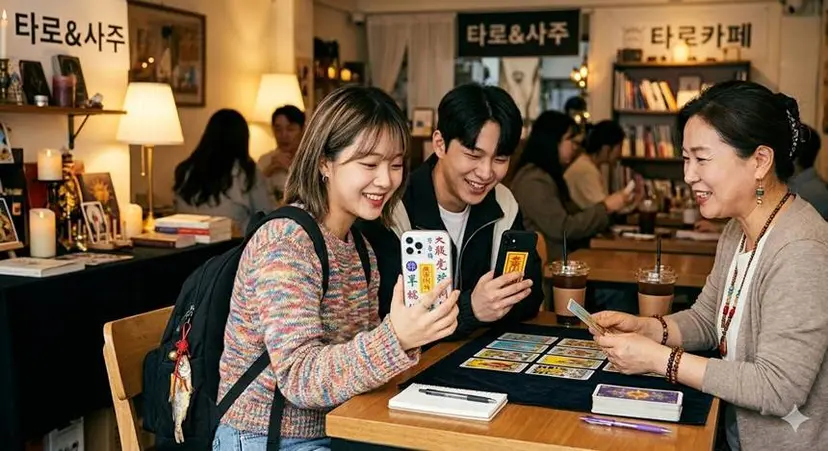
Promoting ‘Company and Products’ by Leveraging Fortune-Telling and Destiny
The social reward platform Trigr held a large-scale collaborative event on the 18th and 19th with MZ shaman Noh Seul-bi. They sold various rewards, such as ‘MZ-customized limited edition amulets,’ at Seoul Land in partnership with Noh Seul-bi, who rose to fame after appearing on ‘Destiny War 49.’ According to Trigr, a total of 25,000 people flocked to Seoul Land during the weekend of the event.
Healthcare robot company Bodyfriend also utilized shamanism in its marketing. When it launched its wearable AI healthcare robot ‘733’ last March, the company emphasized that it implemented theme-based massages through AI that reflect individual characteristics—such as fortune-telling, personality types, and zodiac signs—based on basic user information like age and gender.
Retail Sector Actively Selling by Promoting ‘Feng Shui and Amulets’
The retail sector is even more proactive. In February, for the Lunar New Year holiday, Daiso introduced a ‘Feng Shui Interior Exhibition.’ They released Feng Shui items (gourd bottles, moon jar tissue cases) intended to add positive energy to living spaces or block negative energy. They also sold ‘Amulet Bookmarks’ to ward off bad luck and wish for good fortune, as well as ‘Lucky DIY Amulet Making Kits’ for creating personalized amulets for various events like job hunting and graduation.
Sending ‘good luck’ as a gift is also increasing. According to Kakao Commerce, the sales volume of products on KakaoTalk Gift containing words like ‘amulet against bad luck,’ ‘good luck,’ ‘pollack,’ ‘talisman,’ and ‘four-leaf clover’ has increased by about 37% over the past year. The number of brands selling these items has also grown to around 500. Fashion platform 29CM also stated that searches for the term ‘amulet against bad luck’ increased by 72 percent compared to before.
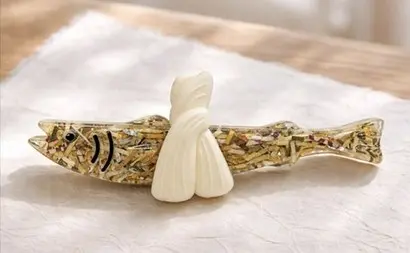
Purchases for self-care are also on the rise. The ‘Money Pollack Magnet’ released by the Korea Minting and Security Printing Corporation (KOMSCO) is a hot topic online. This product turns the ‘warding-off-bad-luck pollack,’ which has long been believed to block negative energy when hung in a house, into a magnet. KOMSCO included actual currency byproducts generated during the production of 50,000-won banknotes inside the product. It sold out immediately upon its first release, and its popularity is so high that even the recent 4th pre-order round sold out successfully. Many people are currently waiting for the 5th round of sales.
There are also those who buy items to fill the ‘lacking energy’ in their homes. Shin, an office worker in her late 20s, said, “I get my fortune read at the beginning of every year. This year, I was told my fire energy is strong, so I was advised to keep ‘water’ in the house, so I bought an aquatic plant.” She added, “I want to change jobs, and whenever I look at the aquatic plant in my room, I feel like things will go well, which brings me comfort. It’s superstition, but I think it was a good purchase.”
While some attribute this to the popularity of the Disney+ show ‘Destiny War 49,’ the retail industry analyzes this trend as a ‘characteristic of Gen Z.’ They argue that because competition is fierce and the future is highly uncertain, they do not hesitate to spend money to alleviate this anxiety.
The YOZM Lab under Cheil Worldwide analyzed in its ‘Minority Report’ that “For Gen Z, vulnerability is not a temporary crisis but closer to a ‘default value,’” adding, “To those who grew up amidst economic instability, rapid technological development, and unpredictable international relations, incompleteness is not a flaw to be hidden, but a reality.”
A retail industry official explained, “Unlike previous generations, it seems that a culture has formed among Gen Z where they enjoy shamanism like fortune-telling or tarot lightly rather than blindly believing in it.” They added, “Thanks to ‘Destiny War 49’ this year, more people have become interested in shamanism. For companies needing to build brand awareness, it has become a good collaboration subject, and for retail companies, it has become a popular item for gifting.”