

[비즈한국] Whenever the real estate market falters, people say, "Now is not the right time." When interest rates are high, they blame the rates; when construction costs rise, they point to project feasibility; and when there is friction within the union, they talk about the risk of conflict. However, looking back at the past 30 years of the real estate market, those who delayed their decisions out of fear found that by the time they finally decided to buy, the opportunity had already slipped away. Right now, urban renewal projects are standing at that very crossroads.
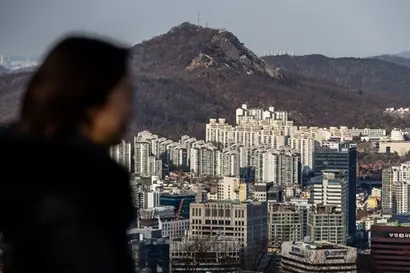
The Wall of Supply: No New Apartments in Seoul
The current stance of South Korea's real estate policy delivers a single message: "One smart home." Multiple homeowners are shackled by a triple burden: heavy acquisition taxes, comprehensive real estate taxes, and heavy capital gains taxes. When you add property taxes and health insurance premiums to the mix, a second home becomes a liability rather than an asset. In this environment, where should people looking to grow their assets turn? There is only one answer: trading up to a better home. And the best means to achieve that is through urban renewal projects.
Let’s look at Seoul's housing supply structure objectively. In 2023, the number of completed apartments in Seoul was approximately 30,000, and it decreased even further in 2024. On the other hand, when you combine the net inflow of population into Seoul, the increase in single-person households, and the demand to replace demolished buildings, the annual required supply far exceeds this. The only physical means to plug this hole in supply is through reconstruction and redevelopment.
The government knows this, too. Supply plans through Seoul's urban renewal projects have been announced repeatedly through 2030, but there is usually a 5–8 year time lag between permits and groundbreaking. The earliest that complexes currently in the project implementation or management and disposal plan approval stages will actually hit the market is 2028–2030. In other words, securing union membership in an urban renewal project right now is an act of pre-empting the scarcity premium on the other side of the supply cliff.
The Fear of Skyrocketing Construction Costs… Actually, Now Is Advantageous
The surge in construction costs is a reality. The construction cost index has risen by more than 35% in 2025 compared to 2020. The additional contributions required from union members have increased, and some projects have stalled. I have no intention of denying this reality. But fear and facts are two different things.
First, the rise in construction costs is already reflected in the market. Everyone knows this, which is why the price premium for move-in rights and union memberships was suppressed for a time. Paradoxically, because the concerns about construction costs are now sufficiently baked into the prices, it may actually be in an "undervalued zone."
Second, while the pain of rising construction costs is temporary, the value of a new apartment after completion is permanent. Looking at cases of completed reconstruction projects in the Gangnam area, it has repeatedly happened that market prices rose by tens of percentage points within five years of completion compared to the pre-sale price.
Third, raw material prices have been showing signs of stabilization since last year, and the construction industry is responding with cost-saving designs. It is highly likely that the peak of construction costs has already passed.
Policy Risk? No, Policy Benefit
The most frequently cited risk for urban renewal projects is regulatory risk. The Reconstruction Excess Profit Recovery Act, the pre-sale price cap, and various delays in permits all exist, and some do erode project feasibility. However, from a macro perspective, these regulations play a role in increasing the scarcity of urban renewal projects.
The stronger the regulations, the harder it is to enter new projects, and the value of complexes already on track increases further. A complex that has navigated regulations and received management and disposal plan approval is, in itself, a "certified project" that has already passed high barriers to entry. Regulations act as a moat that prevents others from entering, granting a monopolistic position to members already inside.
Even more important is the "Rapid Integrated Planning" (Sin-tong-gi-hoek) system. This policy, pushed by the Seoul Metropolitan Government, aims to shorten the typical 15-year redevelopment process to 5–7 years. In fact, designated zones such as Heukseok, Seobinggo, Susaek, and Yangpyeong are seeing rapid progress. Those already in these project sites are the ones benefiting from deregulation.
Urban Renewal Offers the Best Value for Money
As long as the tax pressure on multiple homeowners continues, the funds of asset-rich individuals will inevitably be concentrated in a single asset. Where should that one home be? New apartments in Gangnam have already surpassed 3 billion to 5 billion won, making it difficult for the average middle-class family to enter. Conversely, existing apartments on the outskirts of Seoul, in Gyeonggi-do, or in other provinces have price advantages but weaker demand foundations.
The answer in between is union membership in an urban renewal project. With funds ranging from 500 million to 1.5 billion won, you can become a member of an aging complex that has the potential to transform into a "Gangnam-class new apartment." The urban renewal projects in Mapo, Yongsan, Seongdong, Dongjak, and Yeongdeungpo are examples of this. They may be old now, but upon completion, they will become brand-new apartments in key Seoul locations. Whether as a bridgehead for trading up or a stepping stone for your first home, urban renewal projects currently offer the best value for money in the Korean real estate market.
I don't mean to ignore the reasons for hesitating to jump into urban renewal projects. The long project duration, internal conflicts within the union, the uncertainty of additional contributions, and the issue of securing a jeonse deposit after moving out—everything is difficult. But I want to ask: Is doing nothing right now really safe?
No expert is confident that Seoul housing prices will be lower in 10 years than they are now. The jeonse market is becoming a harsher environment for tenants as the transition to monthly rent accelerates. The longer you remain a non-homeowner, the higher your housing costs will become, and the opportunity to own a home will move further away. You must face the fact that the choice that appears to avoid risk is, in reality, the greatest risk: "loss of opportunity."
The essence of urban renewal is "buying time." We wait during the project period, but the moment that wait ends, we have a brand-new apartment in the heart of Seoul in our hands. Getting something after waiting 10 years versus having nothing after waiting 10 years—the results of these two choices are completely different.
Check Information Carefully
First, Seoul's housing supply is structurally insufficient, and urban renewal is the only path to resolving this. Securing union membership now is a pre-emption of future scarcity. Second, rising construction costs and regulations are already reflected in the market, which actually suppresses additional supply and increases the value of existing project sites. Third, the policy stance on "one smart home" will not easily change in the future, and urban renewal is the way to secure that one home in the best location at the most reasonable price.
Of course, selecting the right complex is crucial. Not all urban renewal projects are successful. You must carefully examine the project stage, the union's financial status, future demand in the area, and the contribution structure. However, being afraid without analysis and being afraid after analysis are completely different. What you need right now is not courage, but information. A decision made after gathering information is a strategy, not a gamble.
In an era of regulation, if you are allowed only one home, that home must hold future value. Urban renewal is the answer right now.
※ Kim Hak-ryul, the head of the Smart Tube Real Estate Research Institute known by the pen name 'Pashong,' previously served as a team leader at the Real Estate Research Division of Korea Gallup. He operates and hosts the Naver blog 'Pashong's World Exploration' and the YouTube channel 'Stu TV.' His books include '3040 Beginner's First Real Estate Investment (2026),' 'Rewriting the South Korean Real Estate User Guide (2025),' 'The Power of Gyeonggi Real Estate (2024),' 'Absolute Principles of Seoul Real Estate (2023),' 'The Future of Incheon Real Estate (2022),' 'Kim Hak-ryul's Absolute Principles of Real Estate Investment (2022),' 'The Future Map of South Korean Real Estate (2021),' and 'From Now On, Only Places That Rise Will Rise (2020).'