

[비즈한국] 'I have become an "older senior." I hear news of my peers passing away. When I lose a dear friend, it feels as if the part of me that shared memories with that person is slipping away into the other world. That is how I am being whittled away.'
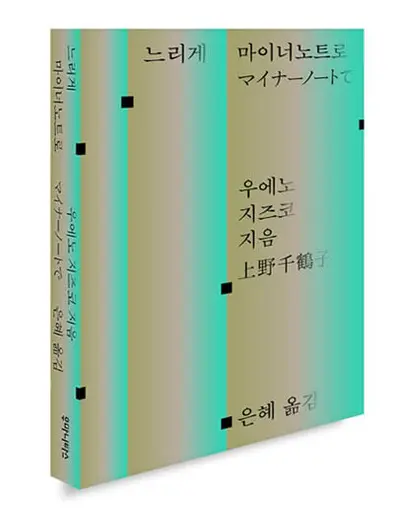
A Japanese sociologist, professor emeritus at the University of Tokyo, and long-time feminist activist has made an unexpected confession. Chizuko Ueno, now nearing eighty, reflects on her life and discusses death and caregiving in her recently published book, 'Slowly in a Minor Key'.
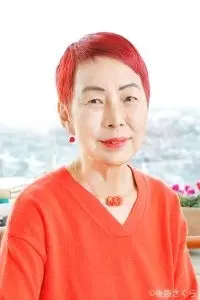
Chizuko Ueno is considered a pioneer who popularized feminism in Japan by analyzing the relationship between the country's patriarchal system and capitalism. To borrow the translator's expression, she is the "big sister" of the East Asian feminist intellectual scene. She has maintained a cynical and clear voice toward a male-dominated society, even going so far as to say that she became a feminist and an atheist 'thanks' to her patriarchal father.
However, this book is different from the 'major key' voice she has maintained thus far. She shares the experiences she and those around her have had with aging, focusing on issues of old age and caregiving that have recently captured her attention, in a calm and quiet 'minor key'.
For instance, she expresses affection for her father, with whom she was at odds throughout her life. She speaks of how she resisted her father's insistence that one must do "useful" work by pursuing "useless" things, only to realize in retrospect that by becoming a university professor, she ended up doing useful work after all. She also shares how she has been unable to throw away a sweater her father bought her after her mother passed away. Even an author who seems unlikely to leave any regrets in life admits that not reconciling with her parents before they died remains a source of remorse.
The author states, "So that I can feel 'I am glad I lived' at the very end, I want to exchange forgiveness with those who have been part of my life, as well as those who were hurt by my immaturity or whose relationships with me were fractured due to misunderstandings." The desire to forgive even those whom one could never forgive in a lifetime might be a sentiment that can only be embraced when one draws closer to death.
Meanwhile, her critique of old age and caregiving in Japan, a super-aging society, is poignant. The author has witnessed the country's top intellectuals fall into dementia, reaching a point where they cannot survive without the care of others. Some have even rejected this reality by choosing to end their own lives. The author shudders at the reality where a person who has lived a life of independence and freedom must enter an adult daycare center and be treated "helplessly" like a child in a group setting.
"I do not want to participate in things like the recreational activities at a daycare center where they say, 'Now, everyone, let's do this together.' Having never liked group activities in my life, there is no way I would suddenly like them just because I've grown old. If a care worker whispered 'Grandma' in my ear, I think I would snap back, 'I am not your grandma.' (Omitted) But... but... the reality of old age is that without the help of such people, I cannot even eat or bathe on my own." - Page 195
The author herself experiences the hardships of aging firsthand after a fall during her first outdoor activity since the COVID-19 pandemic. Reality is worlds apart from what she imagined old age would be like. Everyone overtakes me, and I find it difficult even to walk; my energy is drained by pain, my appetite disappears, I lose the strength to bathe, and even putting on socks becomes a struggle. Only then does she truly grasp the suffering of those who were in pain.
I thought I had heard, I thought I knew. But in the end, the pain of others was just the pain of others. 'Was that person enduring this kind of pain back then?', 'Did that person, who was in the final stages of cancer, come to see me while using painkillers?' Scenes like these kept coming to mind. - Page 222
The book starts with 'Basso Continuo,' the story of the family and childhood that composed the piece called Chizuko Ueno, passes through the 'Intermezzo,' where she flourished as a sociologist traveling the world, and slowly descends into the 'Ritardando,' which deals with war and dementia. Finally, a 'Nocturne' rings out, serving as a funeral song for her beloved acquaintances.
Is the sharp-eyed scholar simply growing old and weak, as is often the case? Has the polemicist of the past disappeared? No. Her voice is modest, but she has become deeper. Because she has now attained the 'strength' to acknowledge even her own weaknesses. The author demonstrates "the courage to reveal one's flaws as they are, and the freedom gained by embracing and soothing oneself, whether it be the past self or the present self."
In 2023, Chizuko Ueno contributed her own funds to establish the 'Chizuko Ueno Fund.' It supports research and activities for achieving gender equality in Japan. She stated the purpose of its establishment as follows: "The Chizuko Ueno Fund does not aim for fairness, neutrality, or impartiality. Educational background, affiliation, gender, and nationality do not matter." She is passing on the language and thoughts she inherited from the women who walked before her to the next generation.
There is a word called 'Song-eun' (paying forward grace). It refers to taking the kindness one has received and passing it on to others who need it. Although I do not have children, many young people who were my students as a university professor have entered society. One of them told me, "I will not forget your grace, teacher. I will repay that grace to my own students." My heart beats with anticipation for what challenging subjects future talents will bring forth. - Page 234
The Chizuko Ueno Fund is a legacy of the feminists who came before, and a legacy of Chizuko Ueno herself. Perhaps it is a "funeral song" that Chizuko Ueno is leaving for herself.