

[비즈한국] "I have decided to burn down the SaaStock brand that I built for 10 years."
Alexander Theuma, founder and CEO of SaaStock, Europe's largest B2B SaaS (Software as a Service) conference, made this announcement via his social media on the 15th, just before the opening of SaaStock USA 2026 in Austin, USA.
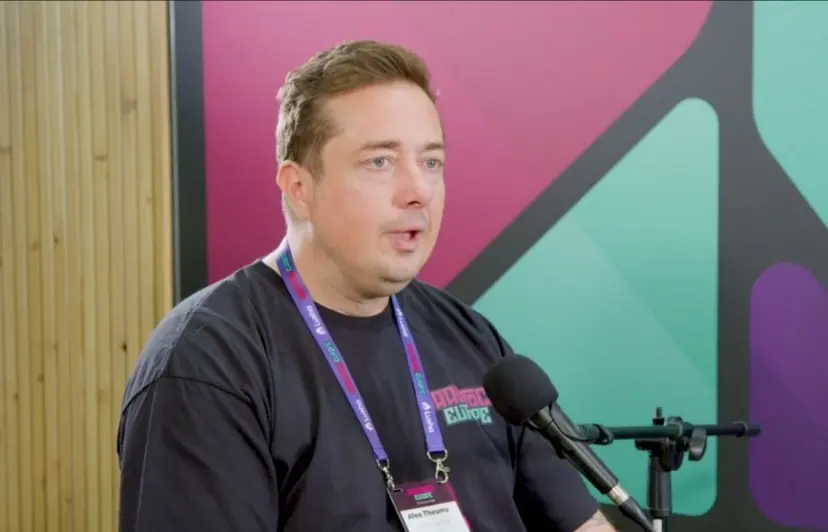
He stated, "The per-seat pricing model is under irreparable structural pressure," adding, "AI is replacing the workflows for which customers pay and use software."
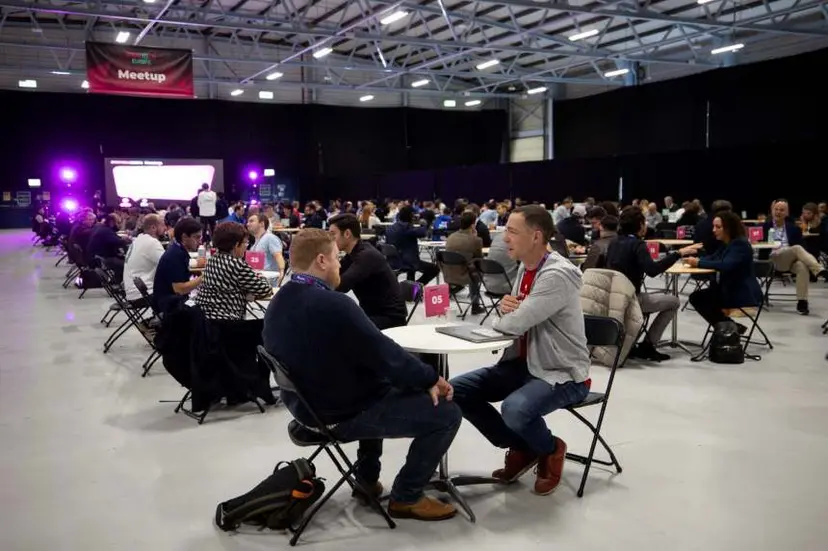
SaaStock began in 2016 in Dublin, Ireland, as a conference with 700 attendees from 34 countries. Its roots lay in 'SaaScribe,' a blog dedicated to SaaS that Theuma launched in 2015 after leaving his 11-year career in IT and telecommunications sales. Within two years, the number of participants grew to 1,500, and it subsequently expanded to North America, South America, Asia, and Australia. At its peak, it evolved into a massive event drawing over 4,000 people across five continents.
So-called 'successful' European SaaS companies, including customer messaging platform Intercom, corporate payment infrastructure software Paddle, scheduling automation tool Calendly, online collaboration tool Miro, and corporate HR management platform Personio, have all graced this stage.
For SaaS startups, SaaStock was one of the few verified opportunities they had to showcase their technology and meet investors to take the leap toward becoming unicorns.
Now, even this opportunity is gone. SaaStock USA 2026 has thus become the stage that signaled the end of the SaaS era.
AI, the Trigger for the 'SaaSpocalypse'
SaaS stands for Software as a Service. Instead of buying software and installing it directly on a computer, it is a format where users pay a monthly fee to lease it online.
Well-known B2B SaaS tools include Microsoft 365, used by many Korean companies, as well as Notion and Slack. For companies, leasing software is cheaper than buying licenses for every employee, and it is easier to manage, maintain, and scale. Most SaaS models charge based on the number of users. For example, if 10 employees use it, you pay for 10; if 100 employees use it, you pay for 100. However, as AI began performing tasks on behalf of employees, the need to purchase seats for every head count vanished.
The advancement of AI has brought about the collapse of the business model that earned money based on employee head counts—in other words, the 'SaaSpocalypse.'
According to TNW (The Next Web), a European tech media outlet under the Financial Times (FT), approximately $2 trillion (about 2,900 trillion KRW) in market capitalization evaporated in the software sector from the beginning of this year to mid-February. On February 3rd alone, the epicenter of the SaaSpocalypse, $285 billion (about 400 trillion KRW) in value vanished in a single day.
The Ball Set in Motion by AI Agents
In fact, February 3rd, when the SaaSpocalypse effectively began, was the day Anthropic and Google successively poured out announcements related to new AI agents. Anthropic unveiled its AI agent tool, 'Claude Cowork,' and showcased plugins applicable to 11 business areas, including law and finance. For instance, if a user enters, "Review this client contract and summarize the risk clauses," Claude Cowork opens the document, analyzes it based on legal standards, and even writes a report. Furthermore, if a sales representative inputs, "Organize this quarter's pipeline," Claude Cowork can directly access CRM data, categorize it, and draft a report. Starting from this day, the perception spread rapidly that AI could replace areas that previously required specialized SaaS or human labor, going beyond simple chat-based AI.
Google also extensively unveiled an autonomous agent platform that makes decisions and completes tasks without human intervention, based on its AI model 'Gemini,' across its entire Workspace, including Gmail, Docs, and Sheets. When a user describes the desired task in words, the agent directly opens relevant apps, reads data, and produces results.
Experts believe that as this technology commercializes, up to 80% of simple, repetitive SaaS manipulation tasks will be automated. Beyond simply reducing labor costs, this has rendered the very concept of 'buying a software account for every head count' a relic of the past overnight.
SaaS Industry Sees Stock Values Plummet
This shift in perception was directly reflected in the market.
Around the earnings announcement season in early 2026, the Australian SaaS company Atlassian, maker of collaboration software like Jira, saw its stock price fall by approximately 35% over several weeks after it disclosed a decline in corporate customer seats for the first time. Salesforce, the pioneer of SaaS and a CRM solution provider, saw a similar drop of about 28% during the same period.
Traditional software giants like Microsoft, Adobe, SAP, Oracle, and ServiceNow were also analyzed to have suffered losses ranging from tens of billions to hundreds of billions of dollars.
The outlook for the SaaS ecosystem is also skeptical.
According to the 2026 IT spending forecast by Gartner, a global IT research and consulting firm, corporate investment budgets for new technologies are shifting rapidly from traditional software subscriptions to AI infrastructure and agent building. In actual fields (such as CIO surveys), it was confirmed that about 70% of new software budget increases have moved toward securing in-house AI models and purchasing computational resources rather than upgrading existing apps. This shows that companies are now opting to build their own specialized AI ecosystems rather than paying rent for 'general-purpose software.'
End or Transformation?
However, the SaaSpocalypse does not mean the end of software.
Nvidia CEO Jensen Huang, speaking at the Cisco AI Summit held in San Francisco in early February while the fear of the SaaSpocalypse was at its peak, flatly stated, "The perception that the software industry will decline and be replaced by AI is the most illogical thing in the world." His logic was that because AI uses existing software as a tool rather than replacing it, software usage will actually increase.
Michael Arougheti, CEO of Ares Management, a large U.S. private equity firm with $600 billion (about 890 trillion KRW) in assets under management, also suggested that the AI chaos should not be viewed as just a software problem, but should be approached by distinguishing between systems deeply embedded in companies and those that are not. Experts point out that what is dying is not 'software,' but the 'head count business model.'
SaaS companies are also doing everything they can to survive. Salesforce partnered with Anthropic to launch an integrated AI agent platform, and SAP redeployed 8,000 personnel to focus on AI.
TNW reported that 7 out of 10 companies now demand to pay costs based on 'how much work the AI actually performed' rather than simple subscription fees. A transition to a structure that pays for 'results' rather than head counts has become a condition for survival.
The European startup ecosystem is also in the midst of this reorganization. According to European venture capital data, the proportion of AI in European startup investment in the first quarter of 2026 surpassed 50% for the first time. Money has moved from SaaS to AI infrastructure and Vertical AI (AI specialized for specific industries).
Theuma's Choice
So, what decision did Theuma make? Instead of closing SaaStock, he decided to restart under a completely different name. The new name is 'Shift AI.' He erased the word 'SaaS' from the brand entirely.
He revealed that it took six months for this decision to emerge. It was not because conference profits were bad or the number of participants was decreasing. The only question Theuma asked himself was, "Can I lead the next era with this name?" Unfortunately, his answer was "No."
The first event for Shift AI will be held in Barcelona, Spain, this coming October. Theuma said he would bring the community he has built over 10 years with him. SaaStock was valuable not because of its name, but because it was a collective of founders facing the same problems. They must now answer new questions in Barcelona.
Writer Lee Jung-woo has served as a reporter for 17 years, covering various fields including major industries such as automobiles, secondary batteries, and heavy industry, as well as national defense, diplomacy, environment, education, and health/welfare. In particular, he has covered industrial structural changes centered on mobility, energy transition, and sustainability on the ground. He currently resides in Berlin, Germany, and is active as a partner at the startup accelerator '123 Factory'.