

[비즈한국] Obesity is no longer just a matter of personal willpower. It is a 'structural disaster' that generates 15 trillion won in socioeconomic losses annually. Bizhankook has set out to find fundamental solutions for the massive obesity bill facing our society. We examine the collapsed nutritional environment for children and adolescents, and explore the sharp policy dilemmas surrounding the reimbursement of obesity drugs and the introduction of a sugar tax. Furthermore, we look beyond the limits of medication-centered approaches to highlight the innovation of K-Bio that could change the landscape of the 100 trillion won global market.
Obesity treatments like Wegovy and Mounjaro, which can reduce weight by more than 15% with a once-weekly injection, are sweeping the world. The same is true in Korea. Last year, domestic sales of Wegovy reached 472.5 billion won, while Mounjaro, released in September, recorded 215.5 billion won in sales in just four months.
However, the clear limitation is that if the environment that causes obesity does not change, these 'miracle obesity drugs' can only suppress appetite and cannot fundamentally fix obesity. In their daily lives, patients are exposed to the temptation of delivery apps that allow ordering 24/7 and ultra-processed foods everywhere. When the environment is pushing us to gain weight, relying solely on medication to treat obesity can only result in temporary success.
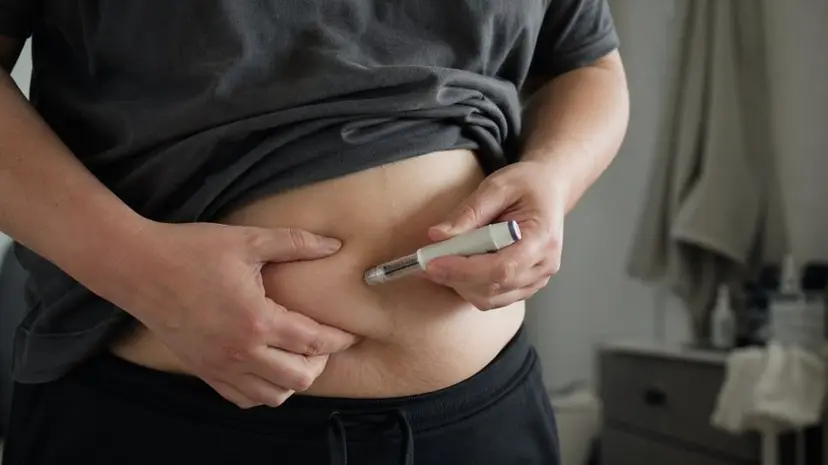
0.4kg increase every month after stopping the medicine
Obesity experts warn against the dangers of drug-centered ideologies. What medical professionals are most concerned about recently is the physiological rebound after stopping medication. Our bodies are governed by the fearsome inertia of homeostasis, which tries to maintain our current weight. When body weight decreases, the basal metabolic rate also decreases; if you stop taking the drug after using it to forcibly suppress appetite, the body mistakes it for a state of starvation and triggers an explosion of suppressed cravings for food. This means it leads to a 'yo-yo effect' where weight is gained even when eating less because the metabolic rate has dropped.
Research results have also shown that when a patient who lost weight by relying only on medication stops taking it, their weight increases about four times faster than those who lost weight through general dieting or exercise.
According to 'Weight regain after withdrawal of weight management medication: a systematic review and meta-analysis' published in the international medical journal 'The BMJ' this past January by a research team at the University of Oxford, UK, patients who stopped taking obesity treatment gained an average of 0.4kg per month. In contrast, patients who stopped 'Behavioral Weight Management Programs (BWMP)' such as diet and exercise gained 0.1kg per month. Ultimately, this means you must either pay hundreds of thousands of won for medication for the rest of your life to keep getting injections, or you must learn strategies to survive without the help of drugs.
“Stop it unconditionally” is old news… Use ultra-processed foods and delivery food wisely
‘Let's eat less salty, less sweet, and less oily. Let's eat moderately and increase activity for a healthy weight.’ For modern people who are suffering from about 10 hours of heavy work including commuting time and need to relieve stress, such slogans are closer to empty talk.
Rare is the office worker who has the energy left to stop by the grocery store, prepare fresh vegetables, and cook after dragging their exhausted body home after work.
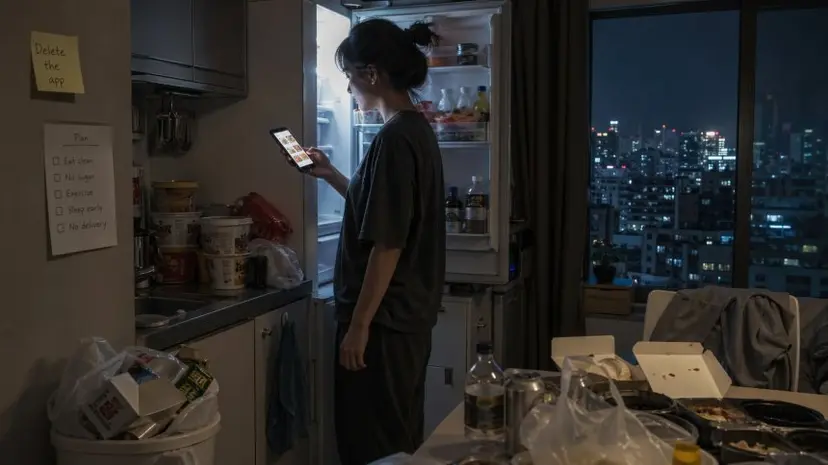
In particular, for single-person households, choosing delivery food that arrives right at the door or a meal box from a local convenience store can be far more economical and rational than bearing the high cost of vegetables and throwing away leftover ingredients. For busy modern people, ultra-processed foods and delivery apps are not the result of laziness, but structural products.
At the 63rd Spring Conference of the Korean Society for the Study of Obesity held on the 13th of last month, there were also voices of self-reflection that this reality must be faced. Kim Eun-mi, President of the Korean Society for the Study of Obesity, said, “Ultra-processed foods and delivery foods are a major problem these days, but if used appropriately, they can be much more nutritionally adequate than just eating rice and kimchi at home,” adding, “It will be helpful if there is a lot of discussion on how to use them and concrete modules are created.” This means that specific combinations that can avoid bad choices and provide nutrition in an unavoidable obesity environment are important.
Unprofitable cognitive behavioral education… A medical system that fosters drug dependency
However, it is extremely difficult for patients in Korea to receive proper lifestyle habit education from medical staff. This is because, under the current system, all treatments except for bariatric surgery, nutritional counseling, and cognitive behavioral therapy are labeled as non-reimbursable, meaning health insurance does not apply. In a structure where medical staff cannot be compensated even if they spend time and effort on behavior correction counseling, hospitals are leaning toward a bizarre structure where they rely only on drugs and writing prescriptions in three minutes instead of education that does not generate profit.
On the other hand, developed countries abroad force behavior change as a prerequisite for drug prescription. In Japan, to be prescribed Wegovy covered by health insurance, one must undergo at least six months of dietary and exercise therapy under a doctor's guidance first. The UK also specifies through National Institute for Health and Care Excellence (NICE) guidelines that professional weight management services such as diet and exercise therapy must be provided concurrently when prescribing Wegovy. These countries are inducing behavioral changes through systems beyond just taking treatment drugs.
As obesity has emerged as a social issue, there are also loud voices for applying insurance coverage to obesity treatments. However, to reduce socioeconomic costs, it might be more important to first provide coverage for cognitive behavioral therapy that helps patients navigate the obesity-inducing environment before supporting medication costs. If we cannot change the environment, one must wonder if the true role of the state is to teach people how to overcome it.
![[The 15 Trillion Won Obesity Bill] ① School lunch trays ruined by 'complaints', children's health ruined by 'algorithms'](https://s.bizhankook.com/attachments_thumb/2026/05/98376_thumb.webp)
![[The 15 Trillion Won Obesity Bill] ② A society fattened by delivery apps: Medication alone is not a cure](https://s.bizhankook.com/attachments_thumb/2026/05/98333_thumb.webp)
![[15 Trillion Won Obesity Bill] ③ Is Covering Wegovy and Mounjaro a Benefit or a Burden to National Health Insurance?](https://s.bizhankook.com/attachments_thumb/2026/05/98389_thumb.webp)
![[15 Trillion Won Obesity Bill] ④ “Use Sugar Tax for Obesity Drug Subsidies,” Checking the Feasibility…](https://s.bizhankook.com/attachments_thumb/2026/05/98452_thumb.webp)
![[15 Trillion Won Obesity Bill] ⑤ "Eat, Patch, Lasts a Month": The Current Status of Localizing Obesity Treatments](https://s.bizhankook.com/attachments_thumb/2026/05/98465_thumb.webp)