

[비즈한국] If the central government outlines the blueprints for carbon neutrality, the practical implementation falls to local governments. On the third day of the UN Climate Week and Green Transformation (GX) International Week held in Yeosu, discussions focused on how to expand renewable energy production and implement carbon neutrality at the regional level.
Through this international week, the government reaffirmed its roadmap to increase the share of new and renewable energy power generation to over 20% and secure a total of 100GW in capacity by 2030. Experts agreed that the success of this roadmap depends on the establishment of a 'local production, local consumption' strategy, moving away from large-scale, centralized power generation toward regions producing and consuming their own energy. In particular, concerns were raised that the government-promoted 'Sunshine Income Village' project and the 'Basic Plan for Carbon Neutral Green Growth' for each local government require rigorous verification to function as effective implementation tools.
Concerns Mount Over Rosy Outlook for Sunshine Income Villages
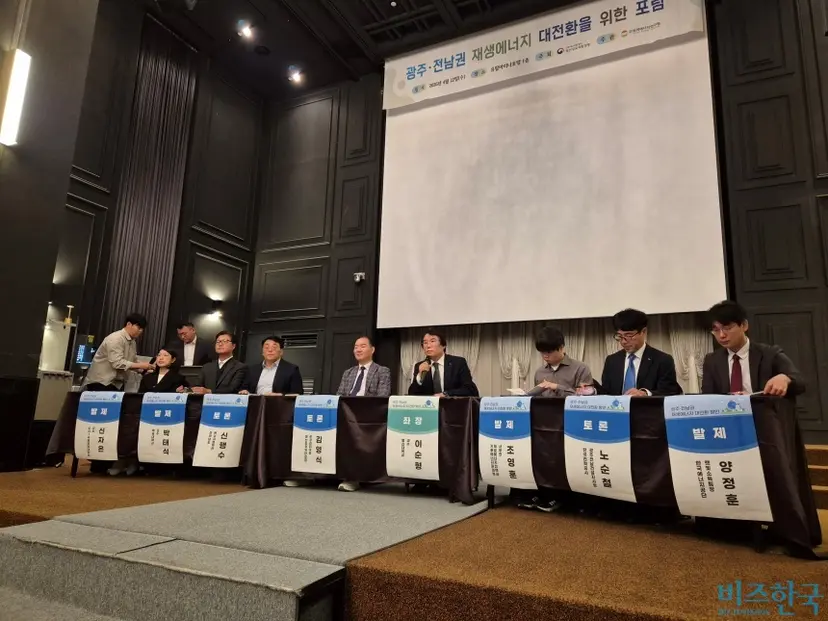
At the ‘Forum for Renewable Energy Transition in the Gwangju-Jeonnam Region,’ held at the Utop Marina Hotel in Yeosu on the morning of the 22nd, the Sunshine Income Village project, which began receiving support in March, was brought under scrutiny. The Sunshine Income Village project is a resident-participatory energy transition model where villagers form cooperatives to install solar power plants on idle land and share the profits within the community. The government has set a policy to create over 2,500 Sunshine Income Villages nationwide by 2030—including more than 500 this year alone—to simultaneously address rural income stagnation and carbon neutrality goals.
The government highlighted the case of Guryang-ri, Yeoju, Gyeonggi-do, which generates an average monthly net profit of about 10 million won through its solar plant, and the case of Sinan-gun, Jeollanam-do, where residents receive an annual 'Sunshine Pension' of up to several million won through the 'Ordinance on Sharing Profits from New and Renewable Energy Development,' as role models.
However, there are many hurdles to overcome for these cases to spread to 2,500 villages across the country. Shin Ja-eun, a professor at the KDI School of Public Policy and Management, emphasized the importance of risk management for Sunshine Income Villages, which are essentially investment projects from the perspective of village communities.
Approximately 85% of the Sunshine Income Village project costs are financed through low-interest policy loans from the Korea Energy Agency. The current loan structure is predominantly a '5-year grace period followed by 10-year repayment' system. While villages can pay only interest and distribute profits stably during the first 5 years, they face a structural vulnerability where cash flow could deteriorate sharply from the 6th year when principal repayment begins. Volatility in electricity prices is another risk that cannot be ignored. If the System Marginal Price (SMP) and Renewable Energy Certificate (REC) prices fall, or if power generation falls short of expectations due to worsening weather, residents could face a situation where they have to worry about repaying principal and interest instead of receiving dividends.
Professor Shin Ja-eun pointed out, "Seeing the Energy Agency's interest rate rise from 1.75% to 2% was chilling," adding, "Since village residents must pay interest, repay principal, and still generate profit, sustainability can only be guaranteed if electricity price protection and priority grid connection are ensured."
The extreme aging of rural areas is the biggest realistic barrier to resident-led energy projects. Solar power plants require consistent, professional management, ranging from sophisticated licensing procedures to inverter replacement, panel cleaning, and efficiency monitoring. It is not easy for village cooperatives primarily composed of elderly residents to manage these tasks directly.
The roles of Renewable Energy Service Companies (ReSCOs) or consultants are bound to grow, but if their professionalism is lacking or costs rise, it creates a burden on residents. It could also lead to a structure where maintenance firms take a significant portion of profits as service fees.
Ko Yi-sun, head of the Local Transition Team at the Solutions for Our Climate (SFOC), stated, "Many ReSCOs are already suggesting the establishment of cooperatives to villages with an eye on profits," and added, "There is a concern that consultants prepared by the government may be too focused on energy expertise while lacking the capacity to build village governance."
Local Characteristics Not Reflected in Carbon Neutral Green Growth Plans
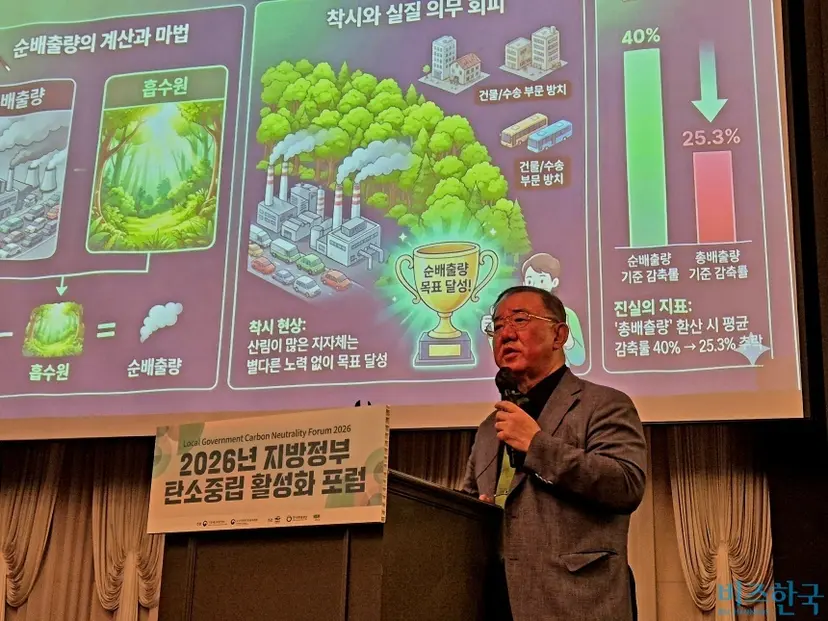
In accordance with the Framework Act on Carbon Neutrality, 243 local governments nationwide must establish and implement 'Basic Plans for Carbon Neutral Green Growth' tailored to their regional characteristics. However, it was pointed out at the forum that many of the plans currently established by local governments lack effectiveness because they simply imitate others without considering local specificities.
Shin Hyun-seok, Chairman of the Energy Just Transition Subcommittee of the National Committee on Climate Crisis Response, noted that local governments are stuck at the level of replicating central government guidelines or the cases of other local governments rather than precisely analyzing their own unique industrial structures or energy consumption patterns. He also pointed out the problem of setting a 'convex reduction path,' where carbon reduction efforts are concentrated in the later stages. This means that local government heads have set modest reduction targets during their terms, pushing the bulk of the reductions toward the target year.
He suggested increasing support for 'Carbon Neutrality Support Centers,' which were established to supplement local governments' lack of capacity for implementing carbon neutrality, assessing them as the last line of defense to ensure policy effectiveness. Chairman Shin emphasized, "The support center budget, which is currently around 100 million won, should be increased to 1 billion or 2 billion won," adding, "We need to enable these centers to collect local carbon-related data and function as hubs for verification."
![[UN Climate Week] Climate Crisis and Energy Security, the Common Answer is 'Renewable Energy'](https://s.bizhankook.com/attachments_thumb/2026/05/98275_thumb.webp)
![[UN Climate Week] Brainstorming Decarbonization Solutions for Steel and Petrochemicals for K-GX](https://s.bizhankook.com/attachments_thumb/2026/05/98368_thumb.webp)
![[UN Climate Week] Central Government Rushes, Local Governments Follow... A Long Road to Carbon Neutrality](https://s.bizhankook.com/attachments_thumb/2026/05/98379_thumb.webp)
![[UN Climate Week] Companies Ready for Decarbonization: "Calling for Transition Finance"](https://s.bizhankook.com/attachments_thumb/2026/05/98401_thumb.webp)
![[UN Climate Week] "Without Green Transition, Korean Steel Industry Faces Loss of Global Competitiveness"](https://s.bizhankook.com/attachments_thumb/2026/05/98382_thumb.webp)