

[비즈한국] As carbon neutrality emerges globally as a new benchmark for industrial competitiveness, the steel and petrochemical industries—the pillars of South Korea's core economy—stand at a massive crossroads of transition. Strengthening environmental regulations, such as the European Carbon Border Adjustment Mechanism (CBAM), are no longer distant future concerns but existential threats that immediately dictate the profitability of our companies.
In particular, since steel and petrochemicals combined account for approximately 65% of total industrial emissions, the decarbonization of these sectors is a key component of achieving carbon neutrality. The UN Climate Week and the International Seminar on Green Transformation (GX) focused intensively on concrete strategies to turn these crises into opportunities.
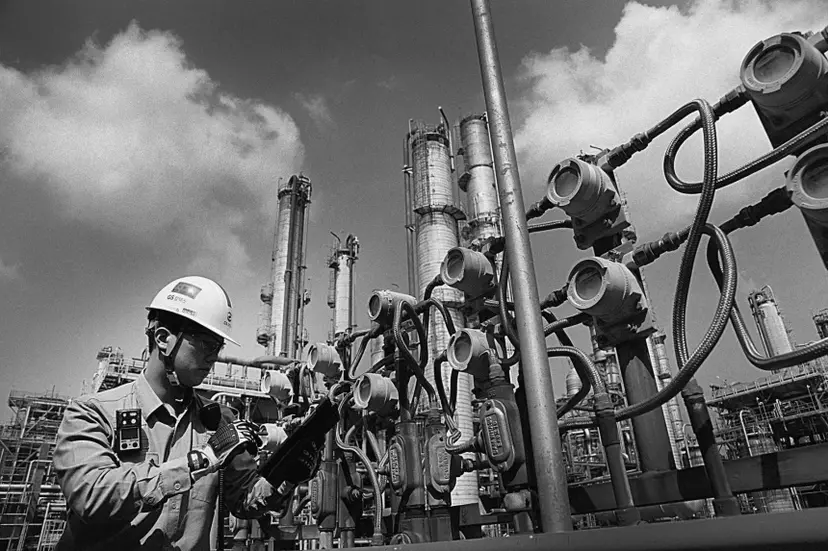
The core of the ‘K-Steel Act and Strategic Design of GX’ seminar, held on April 21 at the Yeosu U-top Marina Hotel, focused on establishing an institutional foundation for the transition to low-carbon steel and its economic impact. Ko Eun, Vice President of Next, who presented at the event, emphasized that the Korean-style low-carbon steel standards supported by the ‘K-Steel Act’ must reflect the requirements of global consumers. Ko pointed out that, with the exception of hydrogen reduction ironmaking, other methods such as blast furnace-electric arc furnace hybrid processes are unlikely to meet global standards.
“In addition to hydrogen reduction ironmaking, we need to pursue mid-to-short term measures such as Direct Reduced Iron (using natural gas or hydrogen) and the DRI-EAF hybrid process. We must institutionalize the parallel promotion of these technologies in the law to diversify risks associated with relying solely on a hydrogen reduction path,” said Ko.
Nora Chang, a researcher at the NewClimate Institute, predicted that South Korea could secure a competitive advantage by proactively responding to the EU's Carbon Border Adjustment Mechanism (CBAM). According to the analysis, if the South Korean steel industry reduces its total emission intensity by approximately 36%, the additional cost burden from CBAM would effectively approach ‘zero.’ She emphasized that this is an opportunity to move beyond mere cost cutting to gain an edge over other high-emission countries and convert potential trade losses into profits.
She also called for the strengthening of the domestic Emissions Trading Scheme (K-ETS). She pointed out that to minimize the CBAM burden in the long term, the allocation of free emission permits to steel companies should be gradually reduced to drive up domestic carbon prices. She added that the tax revenue secured through this process should be used to create a virtuous cycle that supports companies in their transition to low-carbon processes.
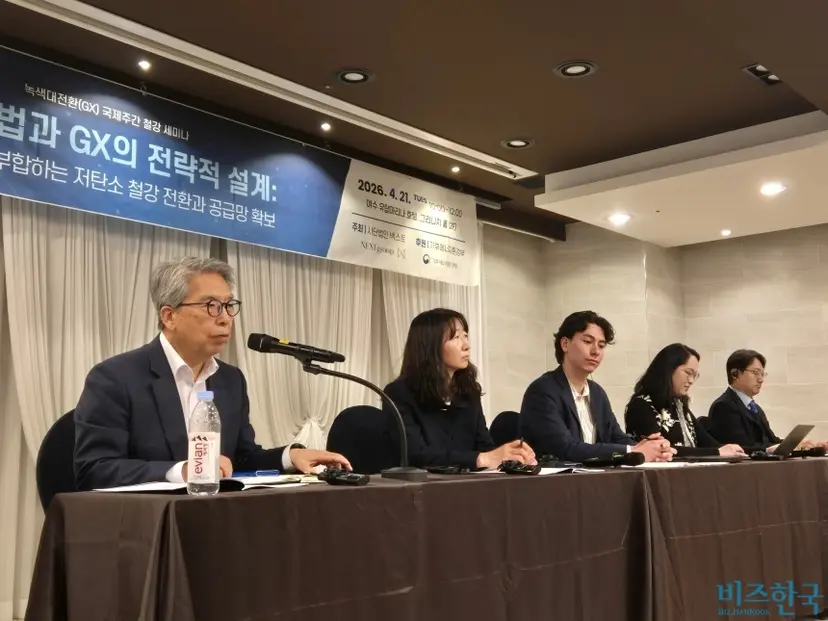
In the afternoon, the seminar on ‘Policy and Investment Strategies for the Clean Chemical Transition of Petrochemical Industrial Complexes’ at the same venue brought the decarbonization strategy centered on the Yeosu National Industrial Complex to the table. The petrochemical industry is a high-carbon emitter on par with steel, and innovations throughout the entire process are being demanded as global regulations, particularly on the plastics industry, tighten.
Kim A-young, a researcher at Solutions for Our Climate, emphasized that to realize K-GX, ‘NCC Electrification’ must be included in the scope of ‘key strategic technologies for petrochemicals’ and ‘high-value transformation’ within the enforcement decree of the Special Petrochemical Act, allowing for R&D and policy financing support. She also proposed including the budget for NCC electrification demonstration support projects, as well as hydrocarbon cracking electrification, in the Climate Response Fund.
Kim Soo-kang, a researcher at Next, presented an electrification scenario for the Yeosu Petrochemical Complex by utilizing Yeosu’s renewable energy potential. Kim pointed out that practical implementation should reflect the demand from petrochemical complexes in distributed energy special zones, which are currently centered on attracting new power demand such as semiconductors and data centers, and in regional renewable energy supply plans. She also suggested allowing the simultaneous use of existing Power Purchase Agreements (PPA) and direct trading in distributed special zones, which is currently not permitted.
“We must explicitly state the electrification of petrochemical processes, such as NCC electric furnaces and industrial heat pumps, as detailed tasks within the GX promotion strategy,” emphasized Researcher Kim Soo-kang.
While acknowledging the importance of the decarbonization transition, the industry identified the lack of a market for low-carbon products as a realistic difficulty. Nam Jung-im, Head of the Climate, Environment and Safety Office at the Korea Iron & Steel Association, said, “The reality is that a low-carbon market is not yet in place. We need to consider policies such as granting priority in public procurement or Japan's policy of creating a green steel category within EV subsidies.”
Similar voices were heard from the petrochemical industry. While various carbon reduction technologies are being developed, they expressed concerns about economic feasibility due to the lack of appropriate buyers. Seok Ju-hwa, Team Leader of New Energy Business Development at GS Caltex, expressed his opinion, saying, “We can reduce emissions by up to 20% by reducing energy usage or optimizing processes without additional costs. However, beyond that point, it affects product prices, making it difficult for low-carbon products to compete in the existing market, which necessitates market cultivation.”
![[UN Climate Week] Climate Crisis and Energy Security, the Common Answer is 'Renewable Energy'](https://s.bizhankook.com/attachments_thumb/2026/05/98275_thumb.webp)
![[UN Climate Week] Brainstorming Decarbonization Solutions for Steel and Petrochemicals for K-GX](https://s.bizhankook.com/attachments_thumb/2026/05/98368_thumb.webp)
![[UN Climate Week] Central Government Rushes, Local Governments Follow... A Long Road to Carbon Neutrality](https://s.bizhankook.com/attachments_thumb/2026/05/98379_thumb.webp)
![[UN Climate Week] Companies Ready for Decarbonization: "Calling for Transition Finance"](https://s.bizhankook.com/attachments_thumb/2026/05/98401_thumb.webp)
![[UN Climate Week] "Without Green Transition, Korean Steel Industry Faces Loss of Global Competitiveness"](https://s.bizhankook.com/attachments_thumb/2026/05/98382_thumb.webp)