

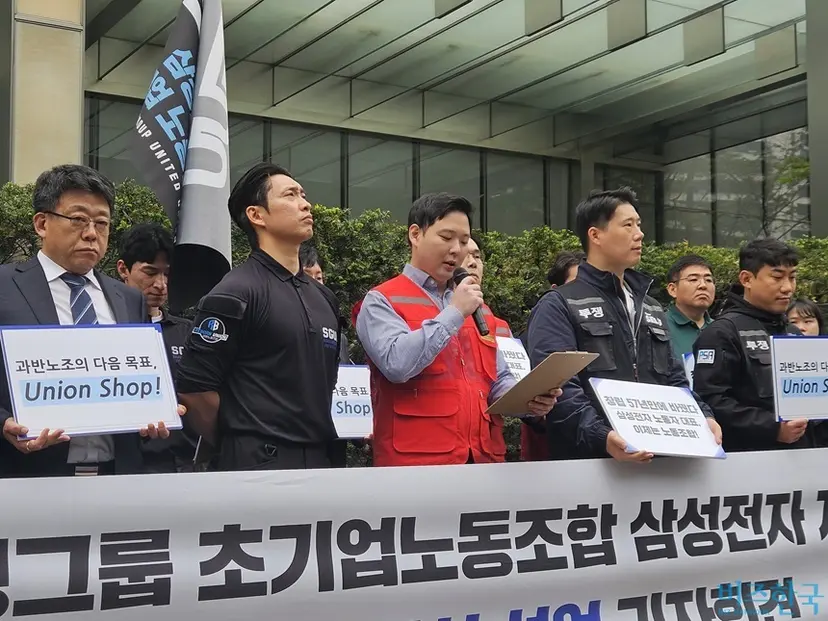
[비즈한국] Paradoxically, the semiconductor boom has brought unprecedented tension to the management and labor of Samsung Electronics005930. A majority union emerged as complaints stemming from compensation gaps with competitors reached a breaking point. Having secured the status of a legal employee representative, the union pursues pragmatism, aiming to look after the rights and interests of employees without relying on higher-level labor organizations. Amidst record-breaking performance, skepticism regarding compensation principles and the rise of a pragmatic new union—where will this strike lead on a path Samsung has never traveled before?
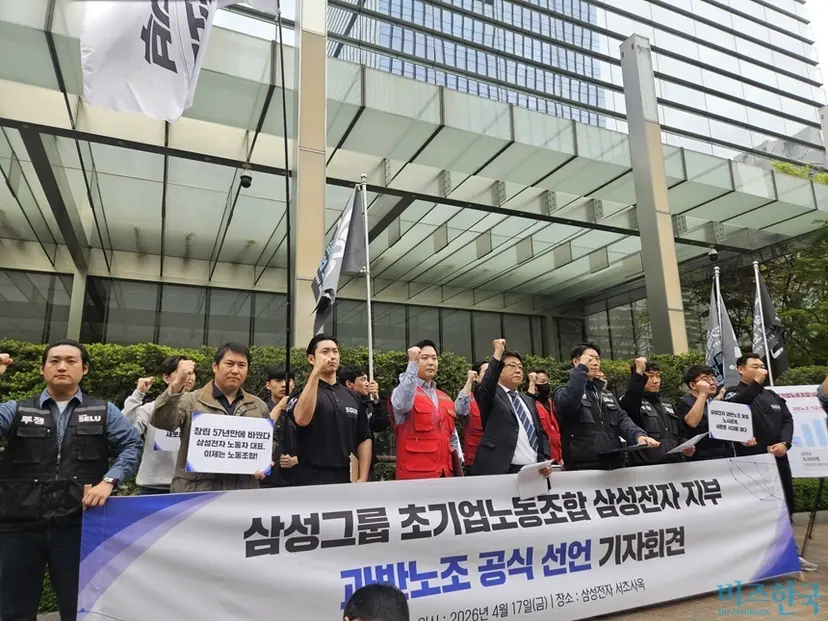
Wage negotiations between the Samsung Group's 'Enterprise-Level Labor Union' Samsung Electronics branch and the company have repeatedly stalled due to disagreements over performance bonus calculation standards. During this process, the number of union members has surged from 6,000 in September of last year to over 75,000 as of April. Notably, more than 80% of the workforce in the Semiconductor (DS) division has joined.
The union plans to begin a large-scale resolution rally on the 23rd, and if negotiations fail, it intends to enter a 18-day general strike starting May 21. On the same day, the company filed for an injunction against illegal industrial action with the Suwon District Court, initiating a legal response. With mediation by the National Labor Relations Commission also breaking down, the union is urging not just working-level talks, but for Samsung Electronics Chairman Lee Jae-yong to come to the dialogue table personally.
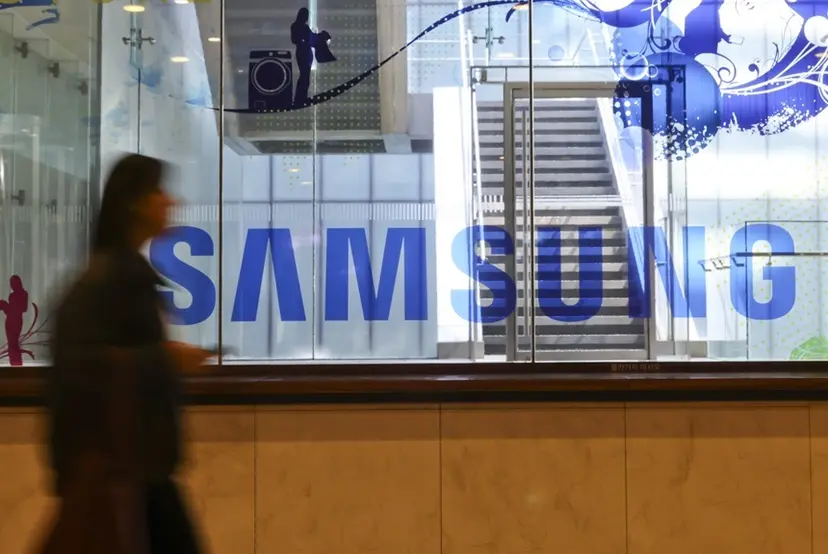
The ‘Real Gap’ That Management and Labor Could Not Narrow
The biggest point of contention in Samsung Electronics' labor-management negotiations is the funding ratio for performance bonuses. The union demands 15% of operating profit as the funding source for DS division bonuses. Furthermore, they are demanding the immediate abolition of the payment cap system. The company proposed using over 10% of operating profit as the source and providing bonuses to the memory business unit that are equal to or better than those of competitors. In this case, bonuses would reach 600% of the average annual salary, or about 540 million won per person. It is reported that additional conditions were also offered, such as low-interest loans in the 1% range (up to 500 million won per person), a 6.2% base wage increase, and the provision of 30 shares of company stock.
The essence of the conflict lies more in whether these terms will be ‘formalized’ than in the numbers themselves. The union wants an institutional framework that guarantees the performance bonus ratio relative to operating profit every year, while the company maintains that it is difficult to promise a fixed ratio due to the high volatility of profits inherent in the semiconductor cycle.
Distrust has also accumulated during the negotiation process. The union is raising issues of credibility, claiming that while the company suggested an operating profit of less than 200 trillion won during negotiations, the actual expected operating profit reaches 300 trillion won. They have also resisted previous conditional proposals such as “1% payment per 1 trillion won of operating profit, only upon breaking a new record” and differential payments by job level, calling them “attempts to divide the union members.”
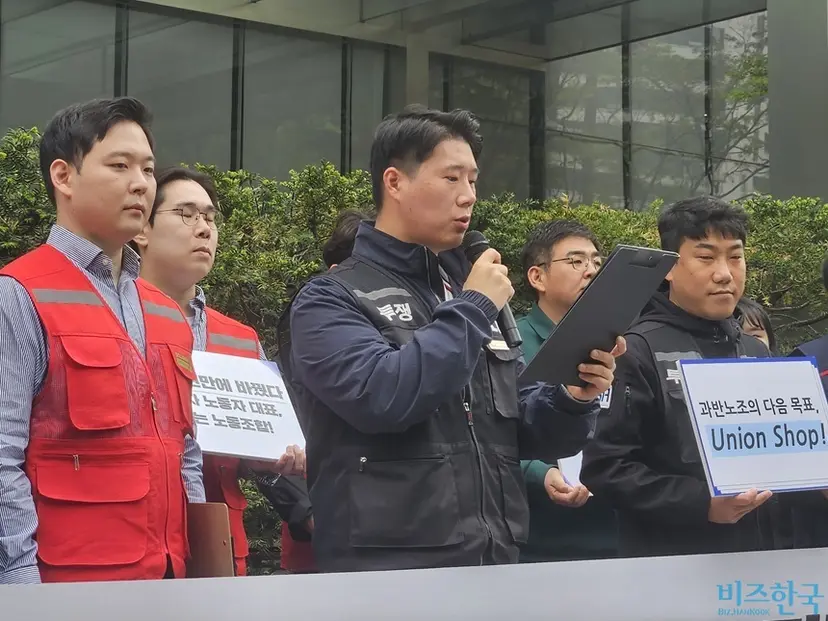
Union: “The ‘Black Box’ Formula Fueled a Sense of Deprivation”
Choi Seung-ho, Chairman of the Samsung Electronics branch of the Enterprise-Level Labor Union, pointed out in an interview with Biz Hankook, “The speed at which the number of members exploded more than 12 times in 7 months was a pace even the union did not expect. Unlike Hynix, Samsung sticks to an ‘opaque’ EVA (Economic Value Added) formula that subtracts interest expenses, corporate taxes, and ‘capital costs’ defined by the company from operating profit, making it difficult for employees to accept.”
SK Hynix000660 formalized its performance bonus standard in 2021 at 10% of operating profit and abolished the cap the following year. This structure allows employees to estimate their compensation once performance is announced. In contrast, Samsung employees complain that due to the nature of the EVA formula, it is difficult to predict how much of a bonus they will actually receive even if operating profit increases.
The explanation adds that internal cases have also fueled discontent. The CTC organization, launched in 2024 for synergy between memory and foundry, resulted in lower performance bonuses for the memory division and was disbanded after just one year. The ‘HBM One Team,’ formed last year to strengthen HBM competitiveness, was also disbanded after achieving results; analysis suggests that the union gained momentum as unilateral organizational management was repeated instead of rewards commensurate with performance.
“If the Line Stops, There is No Turning Back”: Why Management Draws the Line
It is reported that in this proposal, the company put forward a plan to guarantee ‘effectively the best treatment in the industry.’ It promised compensation at a higher level than its competitor, Hynix. However, the logic is that the risk of future uncertainty when fixing a specific ratio is too high, and the plan proposed by the company itself is practically a greater burden than the superficial numbers suggest.
Unlike SK Hynix, Samsung must pay performance bonuses to all personnel, including those in the loss-making System LSI and Foundry divisions. There is a view in the industry that “to match the Hynix level for memory employees, it would actually require spending 13–15% of operating profit.”
The DS division has a precedent of an operating loss of 14.7 trillion won in 2023. The calculation is that flexibility must be maintained in that a mandatory fixed ratio payment could lead directly to financial burden if market conditions drop sharply. There is also concern that if the 15% formula is applied only to the DS division, it could lead to equity issues with non-DS divisions such as MX (smartphones) and VD (TV/appliances).
The union is pressuring management by warning that production losses of at least 20 to 30 trillion won per day could occur if the strike leads to equipment backup and process interruptions. Voices of concern regarding the reality of a strike are high in the industry. Semiconductor processing requires 24-hour monitoring, and if more than 30,000 large-scale personnel simultaneously engage in annual leave struggles or strikes, experts predict that a line shutdown is inevitable. In the case of HBM, which requires a long process of more than 3 months, if the line stops once, all wafers in that section must be discarded, causing irreparable damage.
An industry official pointed out, “Stopping semiconductor lines, which are a national core industry, due to performance bonuses is unprecedented,” adding, “While Samsung is shaken by a strike, competitors such as Taiwan's TSMC could use this as an opportunity.”
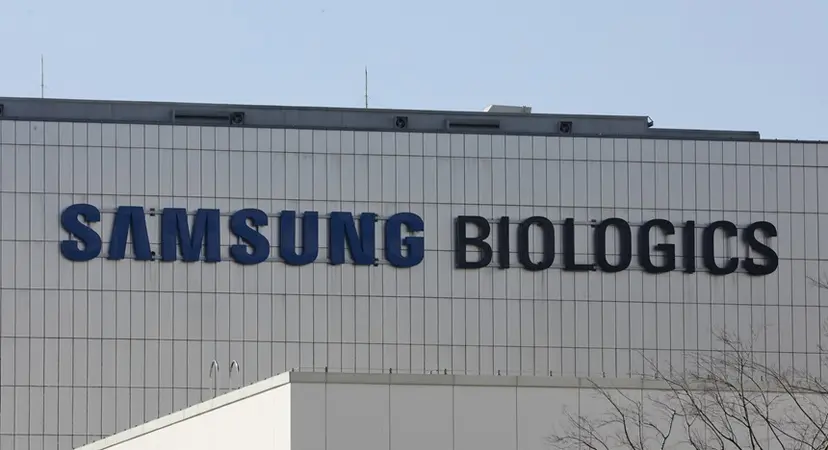
Samsung Biologics Faces Strike Crisis 15 Years After Founding
Conflict between management and labor is also heading toward catastrophe at Samsung Biologics, a leader in K-Bio and another key growth axis for Samsung Group. A countdown to the first general strike in the 15 years since its founding in 2011 has begun. As the company has achieved record-breaking performance, there is a fierce standoff between the union, which demands fair compensation, and the company's position that the union's bonus demands are excessive in a situation where large-scale facility investment is essential.
The Samsung Biologics Coexistence Labor Union (union) has announced the start of a full-scale general strike on May 1st. To build momentum for the strike, they are also planning to hold a large-scale workplace rally on the 22nd. The union secured the right to industrial action with a 95.5% approval rate in a vote held at the end of March. As approximately 3,700 people, about 75% of all employees, are currently union members, projections suggest that a fatal disruption to the production line operation is inevitable if the strike takes place.
The core of the conflict between Samsung Biologics management and labor is, of course, performance bonuses. The union is demanding an average wage increase of around 14%, an incentive payment of 30 million won per employee, the allocation of company stock over 3 years, and a 20% share of operating profit as a performance bonus (OPI) without a cap. The discontent is that employees are not receiving reasonable rewards even though Samsung Biologics is renewing its performance every year and generating massive operating profits. Last year, Samsung Biologics recorded 4.557 trillion won in revenue and 2.0692 trillion won in operating profit.
On the other hand, management maintains that it is not easy to accept the union's demands. This is because proactive infrastructure expansion is essential due to the nature of the biopharmaceutical contract development and manufacturing organization (CDMO) industry, where global competition is intensifying. Last year, in December, Samsung Biologics poured 521.6 billion won into the acquisition of a biopharmaceutical production facility located in Rockville, Maryland, USA, and must continue to make trillion-won investments such as the construction of plants 6–8 to expand production capacity in the future. Accordingly, at the regular general shareholders' meeting in March, they announced that they would maintain a no-dividend policy for the next three years. For the company, they view this as a situation where the union is demanding massive performance bonuses that are disconnected from the sacrifices of shareholders while the company is seeking their understanding to secure future growth engines.
![[Deconstructing the Samsung Strike] ① Samsung Electronics and Bio Performance Bonus Strikes: What are the Decisive Issues?](https://s.bizhankook.com/attachments_thumb/2026/05/98301_thumb.webp)
![[In-depth Analysis of Samsung Strikes] ② Samsung Biologics Union Rally Features Pop Songs and Selfies: "Trust Over Performance Bonuses"](https://s.bizhankook.com/attachments_thumb/2026/05/98306_thumb.webp)
![[In-depth Analysis of Samsung Strike] ③ [On the Scene] The 'Giant' Ball Set in Motion by Hynix Shakes Samsung](https://s.bizhankook.com/attachments_thumb/2026/05/98335_thumb.webp)
![[In-depth Analysis of Samsung Strike] ④ The Shockwaves the Strike Will Bring to the Semiconductor Market During the 'HBM4 Golden Time'](https://s.bizhankook.com/attachments_thumb/2026/05/98412_thumb.webp)
![[Samsung Strike Analysis] ⑤ The Root of 'Relative Deprivation' Felt by Six-Figure Earners](https://s.bizhankook.com/attachments_thumb/2026/05/98425_thumb.webp)