

[비즈한국] The sale of management rights for KOSDAQ-listed Bucket Studio066410 has ultimately fallen through. The agreement to change the largest shareholder was terminated because Wabi-Sabi Holdings, the special purpose vehicle (SPC) that initiated the acquisition, failed to secure the remaining balance. Bucket Studio, currently facing the threat of delisting, needed to demonstrate improvements in its governance structure during the grace period; however, with the failure to change its largest shareholder, the company now bears the burden of a second round of sales.
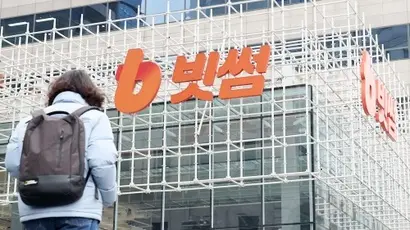
Wabi-Sabi Holdings failed to acquire Bucket Studio. On April 20, Bucket Studio disclosed that it had terminated the stock purchase agreement involving the change of its largest shareholder with Wabi-Sabi Holdings. Bucket Studio stated, “The transferee (Wabi-Sabi Holdings) failed to resolve the reasons for contract termination within the specified period, and no separate agreement was reached. Accordingly, we have exercised our right to terminate the contract,” adding, “The largest shareholder and others plan to proceed with a second round of public sale and will make disclosures as confirmed matters, such as the selection of a target, arise.”
Bucket Studio is a company that holds a 30.0% stake in Bithumb Holdings, the holding company of Bithumb, South Korea's second-largest virtual asset exchange. The governance structure follows the path: Initial Investment Association → Bucket Studio → Inbiogen101140 → Vidente121800 → Bithumb Holdings. Additionally, there is a circular investment structure where Vidente holds a 4.23% stake in Bucket Studio. However, Vidente's stake will be completely divested after this sale.
The acquisition price for Bucket Studio was 240 billion KRW (for a 37% stake), and Wabi-Sabi Holdings paid a down payment of 24 billion KRW by last January. The deadline for the remaining 216 billion KRW was February 27, but Wabi-Sabi Holdings pushed the payment date to March 31. By March 30, they pushed the date back again, claiming they would pay 50 billion KRW of the intermediate payment on March 31 and the remaining 166 billion KRW on April 20.
However, Wabi-Sabi Holdings did not pay the intermediate payment on March 31. On April 10, Bucket Studio disclosed, “The transferee significantly violated the contractual obligations by failing to pay the intermediate payment. We sent a written notice requiring correction, but as it was not corrected within 10 days, the right to terminate the contract arose.”
Although the two sides negotiated to delay the contract termination date until April 20, the sale ultimately fell through as Wabi-Sabi Holdings failed to secure the remaining balance. While Wabi-Sabi Holdings proposed extending the contract until May or June, it is reported that their funding plan lacked realism. Adverse events, such as the coin mis-transfer incident at Bithumb last February, also reportedly impacted their fundraising efforts.
Bucket Studio plans to rush a second public sale. A company official said, “We intend to meet with the lead manager for the sale within this week to discuss extending the contract and proceed with a second round of bidding,” adding, “Because the deal was not closed in the first round, the valuation might be lower in the second, but successfully completing the sale is more important than that.”

The backdrop to Bucket Studio's rush to sell is the crisis of delisting. Trading of Bucket Studio stock has been suspended on the KOSDAQ market for over three years. The KOSDAQ Market Division of the Korea Exchange granted them a nine-month improvement period in July 2025, which ended on April 16. Companies granted an improvement period must submit an improvement plan and implementation results within 15 days of the end date. The Exchange then holds a Corporate Review Committee within 20 days of the submission date to decide whether to delist the company. If the review results in a decision to delist, the KOSDAQ Market Committee will decide on delisting or granting an additional improvement period within 20 days after the review date.
The deadline for Bucket Studio to submit its improvement plan implementation results is scheduled for May 11. Bucket Studio, which was marked for delisting due to governance issues, specified plans in its May 2025 improvement report, including: resolving circular investment structures among affiliates through stake sales and improving the financial structure through paid-in capital increases from new largest shareholders. Although they proceeded with the stake sale in line with this, the failure to close it within the deadline has forced them to pin their hopes on an extension of the improvement period.
A Bucket Studio official replied, “For the second sale, we plan to use the basic framework of the public sale while minimizing unnecessary procedures and selecting a preferred bidder,” adding, “We will likely need to request an extension of the improvement period while showing the Exchange our efforts to push through the sale.”
Meanwhile, attention is also focused on the future path of SwitchOne, the foreign exchange fintech startup that led this acquisition battle. SwitchOne is a company that holds a 41.67% stake in Wabi-Sabi Holdings. SwitchOne CEO Seo Jung-ah was scheduled to be appointed as an executive director at Bucket Studio's regular general shareholders' meeting on March 31, but the appointment motion was rejected when Wabi-Sabi Holdings failed to pay the intermediate payment. Furthermore, with the termination of this contract, it has become difficult for them to recover the acquisition deposit injected through Wabi-Sabi Holdings.
SwitchOne's financial health has deteriorated. According to their audit report, SwitchOne’s operating revenue surged from 77.75 million KRW in 2024 to 37.9 billion KRW in 2025, driven by an increase in foreign exchange gains. However, as non-operating expenses and investment-related losses increased, the net loss widened from 1.7 billion KRW to 3.3 billion KRW, resulting in an even greater deficit. Above all, total capital decreased from 400 million KRW to -2.8 billion KRW, putting the company in a state of complete capital impairment (where losses exceed capital stock and surplus). Regarding the possibility of reclaiming the deposit, Bucket Studio stated, “Since the responsibility for the contract termination lies with the transferee, we will be fully capable of responding.”