

[비즈한국] The '3rd UN Climate Change Conference (UNFCCC) Climate Week' and the 'Korea Green Transformation (K-GX) International Week,' where global climate response methods are discussed, began on the 20th at the Yeosu Expo in South Jeolla Province. As the climate crisis and energy security crisis intensify, international efforts to overcome them through industrial decarbonization and the expansion of renewable energy are gaining attention.
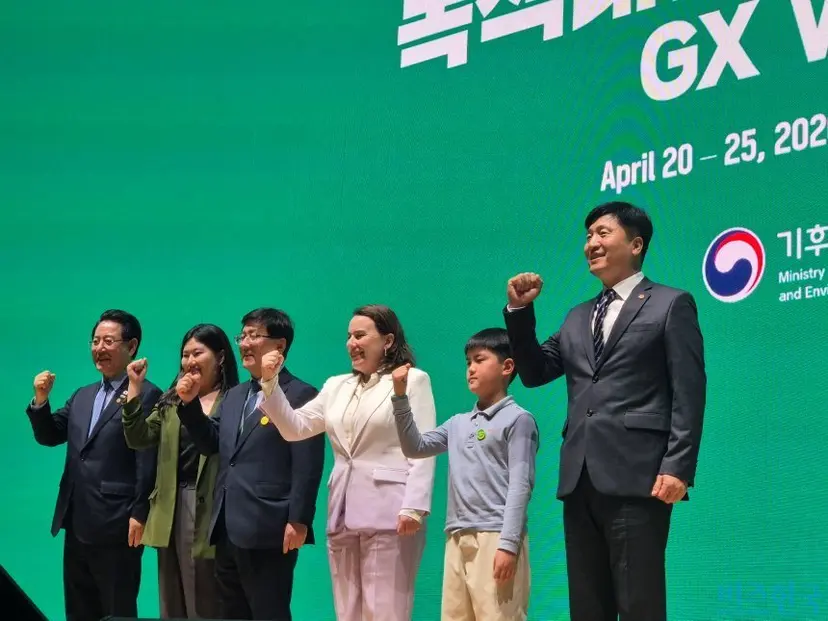
The UNFCCC Climate Week is a large-scale international event held annually in various regions around the world. Governments and companies gather to discuss climate response plans and strategies for implementing the Paris Agreement, and the results are presented as official agenda items for the next UNFCCC Conference of the Parties (COP). This Climate Week will bring together over 1,000 stakeholders from 198 member countries, international organizations, multinational corporations, and civil society groups to discuss practical ways to implement the Paris Agreement.
Held simultaneously with the UN Climate Week, the K-GX International Week is an event discussing the 'Green Transformation,' which combines carbon neutrality implementation with economic growth in sectors such as industry, transportation, and climate tech. The government intends to build an international consensus on the 'K-GX Promotion Strategy' scheduled for announcement this June and solidify the foundation for global cooperation through this event.
The most prominent issue at the K-GX International Week opening ceremony was the unexpected outbreak of the Middle East war and the resulting energy security crisis. Participants emphasized the necessity of an energy transition centered on renewable energy to address the energy security crisis.
Kim Sung-hwan, Minister of Climate, Energy and Environment, stated in his keynote speech, "South Korea, which relies on imports for 90% of its energy, is highly vulnerable to geopolitical conflicts, making energy a core element of security." He added, "By 2030, we will produce 100GW of new and renewable energy, accounting for more than 20% of our total energy mix."
Japan, which has an energy-intensive industrial structure similar to South Korea's, also emphasized the need for a green transition. Takehiko Matsuo, Vice Minister of Economy, Trade and Industry of Japan, said, "Japan is the first country in the world to issue GX transition bonds in 2024, issuing 1.6 trillion yen (approx. 16 trillion KRW) to fund industrial transformation," adding, "Since this month, we have transitioned the emissions trading system into a legally mandatory system."
The European Union (EU) emphasized that it has become more deeply aware of the importance of energy security in the aftermath of the Middle East war and the war in Ukraine. In particular, it stressed the importance of codifying carbon emission reduction targets into law. Ugo Astuto, EU Ambassador to South Korea, said, "The EU has announced the 'Fit for 55' legislative package to reduce carbon emissions by 55% by 2030," adding, "We want to end our dependence on Russian oil and gas."
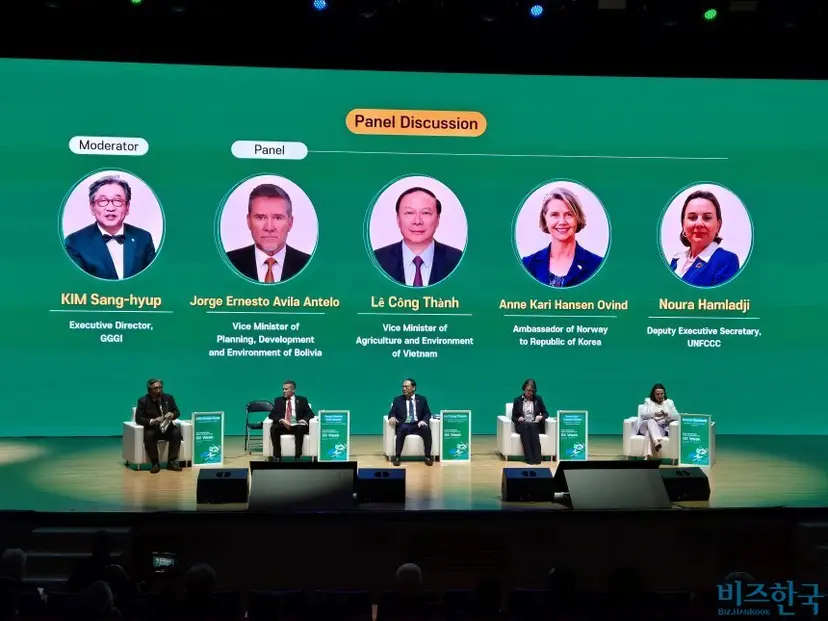
In the high-level panel discussion that followed the opening ceremony, the heads of climate and energy policy from various countries gathered to discuss the current status of energy transition in each nation and international cooperation measures.
Nura Hamraji, Deputy Executive Secretary of the UNFCCC, said, "To translate the negotiation results and discussions of the COP into action, we are reforming Climate Week and holding 'Implementation Forums'," and added, "From the perspective of climate justice, it is necessary to build a system that shares the benefits of the AI transition with everyone."
Anne Kari Hansen Ovin, Norwegian Ambassador to South Korea, said, "South Korea's 100GW renewable energy declaration is impressive, and Norway can share and cooperate on offshore wind power technology operated in the North Sea," and added, "Like the case of saving 3.5 million tons of carbon through climate action collaboration with Zambia, we are working closely with developing countries."
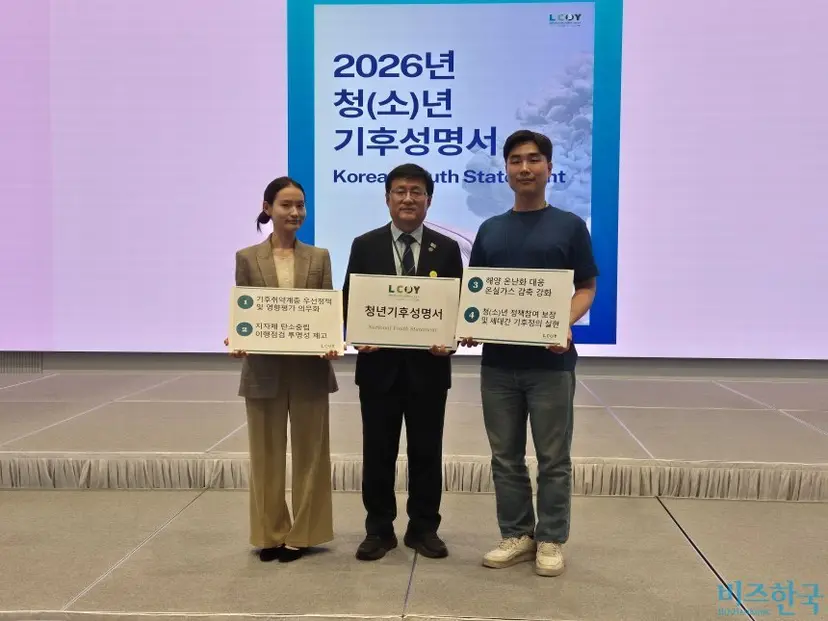
The '2026 Youth Climate Action Conference (LCOY KOREA)' was also held on this day to incorporate the voices of future generations into climate crisis response policies. LCOY is a youth climate change conference for each country officially approved by YOUNGO, the children and youth constituency of the UNFCCC.
At the conference, youth and adolescents from around the world discussed and organized their opinions on four core themes: Ocean, War and Climate Justice, Just Transition, and Energy and Industry. The results of this discussion were reflected in the National Youth Statement (NYS). The youth climate statement will be submitted to the UN Climate Change Conference (COP31) to be held in November.
The youth climate statement was also delivered to Climate Minister Kim Sung-hwan. In a Q&A session before the delivery, regarding the results of the National Assembly's Special Committee on Climate Crisis on reduction targets and pathways, Minister Kim said, "I fully empathize with it, and the result is in line with the Constitutional Court's ruling not to pass the burden to future generations." However, he added, "The fact that the 2035 NDC (Nationally Determined Contribution) was set as a range, not a single number, reflects the conflict between the aforementioned demands and the industrial sector's situation. Politics is alive, so let's work together to ensure South Korea moves forward based on the results of the public discussion."
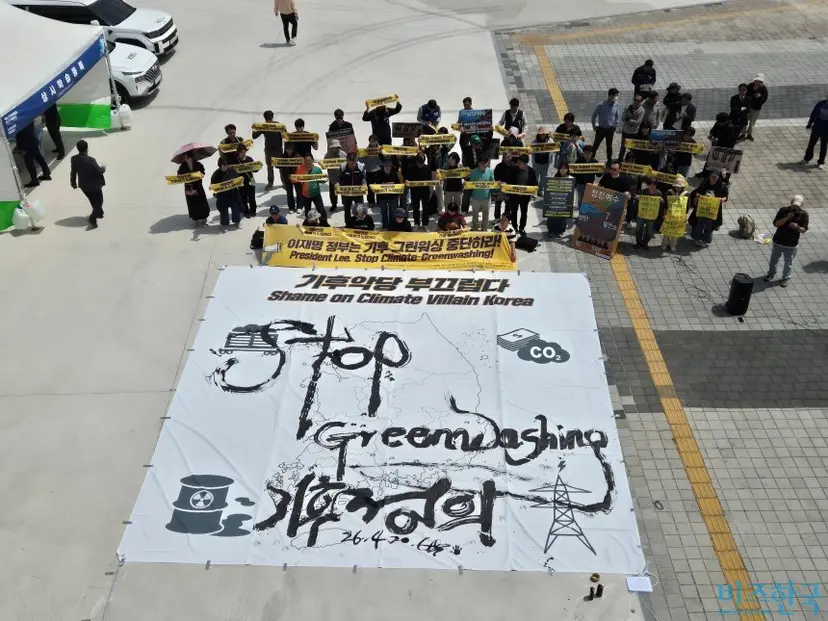
Meanwhile, civil society organizations, including the Climate Crisis Emergency Action, held a press conference at the Yeosu Expo to criticize the Lee Jae-myung administration's climate policy. The civic groups raised their voices, claiming that new nuclear power plant construction, delays in early coal phase-out, expansion of carbon markets, and the construction of transmission towers for the Yongin semiconductor cluster are against climate justice.
They particularly strongly condemned the policy to promote new nuclear power plants. Arguing that the logic of justifying nuclear power under the pretext of expanding the AI and semiconductor industries is concealing climate injustice, they demanded a transition centered on public renewable energy rather than market-centered ones. They also pointed out that there are no 'just transition' measures for workers who lose their jobs in the process of closing fossil fuel power plants. They emphasized that renewable energy power plants without non-regular workers are the core of a just transition.
Kim Young-gu, head of the Hadong branch of the Power HPS branch of the Korean Public Service and Transport Workers' Union, emphasized, "New renewable energy projects have degraded into a means of making money for large corporations and foreign capital, while workers at closing coal-fired power plants are being driven to fend for themselves," adding, "There must be an integrated employment succession that allows skilled workers to move intact to offshore wind farms and new and renewable energy sites."
![[UN Climate Week] Climate Crisis and Energy Security, the Common Answer is 'Renewable Energy'](https://s.bizhankook.com/attachments_thumb/2026/05/98275_thumb.webp)
![[UN Climate Week] Brainstorming Decarbonization Solutions for Steel and Petrochemicals for K-GX](https://s.bizhankook.com/attachments_thumb/2026/05/98368_thumb.webp)
![[UN Climate Week] Central Government Rushes, Local Governments Follow... A Long Road to Carbon Neutrality](https://s.bizhankook.com/attachments_thumb/2026/05/98379_thumb.webp)
![[UN Climate Week] Companies Ready for Decarbonization: "Calling for Transition Finance"](https://s.bizhankook.com/attachments_thumb/2026/05/98401_thumb.webp)
![[UN Climate Week] "Without Green Transition, Korean Steel Industry Faces Loss of Global Competitiveness"](https://s.bizhankook.com/attachments_thumb/2026/05/98382_thumb.webp)