

[비즈한국] The news and the market speak different languages. Watching the news these days is enough to terrify any investor. The brinkmanship between the U.S. and Iran over armistice negotiations, the fear of oil prices breaking $100, and the controversy over undermining the independence of the Federal Reserve. Every time you turn on a channel, new negative news pours out. But it’s strange. The market is rising.
It is an old adage that the market hits rock bottom when the news is at its worst, and peaks when the news is at its best. However, investors know this in their heads but act in the opposite way with their bodies. They sell in fear and buy in relief. That pattern is repeating itself this time as well.
If you calmly interpret the market's movements surrounding the current Iran situation, one uncomfortable truth emerges: the market has already reached a conclusion and begun to act. The U.S.-Iran negotiations haven't ended, and the Strait of Hormuz remains in a state of tension, yet the KOSPI rose 5.6% and the NASDAQ surged about 5.5% last week. This is not reckless optimism. It is a signal that smart money is betting on the scenario that 'the worst has passed,' factoring in a low probability of an extreme, all-out war. Of course, pre-empting the market bottom is dangerous. In the short term, additional turbulence may follow based on geopolitical noise and data releases. However, what we need to focus on is not the temporary fluctuation of prices, but the change in data flowing beneath the surface.
What investors fear most right now is a 'second 2022.' Many investors are projecting the nightmare of 2022—when the Russia-Ukraine war broke out, oil prices skyrocketed, and inflation hit a 40-year high—onto the current Iran situation.
But we must ask a critical question here. Is the current situation really the same as in 2022? The hyperinflation of 2022 was a 'quadruple-complex shock' caused by excess liquidity after the pandemic coupled with supply chain paralysis.
Things are different now. Fiscal policy is constrained, the labor market is already cooling, and supply chain disruptions are limited to energy. Ignoring these structural differences and replicating past fears is like trying to follow the same path with a different map.
The psychological red line the market is watching is $85 per barrel for West Texas Intermediate (WTI). Why is this line important? Looking at historical data, it is only when oil prices remain above this level for an extended period that the 'contamination effect' occurs, where rising energy costs transition into service inflation and inflation expectations.
In other words, if oil prices stabilize below $85, the central bank gains the justification to maintain a 'look-through' strategy, treating supply shocks as temporary phenomena. The reason for raising interest rates disappears.
The concerns about the Fed resuming tightening are also somewhat exaggerated. Currently, the Fed is holding rates steady at 3.75% while observing the situation. What matters is the direction. If oil prices gradually decline, U.S. core inflation (PCE) could fall significantly below the Fed's forecast (2.7%) in the fourth quarter of this year. Samsung Securities016360 projected that in this scenario, the core PCE could drop to the 2.4% level.
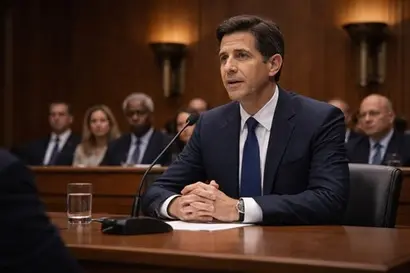
Added to this, the confirmation hearing for Fed Chair nominee Kevin Warsh, scheduled for the 21st, is a key variable. What the market detests most is not a specific policy leaning, but 'unpredictability.' Just by having the confirmation process conclude smoothly and resolving the political uncertainty surrounding the Fed, the market will likely shed its risk premium. Paradoxically, this could lead to a weaker dollar and a rebound in emerging market assets.
Most investors fear making a 'bad investment.' But there is another real danger in the current market. One is being defenseless against irrational variables. Wars do not run solely on economic logic. The 'tail risk' of a 'surprise action by an irrational actor' still exists. Therefore, rather than going all-in on optimism, one needs the strategic flexibility to keep a hedge in energy or commodities as one axis of the portfolio.
And then there is another, more fatal risk: the risk of missing the opportunity. While people are paralyzed by fear and waiting on the sidelines, the market has already moved to the next stage. Smart money doesn't invest by watching the news. It reads the underlying structure before it becomes news. We already know that the moment of greatest fear is often the best entry point. However, by the time we are convinced of that fact, the bus has usually already left. If you are standing at the bus stop right now, it is time to get on.