

[비즈한국] Recently, as ECM (Extracellular Matrix) skin boosters utilizing human-derived components gain popularity in the aesthetic and plastic surgery market, the issue is spilling over into the culture of body donation, which serves as the foundation for life-sharing and medical advancement. Currently, all human tissue used in commercially available skin boosters in Korea is imported from overseas. However, growing concerns that 'sublimely donated bodies could be used for commercial aesthetic products rather than for medical purposes' are raising anxiety among potential donors.
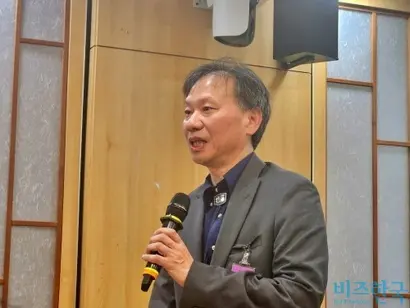
At the '15th K-Bio Health Forum' held at the National Assembly Member's Office Building in Yeouido on the 16th, Kim Chul-min, a professor at the Hospice and Palliative Care Center at Seoul St. Mary's Hospital, expressed the concerns of the field. Professor Kim stated, "The deceased and their families donate bodies for research and education purposes to save new lives and overcome incurable cancers or diseases," adding, "However, it is very distressing that the recent news that they could be used for commercial purposes could put the brakes on our society's body donation culture and lead to problems." He added, "I hope these controversies are settled quickly so that the noble value of donating a body can be sustained."
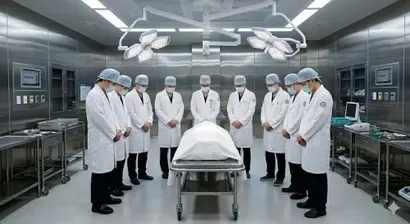
Because the human tissue used to produce ECM skin boosters is supplied by public tissue banks, bodies donated to medical schools do not flow into aesthetic purposes. Kim Hee-sun, head of the Blood and Organ Policy Division at the Ministry of Health and Welfare, also emphasized, "Body donation follows the Act on Dissection and Preservation of Dead Bodies, and donated bodies are used strictly for research and education purposes, and are completely unconnected to human tissue skin boosters."
In Korea, body donation began in 1967 for anatomy practice and other purposes, and the number of donations has exceeded 6,000 to date. Although donated bodies serve as the backbone of medical education, public fear and distrust remain significant.
According to a 2024 survey of 500 adults by the Korea National Institute for Bioethics Policy, key reasons for hesitating to donate a body included 'reluctance to damage the body due to Confucian culture,' 'distrust in post-mortem management,' and 'questions about the actual practical use in research.'
In a study on 'Understanding the Phenomenon of Donation Hesitation' published earlier this month on the international academic network ResearchGate, about 66% of respondents cited 'doubts about distribution and processing procedures after donation,' 'distrust in medical institutions,' and 'fear of bodily desecration' as factors for hesitating to donate their bodies. Experts point out that in a situation where it is difficult to trust the purposes for which donated bodies are used, the very controversy over human tissue being used for commercial product development rather than treatment could maximize the anxiety of potential donors and dampen their willingness to donate.
The controversial ECM skin boosters are currently being produced using human tissue imported entirely from overseas human tissue banks, including those in the United States. L&C Bio290650, HansBiomed042520, Humedix200670, and CG Bio are launching ECM skin booster products one after another, and the market is growing rapidly. While the demand for human tissue is that high, it cannot be met domestically.
Although donations are steadily increasing, last year's total human tissue donation record in Korea was only 169 cases. Moreover, under current law, human tissue donated in Korea cannot be used for profit-making purposes. According to the Act on Safety and Management of Human Tissue, donated tissues such as bone, skin, blood vessels, and nerves must be used for life-saving and medical treatments, such as skin reconstruction for burn patients or tissue transplantation for accident victims.
Jung Eun-joo, Vice President of the Health Consumer Alliance, pointed out, "There are ethical issues and social discrepancies arising from the use of donated bodies, organs, blood, and tissues," adding, "How to reasonably resolve the noble intentions of donors is a major task."