

[비즈한국] Busan Mayor Park Heong-joon has expressed his intention to make another bid for the World Expo. Previously, Busan pushed for the 2030 Expo but faced defeat, losing out to Riyadh, Saudi Arabia. It is expected that if Mayor Park succeeds in being re-elected, he will pursue the Expo bid once again. Some point out that before re-launching a bid, the causes of the previous failure must be thoroughly analyzed. However, there is also significant criticism that Mayor Park is trying to push forward blindly without properly reflecting on the reasons for the loss.
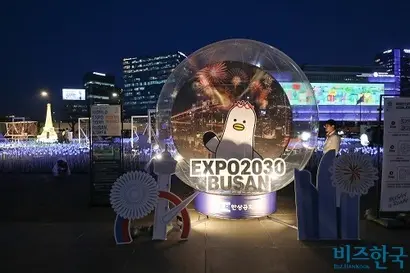
Mostly Evasive, Lacking Self-Reflection
In November last year, Busan Metropolitan City published the '2030 Busan World Expo Bid Activity White Paper.' The white paper contains an analysis of the entire process from 2014 to 2023, during which the government, Busan City, and the private sector worked together, as well as the achievements and reasons for failure during the Expo bidding process.
It identified several shortcomings: △institutional and operational limitations in the bidding negotiation system, △limitations in the implementation of the bidding strategy, △limited recovery of support due to late-stage negotiation activities compared to competitor nations, △weakened negotiation competitiveness due to rapid changes in the global environment, △decision-making structures that hindered timely and flexible responses, △insufficient preparation for the various strengths of competitor nations, and △insufficient strategic promotion and messaging to member states.
The white paper noted, "Due to negotiation activities that were later than our competitors, we faced difficulties in securing initial support, and it appears we failed to overcome the various strengths of the competitor nations. There is significant regret in that the strategies, resources, and follow-up management required to effectively attract interest and secure support from member states were ultimately insufficient."
Following the publication of the white paper, criticism from civil society continued. This was because, although it explained the reasons for the failure to secure the Expo, it lacked mention of where the accountability lay. Critics also argue that the content is mostly evasive rather than self-reflective.
Around 40 civic groups in the Busan region held a press conference last December, criticizing that "the disclosed 309-page white paper is merely a report designed to evade responsibility, filled with 'mental victories' that claim we 'fought well even though we lost.' The white paper is silent on the specific question of who distorted information and through what process, and where that responsibility lies."
The 2030 Expo Bid Committee was co-chaired by former Prime Minister Han Duck-soo and Korea Chamber of Commerce and Industry Chairman Chey Tae-won (SK034730 Group Chairman). The committee members included key government ministers and business figures. This means that key figures of the Yoon Suk-yeol administration spearheaded the Expo bid. Busan City also established the '2030 Expo Promotion Headquarters' to pursue the bid. The head of the headquarters was a Mr. Cho. However, it is reported that Mr. Cho has not faced any particular disadvantages and continues to work in a director-level position at Busan City.
Key committee members, including former Prime Minister Han Duck-soo, have already stepped down from public office. Even so, it is difficult to hold working-level staff accountable when they were not the decision-makers. However, the point that a spirit of reflection is necessary remains. Even if they re-bid for a future Expo, the chances of success increase only if the causes of failure and areas for improvement are identified. The white paper also acknowledges this and suggests remedial measures. It states, "It is necessary to fully analyze the implications and use them more flexibly and effectively when bidding for future World Expos or large-scale international government events."
The white paper highlighted the need for: △establishing a unified control tower with clear role division and utilizing professional personnel for effective negotiations, △enhancing the effectiveness of bidding strategies through clear targeting and user-centered promotion, as well as strengthening budget planning, execution, and follow-up management based on actual needs, △establishing substantive support systems to maximize the efficiency of bidding activities, △systematic negotiation strategies and integrated promotion, △preliminary strategy design through the activities of global experts, and △building expert networks.
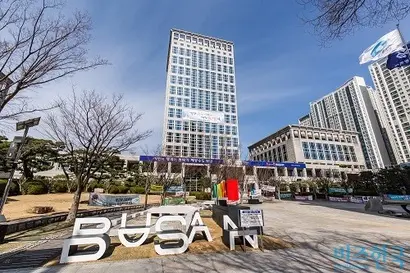
Mayor Park Heong-joon: "I Will Challenge Once More"
Busan Mayor Park Heong-joon recently mentioned a renewed push for the Expo bid. In an interview with Weekly Chosun on April 10, Mayor Park said, "When the PyeongChang Winter Olympics and Yeosu Expo failed in their first bids, they didn't receive this level of political attack," adding, "If given the chance to challenge one more time, it will give Busan wings to become a global city."
The problem is that critical public opinion against Mayor Park Heong-joon and Busan City is not subsiding. If domestic criticism continues, it will be difficult to expect full-scale support from the government. Rumors that surfaced during the previous Expo process also persist. There is talk that more money was spent on domestic media promotions than on the costs required for persuading overseas officials.
According to the white paper, a total of 114.048 billion KRW was spent on the Expo bid. Of this, 51.585 billion KRW was executed by the Bid Committee, and 62.463 billion KRW by Busan City. However, the specific details of how the budget was used have not been disclosed.
The 'Promotion Committee for Finding the Truth of the 2030 Expo that Deceived Busan Citizens' (Promotion Committee) requested disclosure of information regarding the Expo budget expenditures from Busan City, but claimed that they did not receive most of the information. In a press conference held in February this year, the committee criticized that "the answer that there are no records for a national project involving hundreds of billions of won in budget and hundreds of public officials is beyond irresponsible and reveals the reasons for the bidding failure."
Busan City stated again that this was a misunderstanding, but the specific usage of the budget has still not been disclosed. Without an explanation for this, Mayor Park Heong-joon's sincerity could also be doubted. Even if Mayor Park makes a future bid for the Expo, these points raised by civil society appear to be a wall he must overcome.
![[Can We Bid for the Expo Again?] Budget Expenditure Details Remain in the Dark… Is This Really Happening Again?](https://s.bizhankook.com/attachments_thumb/2026/05/98265_thumb.webp)
![[Can the Expo be Re-attempted?] Joint Hosting by Busan, Gyeongnam, and Jeonnam Depends on Local Elections](https://s.bizhankook.com/attachments_thumb/2026/05/98450_thumb.webp)
![[Can We Bid for the Expo Again?] North Port or Maekdo… Selecting a Venue Is the First Hurdle](https://s.bizhankook.com/attachments_thumb/2026/05/98432_thumb.webp)
![[Can Expo Bid Be Revived?] Vacant Yeosu Expo Site Serves as a Warning for Busan](https://s.bizhankook.com/attachments_thumb/2026/05/98669_thumb.webp)