

[비즈한국] Hanwha Solutions009830 has scaled back its large-scale capital increase plan. The company appears to have taken a step back following requests for amendments from financial authorities and backlash from shareholders. Along with reducing the capital increase by nearly 600 billion won, Hanwha Group Chairman Kim Seung-yeon has decided to engage in "unpaid management."
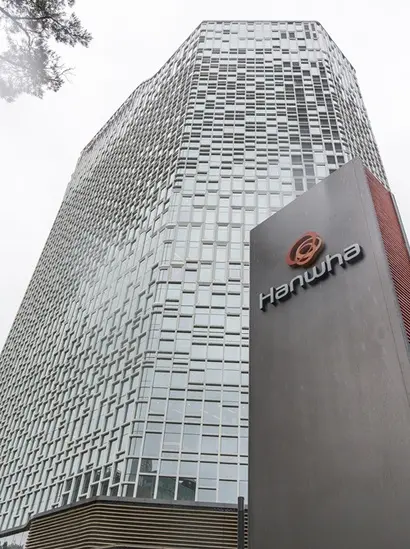
Capital increase reduced by 600 billion won; debt repayment cut, investment maintained
Hanwha Solutions announced on the 17th that it held a board meeting and approved an amendment to reduce the size of its capital increase from 2.4 trillion won to 1.8 trillion won. The decision came eight days after the Financial Supervisory Service demanded an amendment to the capital increase registration statement on the 9th.
The company decided to reduce the debt repayment portion by over 580 billion won, from 1.4899 trillion won to 906.7 billion won. Facility investment funds for new growth engines such as solar power will be maintained at the 907.7 billion won level. The funding gap caused by the reduction in the capital increase size will be covered within the year through self-rescue measures, such as the sale of investment assets, securitization of structured products, and raising capital-like funds using overseas subsidiaries.
The number of new shares to be issued was adjusted downward from 72 million to 56 million, and the issue price was lowered from 33,300 won to 32,400 won per share. Consequently, the allocation ratio for existing shareholders per share was also reduced from 0.3348 to 0.2604.
The company also presented goals for improving its financial structure. It plans to manage its debt-to-equity ratio at under 150% by 2026 and lower it to 110% or less by 2030. It also plans to maintain its shareholder return policy. The company stated it would use 10% of its net profit over the five years from 2026 to 2030 for dividends or stock buybacks and cancellations, and guaranteed a minimum dividend of 300 won per share.
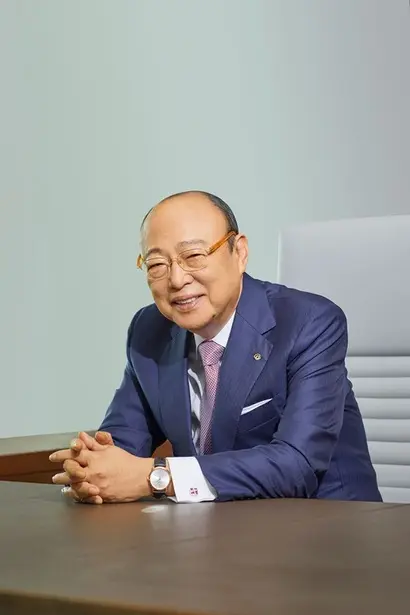
Hanwha Group Chairman Kim Seung-yeon is set to adopt unpaid management. Hanwha Solutions announced that Chairman Kim will participate in management starting in May without receiving a salary from Hanwha Solutions. This is intended to demonstrate the CEO's commitment to responsible management for the purposes of future technology investment and financial structure improvement. Chairman Kim plans to focus on providing advisory services for management strategy, leveraging his global solar market expansion efforts and his network in the U.S.
Concerns over shareholder trust and financial health remain
Hanwha Solutions' decision to raise capital sparked controversy immediately after its announcement. Since the plan was unveiled on March 26, two days after the general shareholders' meeting, critics pointed out that there was a lack of prior explanation regarding the major financing plan. Criticism poured in, questioning whether the decision was made without sufficient communication with shareholders.
The fact that a significant portion of the raised funds was to be used for debt repayment also emerged as a point of contention. Under the initial plan, over 60% of the total raised funds were slated for debt repayment. In this regard, the market evaluated the move as choosing a capital increase to alleviate financial burdens caused by poor business performance, effectively shifting that burden onto existing shareholders.
Since the capital increase plan became public, the stock price has shown high volatility due to concerns about shareholder value dilution. Backlash from shareholders also intensified. It is reported that retail shareholders have begun to unite around shareholder activism platforms and have stepped up their response, including submitting petitions to the Financial Supervisory Service.
The assessment is that shareholder burden has been somewhat alleviated with this reduction. As the scale of the increase and the number of new shares were reduced, the pressure for share dilution was also lowered to some extent. However, the prevailing view in the market is that it will not be easy to restore shareholder trust with this measure alone. Since the controversy surrounding the lack of communication and the capital usage structure surfaced during the announcement, there is a limit to how much simple adjustments to the size can reverse damaged trust.
It is further pointed out that the burden surrounding the financial structure has not been fully resolved. Because the structure of covering funding gaps through asset sales and external financing is being maintained, analysts suggest it is difficult to view this as a fundamental improvement in financial strength.
Hanwha Solutions announced that its management will hold a meeting on the 21st for domestic securities analysts to explain the expected effects of the capital increase, its self-rescue plan, and its growth investment strategy. Nam Jung-woon, CEO of the Chemicals Division, and Park Seung-duk, CEO of the Qcells Division, stated, "We regret that we did not sufficiently explain the scale and background of the capital increase to shareholders and the market at the initial stage," adding, "We will continue to engage in active communication going forward."