

[비즈한국] The global aviation industry faces an existential crisis as the Strait of Hormuz, a vital artery for international energy supply, remains blockaded due to conflict in the Middle East. Fatih Birol, Executive Director of the International Energy Agency (IEA), issued a sobering assessment that European jet fuel reserves are sufficient for only six weeks, characterizing the current situation as “the biggest energy crisis we have ever faced.” The fractures in the global supply chain have also triggered a price explosion in the South Korean market. International fuel surcharges for domestic airlines have reached the 33rd tier, the highest level, for the first time since the system's inception.
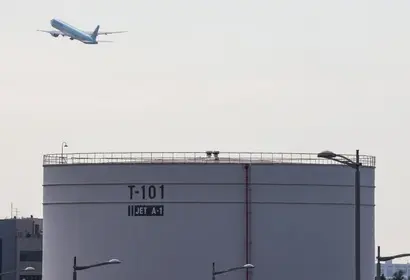
In an interview with AP News, Executive Director Birol described the current situation as a “Dire Strait,” warning that an “aviation crisis,” where planes cannot take off due to an acute physical shortage of fuel, could become a reality. Unlike gasoline or diesel, jet fuel is a specialized product for which it is difficult to find alternative supplies, making the consequences of supply chain collapse even more critical. Over 80 major energy facilities in the Persian Gulf region have been damaged due to the Iran conflict. Birol estimates it could take up to two years to restore them and return to previous production levels.
For South Korean consumers, this crisis is felt through the overwhelming figure of the “33rd tier fuel surcharge.” According to the aviation industry, international fuel surcharges applied to tickets issued from May 2026 have hit the 33rd tier—the ceiling—for the first time since the distance-proportional system was introduced in 2016. It represents a vertical jump of 15 tiers in just one month.
A fuel surcharge is an “additional fare” imposed by airlines to offset losses by reflecting the burden of rising fuel costs into ticket prices. Because fuel costs can account for up to 35% of an aircraft's operating expenses, this serves as a way to share the risk of oil price fluctuations with passengers.
South Korea first introduced this system during the 2003 oil price surge to prevent the financial deterioration of domestic airlines and maintain equity with foreign carriers, implementing it in earnest starting in 2005. It was subsequently expanded and reorganized in 2008 during another oil price spike, moving from 16 tiers to the current 33 tiers.
The reason the surcharge skyrocketed to the top tier in May is that the benchmark Singapore Jet Fuel (MOPS) price hit 511.21 cents per gallon, significantly exceeding the 470-cent threshold required for the 33rd tier. Under the current system, fuel surcharges are not applied when the price is below 150 cents per gallon, and they rise in 10-cent increments once the price exceeds 150 cents. The 33rd tier applies when the price reaches 470 cents or more per gallon, and during the calculation period from March 16 to April 15, the MOPS reached 511.21 cents per gallon ($214.71 per barrel, approximately 294,000 won).
While each airline is the final authority in setting its fuel surcharges, the standards must follow the “Fuel Surcharge Criteria Table” approved by the Ministry of Land, Infrastructure and Transport. The calculation method is as follows: in the middle of each month, the average spot price of Singapore jet fuel (MOPS) is checked for the one-month period from the 16th of the month before last to the 15th of the previous month. This average price is applied to the 33-tier table to determine the tier for the following month, which is then converted into fixed amounts per route group based on the Ministry’s distance-proportional guidelines. The resulting surcharge is applied from the 1st of the following month and announced two weeks in advance.
The Singapore Jet Fuel price is used as the benchmark because Singapore is the largest oil product trading market and logistics hub in the Asia-Pacific region. Most developed countries, including the US, Europe, and Japan, also peg their prices to domestic spot markets or nearby international product prices. Japan also previously used crude oil price benchmarks, but switched to an international product price-linked system in 2008 due to problems with discrepancies and supply-demand distortions.
Consumers burdened by higher surcharges naturally complain, questioning why current oil prices are reflected when the jet fuel might have been purchased earlier. Airlines engage in “oil hedging” to reduce the risk of future price fluctuations. This involves fixing the price of jet fuel for future use in advance through futures contracts or options. For example, if an airline has hedged at $80 per barrel, it can continue to receive fuel at $80 even if the market price soars to $200.
However, the fuel surcharge has nothing to do with an airline’s hedging success or its actual purchase price. The surcharge is calculated mechanically based solely on the MOPS, a “market indicator from the previous month.” This is because if surcharges were set based on each airline’s specific hedging ratio and purchase price, the pricing system would become extremely opaque. Furthermore, hedging is considered an area of airline management expertise, not a market price factor that should shift costs onto or provide benefits to consumers. Conversely, if an airline purchased fuel at a high price but market prices drop, the surcharge decreases, forcing the airline to absorb the loss.
As of 2022, South Korea is the world’s leading exporter of jet fuel, with a 29% market share, exporting over 10.8 million tons annually. Its competitiveness is so overwhelming that 70% of the jet fuel imported by the US is of South Korean origin. Why, then, do domestic airlines and consumers still pay costs that have risen according to international market rates?
This is due to the open economic system known as the “International Market Linkage System” adopted by Korea. Petroleum products are goods that can be freely imported and exported; if the government were to artificially suppress domestic supply prices, refiners would avoid domestic supply and prefer to export all volume overseas. Preventing this would require an export ban, which would not only violate free trade norms but also result in crippling the refining industry, a core pillar of the national economy.
Ultimately, such interference would lead to domestic supply instability and threaten energy security. Furthermore, while South Korea excels in refining technology, it relies 100% on imports for its crude oil feedstock, leaving no way to avoid the impact of rising costs. In the end, following international standard prices is the choice that prevents market distortion.
The good news is that the May fuel surcharge is highly likely to be the peak. There are signs that tensions in the Strait of Hormuz may be easing slightly. If international oil prices stabilize with a slight downward trend, fuel surcharges could decrease starting with tickets issued in June or July. However, if an actual physical supply shortage occurs as the IEA warns, leading to flight reductions, a “supply shock” could ensue where the base fare of air tickets skyrockets even if fuel surcharges decrease.