

[비즈한국] The financial industry has entered the massive tide of Artificial Intelligence Transformation (AX). Adopting AI in core areas of finance, such as data analysis, risk management, and asset management, has emerged not as a choice but as a survival imperative. Driven by the rapid advancement of generative AI technology and government policy support, financial companies are moving beyond digital transformation (DX) to reshape their entire business processes, organizational structures, and service strategies around AI. This report examines the flow of AI transformation in the financial sector and explores the direction of changes in the industry through strategies and application cases in each field.
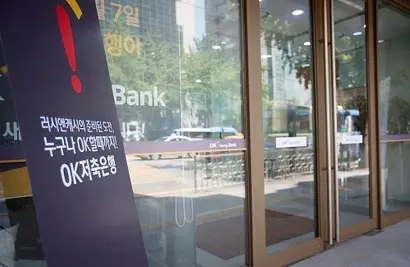
Savings banks are putting great effort into securing AI personnel. OK Savings Bank is currently hiring experienced professionals to handle AI planning and operations. According to the job posting, the AI planning role involves setting the direction for company-wide AX and leading projects, with responsibilities including formulating AI/digital strategies and managing AI projects. The AI operations role covers the construction of AI automation systems, development and operation of AI agents and Robotic Process Automation (RPA), and providing user support and training.
Acuon Savings Bank has also been hiring AI developers and team leads to work in its AI innovation team since February. The bank is looking for talent with experience in developing open-source Large Language Models (LLM) and Retrieval-Augmented Generation (RAG) architectures, or experience in utilizing agentic AI (AI systems that make decisions and perform tasks without human intervention).
SBI Savings Bank secured AI talent through its 2025 financial AICT (AI, Digital, IT, Data, DX) new hire open recruitment. They recruited in areas such as generative AI system development, banking/infrastructure system development and operation, data planning and analysis, and digital transformation planning, selecting candidates with IT backgrounds such as computer science and information security.
Savings banks pushing for AX are characterized by strong management commitment. OK Savings Bank is led by CEO Jung Gil-ho, who succeeded in his sixth consecutive term this year. To apply AI throughout the organization, OK Savings Bank added 'AX' to the names of its key headquarters—management, marketing, credit management, and consumer finance—in an organizational reshuffle earlier this year.
At SBI Savings Bank, which was incorporated as a subsidiary on the 6th after completing its merger with Kyobo Life Insurance, CEO Kim Moon-seok declared 2026 as the 'first year of field-oriented AI transformation' in his New Year's address. The goal is to improve business processes and achieve tangible results by introducing AI technology.
In January, SBI Savings Bank launched 'Sbi-bot', an in-house generative AI chatbot aimed at company-wide AI utilization and business innovation. Built on an open-source LLM, Sbi-bot is used for internal knowledge management—answering questions about company regulations and manuals—and general knowledge, providing support for financial terminology and coding. Additionally, the bank introduced 'AirPac Lab', an AI-based risk management solution, through PFC Technologies. This automates lending strategy formulation and credit risk management, including monitoring the occurrence of overdue payments and analyzing delinquent customers.

Welcome Savings Bank, which has entered the era of second-generation ownership following the transition to a co-CEO system with Park Jong-sung and Son Dae-hee, is also accelerating its AI transformation. CEO Son Dae-hee, who took office alongside Vice President Park Jong-sung, is the eldest son of Welcome Financial Group Chairman Son Jong-ju. Alongside 1983-born CEO Son, the bank appointed Shin Ik-sik, a professor of computer science at KAIST and an expert in AI agents and information security, as an outside director.
Following these appointments, Welcome Savings Bank set a goal to accelerate AX in retail finance and improve its business structure into an 'AI-Driven Bank'. On the 1st, it launched an AI banking service—the first in the savings bank industry—featuring functions such as an AI-based financial assistant, projected loan limits, and abnormal transaction detection. The bank also selected Lee Sedol, a special professor at UNIST who famously played against Google DeepMind's AlphaGo in 2016, as its advertising model.
Acuon Savings Bank announced on the 14th that it is conducting an advancement project to incorporate AI technology into its lending marketing sector. Its goals include increasing loan conversion rates by proposing customized financial services through AI-driven predictive modeling in personal sales, and establishing a system to automatically analyze business reports using LLMs in corporate sales. At the end of last year, the bank also upgraded its internal generative AI chatbot to improve work efficiency.
Meanwhile, the AX trend in the savings bank industry is showing signs of polarization. Top-tier companies with significant capital, such as OK and SBI, or those backed by groups like KB, Shinhan, Hana, and Woori Financial, are following the AX trend, while small and medium-sized firms struggling with poor performance and health are showing little movement. This suggests that the polarization in financial performance is also impacting the speed of AI adoption.
According to financial authorities, the savings bank industry's net profit in 2025 was 417.3 billion KRW, turning to a surplus compared to the previous year (-423.2 billion KRW); however, 67% of this profit came from OK Savings Bank and SBI Savings Bank. In 2025, OK Savings Bank recorded a net profit of 168.8 billion KRW, and SBI Savings Bank recorded 113.1 billion KRW. Conversely, firms like Pepper and Sangsangin Plus Savings Bank continue to operate at a loss, while those like Welcome and Korea Investment Savings Bank saw their net profits decline by 80–90% year-on-year, despite remaining in the black.
Savings banks outside the capital region are experiencing rising delinquency rates and poor performance simultaneously. While the average delinquency rate for savings banks in Seoul was 5.6% last year, it exceeded 7% for those in other regions. In terms of net profit, savings banks in the Daegu, Gyeongbuk, and Gangwon regions only reached 1.6 billion KRW, and those in the Daejeon and Chungcheong regions only reached 8.9 billion KRW. An industry official noted, "Industry polarization centered on capital strength is intensifying," adding, "Small and medium-sized firms are prioritizing financial health management and face regulatory hurdles, making it difficult for them to pursue new business projects."
![[Finance in AX] Banking rides the AI wave, undergoing a 'Great Transformation' in organization and services](https://s.bizhankook.com/attachments_thumb/2026/05/97686_thumb.webp)
![[Finance is in AX] Regional Financial Triad Focuses on 'Joint Response' for AI Transformation](https://s.bizhankook.com/attachments_thumb/2026/05/97897_thumb.webp)
![[Finance in AX] The Three Internet Banks: "I Am the AI Leading Bank"](https://s.bizhankook.com/attachments_thumb/2026/05/98148_thumb.webp)
![[Finance is in AX] The Top Tier is Busy, Others are Quiet… Savings Banks Face 'Polarization'](https://s.bizhankook.com/attachments_thumb/2026/05/98318_thumb.webp)
![[Finance in the Era of AX] Securities and Insurance Firms Head Toward 'AI Financial Companies,' the Race for AX Begins](https://s.bizhankook.com/attachments_thumb/2026/05/98430_thumb.webp)
![[Finance in AX] 'AI Agent Pay' Is Coming: Shopping and Paying on Behalf of Humans](https://s.bizhankook.com/attachments_thumb/2026/05/98556_thumb.webp)