

[비즈한국] Since Mega Factory Pharmacy opened in Seongnam, Gyeonggi-do, last June, warehouse-style pharmacies have been increasing rapidly across the country. By utilizing lower prices than local neighborhood pharmacies, they are attracting patients. Notably, a pharmacist who previously served as a pharmaceutical company CEO opened a warehouse-style pharmacy near Cheongnyangni Station in Dongdaemun-gu, Seoul, earlier this month, drawing attention.
Lee Cheon-soo, the head pharmacist of Le Medi Pharmacy, previously served as an executive at Daewoong Pharmaceutical069620 and Kwangdong Pharmaceutical009290, and as CEO of Schnell Life Sciences. In particular, he led the development of 'Vita500', which later became a national drink, while at Kwangdong Pharmaceutical, which was facing difficulties during the first financial crisis in 1999. What prompted this accomplished pharmacist to challenge the warehouse-style pharmacy model, which is currently embroiled in controversies over coexistence with existing pharmacies? Bizhankook met with him to hear the inside story.
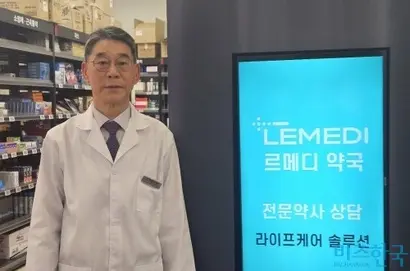
A 30-Year Dream of a Pharmaceutical CEO, Dreaming of a 'Korean Don Quijote'
Head Pharmacist Lee Cheon-soo's idea for a warehouse-style pharmacy dates back about 30 years. During his time at pharmaceutical companies, he was inspired by the advanced pharmacy models he encountered during overseas business trips. Representative Lee explained, "While I briefly left the pharmaceutical industry and was scouted by Hanwha000880 Group to handle distribution, I encountered advanced pharmacy models like Boots in Europe or Don Quijote in Japan," adding, "I tried to introduce this to Korea, but it was thwarted by the Pharmaceutical Affairs Act regulations at the time."
He confessed that his drive to challenge the warehouse-style pharmacy model was reignited after seeing the opening of Mega Factory Pharmacy last year. "I had almost forgotten about it, but after seeing a warehouse-style pharmacy open last year, I thought to myself, 'Someone was faster than me,' and I found it quite impressive."
However, Le Medi Pharmacy became a hot topic in the pharmacy community even before its launch. When it was reported that it would span an unprecedented 1,100 pyeong (approx. 3,636 sqm), controversies regarding the encroachment on local commercial districts arose. However, when Le Medi Pharmacy finally opened its doors earlier this month, it was only 60 pyeong (approx. 198 sqm) in size. The remaining space is occupied by H&B stores selling beauty products, health functional foods, and more.
Representative Lee explained that he had to reduce the pharmacy size due to regulations. He stated, "The initial plan was 500 pyeong for the pharmacy and 500 pyeong for the H&B store, but the permit process was delayed by 2-3 months because the structure of the 'common corridor' within the building conflicted with current pharmaceutical laws," adding, "Eventually, we had no choice but to reduce the pharmacy space to 60 pyeong in compliance with current regulations and open the rest as a completely separate space." He added, "We redesigned the flow and readjusted the space to enhance specialization while adhering to regulations, ensuring that we still meet the needs of consumers."
"Don't Feel Pressured by the Pharmacist": The Core is 'Half-Assistance' and Self-Service
Warehouse-style pharmacies are gaining attention because patients can purchase the medicine they want rather than what is recommended by a pharmacist, and the prices are lower than existing pharmacies. However, with the successive openings of warehouse-style pharmacies, the reality is that maintaining a competitive edge based on price alone is becoming difficult. So, what is Le Medi Pharmacy's unique competitive advantage?
Representative Lee highlighted 'customer experience'. He said, "We introduced a 'half-assistance' approach to our pharmacy, which is commonly seen in large H&B stores like Olive Young." This means professional pharmacists approach only when help is needed, reducing the consumer's psychological burden.
Currently, Le Medi Pharmacy handles about 2,000 types of over-the-counter medicines and pharmacy-exclusive health functional foods, with 11 pharmacists working on a rotational basis. Compared to other warehouse-style pharmacies that have 20 pharmacists in an 870-pyeong area, Le Medi is evaluated as having a more concentrated team of professionals in a compact space, thereby improving the quality of customer service.
In particular, they have established a system where, even if a customer picks up a simple cold medicine from a self-service shelf, they must receive thorough and meticulous medication counseling from a professional pharmacist before payment, in an effort to eliminate concerns about drug misuse. Representative Lee emphasized, "A space that does whatever the consumer wants—that is the true wellness platform we are pursuing."
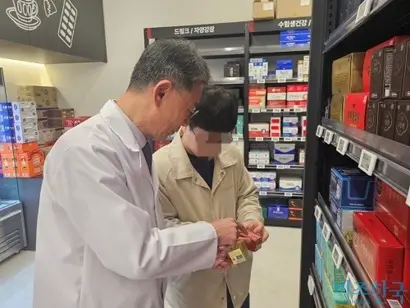
"No Reason to Fight with Local Pharmacies... I Hope Junior Pharmacists Take on Challenges"
While warehouse-style pharmacies are welcomed by consumers as 'affordable pharmacies,' they are the target of criticism and condemnation by local pharmacists. For existing pharmacies, they are suddenly facing price competition and threats to their survival.
However, Representative Lee drew a line regarding concerns that they are destroying the commercial district through 'predatory pricing (cutthroat competition).' He argued, "We are simply lowering the purchase cost through bulk buying (buying power) and minimizing distribution margins, passing the benefits to consumers; it is not cutthroat competition designed to kill off the surrounding area."
Representative Lee expressed regret over the conflict with neighborhood pharmacies, explaining that there is a fundamental difference in the roles of warehouse-style pharmacies and local ones. He explained, "I believe the emergence of warehouse-style pharmacies like large discount stores is a sign of the times," adding, "I believe local pharmacies have their own unique role in providing personalized prescription filling and health services to local residents."
He also left advice for junior pharmacists. Representative Lee expressed his anticipation, saying, "I hope capable young pharmacists will continue to challenge themselves, moving beyond simply being tied to prescriptions and starting new types of pharmacies," adding, "If they do, more innovative models than the current warehouse-style pharmacies might emerge."
A 'catfish' that shakes up the existing order inevitably causes conflict. However, Representative Lee's focus is not on the industry's turf wars but on the consumers visiting his store. All eyes are on whether Le Medi Pharmacy, though smaller in scale, can navigate through regulations and resistance to continue its successful operations.