

[비즈한국] As concerns rise that Liquefied Natural Gas (LNG) carriers could become so-called 'stranded assets' due to the energy transition driven by the climate crisis and potential oversupply, controversy is mounting over the financial support policies of the Export-Import Bank of Korea (Eximbank). While global research institutions warn of declining asset values and risk signals have been detected in actual financial indicators, the bank is considering large-scale new support, prompting calls for a review of its risk management system.
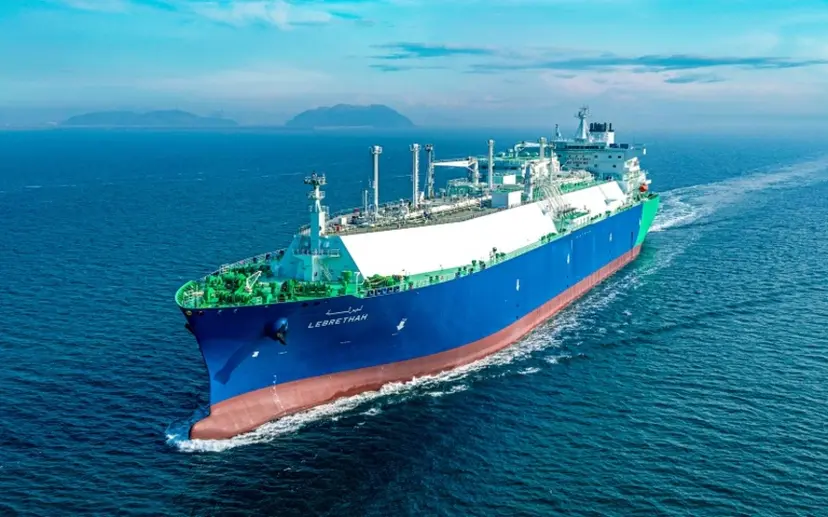
Oversupply Despite 'Stranded Asset' Concerns
A stranded asset refers to an asset that has lost its profitability due to a sharp drop in value caused by changes in market conditions or climate regulations. Solutions for Our Climate (SFOC), a non-profit organization established to respond to the climate crisis and energy transition, stated based on data submitted to the office of Rep. Cha Gyu-geun of the Rebuilding Korea Party, that four cases of breaches in financial covenants due to 'vessel value depreciation' were identified in the Eximbank's recent ship finance portfolio. This serves as an indicator that the market value of the vessels has fallen below a certain level relative to the loan balance. SFOC highlighted that all instances of covenant breaches in the Eximbank's ship finance over the past five years involved LNG carriers.
For these covenant breaches, the Eximbank granted 'waivers,' temporarily deferring debt repayment obligations. The bank explained, "This was a temporary situation during the early stages of operation, and all cases have since been resolved." It maintains that principals and interest are being repaid normally and that there is sufficient collateral value, leaving no reason to classify them as non-performing assets.
However, institutions such as the University College London (UCL) Energy Institute and the Kuehne Center for Sustainable Trade and Logistics have warned that if a 1.5°C carbon-neutral scenario becomes reality, more than approximately $48 billion (about 72 trillion won) in LNG vessel investments could be written off by 2035. Observations suggest that this decline in value will not be a temporary phenomenon.
Currently, a massive number of new ships—estimated at 285 to 321 vessels (about 39% of the total fleet currently in operation)—are under construction or have been ordered, which is analyzed to far exceed the market's absorption capacity. Due to the nature of LNG carriers, if new orders continue until 2030, 51% of all LNG carriers—over half the fleet—risk becoming stranded assets by 2035 as they cease operations.
Even assuming a conservative scenario where global warming reaches 2.5°C, it is projected that up to 22% of vessels will face stranded asset risks by 2035 due to structural oversupply. Although the average lifespan of an LNG carrier is about 38 years, the current median age is only 5 years, making it highly likely that oversupply will persist well beyond 2050.
Furthermore, because these vessels are difficult to convert for other types of cargo, they are relatively more exposed to the risk of becoming stranded assets compared to other ship types. Crude oil, petroleum product, and LPG carriers have the option to be converted to transport other cargoes such as biofuels, ammonia, methanol, or chemicals even if fossil fuel demand declines. In contrast, LNG carriers are highly rigid due to cargo containment insulation systems designed to maintain cryogenic temperatures of minus 162°C and re-liquefaction facilities for managing boil-off gas, making conversion difficult.
19% of 'Speculative Orders' Without Charters… Risk Management Under Fire
Critics also argue that the Eximbank's financial support method is biased toward order volume rather than actual demand for ships. Data shows that out of 120 LNG carrier support cases, 23 (19%) were 'speculative orders' approved without confirmed charterers to operate the vessels. Charter contracts are key to guaranteeing the profitability of ship operations; financing large sums without such contracts can lead directly to losses for financial institutions if market conditions deteriorate. Additionally, since the bulk of public funding for LNG carriers is concentrated on European shipping companies from countries like Greece, the UK, and Norway, there is a structural concern that while commercial profits go to overseas firms, the stranded asset risk is borne by public finance.
In particular, despite rising market uncertainties—such as major gas-supplying nations like QatarEnergy declaring force majeure due to geopolitical risks—it is reported that the Eximbank is reviewing approximately 710 billion won in new financial support for LNG ships this month.
Regarding this, the Eximbank stated, "We provide financing on the condition of long-term charter agreements and are faithfully applying risk management standards such as Loan-to-Value (LTV) ratios." It further clarified, "Overseas shipping companies provide payment guarantees to bear the risk," adding, "Since our ship finance is provided only for ships built in Korea, it has created immense economic benefits for the overall domestic shipbuilding industry, including foreign currency earnings and job creation."
However, voices are emerging that the Eximbank's ship finance should go beyond evaluating individual loans to considering, as a public financial institution, the overall risk management resulting from industrial structural changes to address the climate crisis, as well as the external impacts on the climate. Critics point out that the conditional contracts, collateral, and payment guarantees presented by the bank are all ex-post repayment security measures taken after the loan execution, not proactive risk management tools. They argue that a pre-evaluation system for stranded assets and geopolitical risks is necessary at the decision-making stage of financial support.
Shin Eun-bi, a researcher at SFOC, stated, "If it is public finance, support should be directed more toward industrial transition rather than extending the lifespan of sunset industries."
Controversy Over Environmental Due Diligence Loopholes Due to 'Mobile Asset' Classification
There are also claims that environmental and social impact assessments were omitted during the financial support process. SFOC filed an objection with the OECD National Contact Point (NCP) in Korea, alleging that the Eximbank, the Korea Development Bank (KDB), and the Korea Trade Insurance Corporation (K-SURE) evaded due diligence obligations under the OECD Common Approaches on Environmental and Social Due Diligence when providing financial support for LNG ships. The Eximbank excluded them from detailed environmental impact assessments, citing that ships are 'mobile assets' rather than facilities fixed in a specific location.
However, LNG ships emit powerful greenhouse gases due to 'methane slip,' a phenomenon where unburned methane is released into the air during operation. Studies are also consistently emerging about their impact on marine ecosystems through underwater noise and ballast water discharge. In fact, as of 2021, 82% of methane emissions in the shipping sector came from LNG ships. As reports of damage to marine protected areas near major shipping routes, such as those in the Philippines and Mexico, have surfaced, demands for establishing environmental and human rights due diligence systems that meet international standards are increasing.
Ha Jung-min, an attorney at SFOC, said, "Public finance has not systematically conducted environmental and social impact assessments and has failed to fulfill its duties to inspect, set conditions, and establish relief procedures to prevent and mitigate human rights infringements that projects may cause." She added, "Climate crisis response, biodiversity conservation, respect for human rights, and transparent information disclosure are not a matter of choice but a minimum standard agreed upon by the international community; we urge public financial institutions to transition to finance that meets these standards.".