

[비즈한국] Corporate board compositions are changing. There is a clear trend of replacing the 'rubber stamp' outside directors with practical experts. The evolved lineup of outside directors has become a clear indicator of a company’s future direction and the crises it faces. Biz Hankook examines the changes in the outside director lineups of major companies and provides an in-depth analysis of their future blueprints and underlying intentions.
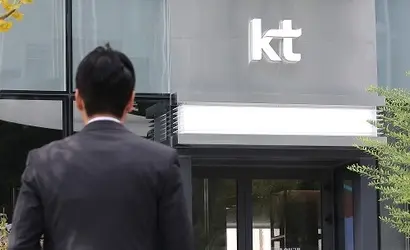
4 Remain, 3 Replaced, 7-Member System Maintained
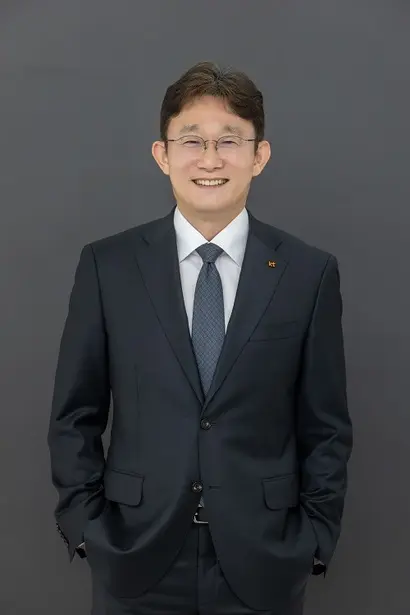
On March 31, KT held a general shareholders' meeting at the KT R&D Center in Seocho-gu, Seoul, and appointed Park Yoon-young as the new CEO. CEO Park is a 'true-blue KT man' who has been with the company for over 30 years. Since joining Korea Telecom (the predecessor of KT) in 1992, he has served as head of the KT Convergence Research Institute, head of the Convergence Technology Institute's Future Business Development Group, and head of the Enterprise Division.
At the meeting, agenda items including the appointment of the CEO and internal/outside directors were presented and passed as originally proposed. KT appointed three new outside directors: Kim Young-han, a professor of Electronic Engineering at Soongsil University; Kwon Myung-sook, former CEO of Intel Korea; and Seo Jin-seok, former CEO of OCI Holdings456040.
Professor Kim Young-han is a telecommunications technology expert serving as an advisor to the 6G Forum and head of the Intelligent 6G Core Network Research Center. He has built a long research career in the next-generation network field, having also served as president of the Korea Institute of Communications and Information Sciences. Director Kwon Myung-sook, as the former CEO of Intel Korea, possesses experience overseeing sales and marketing at a global IT company. Director Seo Jin-seok is currently serving as a non-executive advisor to OCI Holdings and Bukwang Pharmaceutical003000.
Meanwhile, existing outside directors Choi Yang-hee and Ahn Young-kyun were not reappointed, and Yoon Jong-soo voluntarily resigned. Directors Kwak Woo-young, Kim Sung-chul, Lee Seung-hoon, and Kim Yong-heon remain. As a result, the KT board of outside directors maintains its 7-member system.
This board reorganization is aligned with the 'AX (AI Transformation) Platform Company' strategy proposed by CEO Park. Park’s AX strategy differs in direction from the 'AICT Company' vision put forth by former CEO Kim Young-sub. While the former CEO focused on a complete transformation into an AI technology firm beyond the framework of a traditional telecommunications operator, CEO Park is placing weight on leaping into a platform company that creates revenue by combining AI on top of the existing business foundation. The reflection of telecommunications technology and global IT expertise in the reshuffle conducted concurrently with the CEO appointment aligns with this strategy.
Will the Controversies of 'Parachuted' Appointments and Cartels End?
The reshuffle is also seen as a move to address controversies regarding board operations. The KT board has consistently faced questions regarding the fairness of outside director appointments and the independence of the board due to recurring issues like 'parachuted' appointments and influence-peddling cartels.
Last year, the board amended Article 8 of its regulations to require prior review and approval when the CEO appoints division-level executives. However, this faced criticism for infringing on the CEO's personnel authority, and it is reported that the regulation was eventually restored to its original state. Similar attempts continued afterward. Just before this shareholders' meeting, the board attempted to newly establish a regulation that would allow it to intervene in executive appointments during CEO transitions, but the motion was rejected.
There have also been controversies surrounding individual outside directors. Former outside director Cho Seung-ah was found to have concurrently served as an outside director for Hyundai Steel004020 during her tenure at KT, raising questions about her eligibility. Outside director Lee Seung-hoon has been embroiled in allegations regarding personnel solicitation and overseas investment. The KT Labor Union has filed criminal charges against him.
Problems surrounding the appointment structure of outside directors also persisted. The practice of outside directors being reappointed through mutual recommendations and self-evaluations has led to recurring 'self-reappointment' controversies. In particular, Kim Yong-heon, the board chairman, was reappointed under this structure, which prompted questions about the board's independence and fairness.
The board reorganization is read as a move to clear up the repeated board risks with the launch of the Park regime. There is an apparent intent to clearly define management leadership while separating roles by restructuring outside directors into external figures from the technology, global, and management fields.
However, it remains uncertain whether this reorganization will immediately lead to the resolution of risks. Although three new outside directors were appointed, the broader framework of the existing board remains. In particular, it is pointed out that the actual scope of change may be limited, as directors who supported the regulatory amendment that sparked the controversy over management intervention remain on the board.
The industry is focusing on how much board risk will be controlled under the Park regime. If controversies over board intervention recur, constraints on the speed of strategy execution and investment decision-making are inevitable, making the clear demarcation of responsibilities between management and the board a key future task.
CEO Park began his duties on the day of the regular shareholders' meeting by visiting the Gwacheon Network and Security Control Center without a separate inauguration event. He is focusing on reorganizing the organization by carrying out affiliate personnel changes while simultaneously continuing site-centered management moves. In his inaugural address, CEO Park stated, "I will show you through speed and execution rather than words and formalities."
![[Outside Director Lineup] Lotte Shopping Fills Board with AI Experts: A Signal of Strategic Transformation?](https://s.bizhankook.com/attachments_thumb/2026/05/98033_thumb.webp)
![[Outside Director Lineup] Aekyung Industrial, Acquired by Taekwang Group, Makes a Fresh Start with Tax, Accounting, and Marketing Professors](https://s.bizhankook.com/attachments_thumb/2026/05/98108_thumb.webp)
![[Outside Director Lineup] KT Board Reshuffle with the 'Park Yoon-young Regime': 'Half a Success'](https://s.bizhankook.com/attachments_thumb/2026/05/98228_thumb.webp)