

[비즈한국] It has been several years since the so-called 'no-sign store' craze began—a trend where the absence of a signboard is utilized as a marketing tactic itself. What was once thought to be a passing fad has proven to be a lasting phenomenon. However, after investigating various alleys across Seoul, I found that the motivations behind these signless shops vary drastically depending on the location and generation. While some businesses leverage this as a sophisticated marketing strategy, for old-established shops in aging alleys, it serves as a survival mechanism to cope with platform fees and advertising costs.
No Signboard, But Active SNS Promotion
No-sign stores in areas frequently visited by the 2030 generation, such as Seongsu-dong, Konkuk University Station, and Seoul National University Station, are still thriving. The shops I visited did not have even a common projecting sign at the entrance. When asked why they operate without a sign, staff members were tight-lipped, saying they were "not sure" or that it "hasn't been put up yet."
Paradoxically, the silence on-site becomes their most active promotional tool. While they avoid giving answers at the doorstep, they are more active than anyone else on Instagram. They consistently post short-form videos and share aesthetic photos, constantly asserting their presence by exposing their location and ambiance.
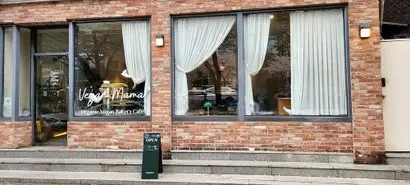
Mr. C, who operates a beverage shop in Seongsu-dong, said, "From the start, I calculated that the very fact of having no sign would create buzz." He explained, "Once word-of-mouth spreads on social media about the 'fun of seeking out' a place, customers flow in without needing to spend money on signboard advertising." In fact, his shop surpassed 10,000 Instagram followers in the early stages of opening without any separate advertising.
The core of this strategy is the 'experience of scarcity.' It is a method that induces consumption by instilling the perception of being a 'place not just anyone can find' in an era of information overload. The main customers who endure the inconvenience to visit these places are in their 20s and 30s. A visitor in their 20s I met on-site said, "I came here after seeing it on Instagram. If there was a long line in front of a no-sign store, I'd just get in line behind them."
However, this strategy is not effective for everyone. Mr. D, who operated a clothing boutique near Konkuk University Station but recently closed it, noted, "It created buzz at first, but as time passed, new customer inflow dropped significantly." His diagnosis was that "having no sign is ultimately just a device to attract the initial influx, not a power that drives return visits." The stimulation of scarcity loses its effect the moment the consumer becomes accustomed to it.
Aiming for Cost Reduction and Avoiding Excessive Delivery App Solicitation
The situation for no-sign shops I encountered in older alleys in Seoul's Gangseo-gu, Jongno-gu, and Mapo-gu was quite different. For the owners here, having no sign was not a matter of style, but practicality.
Mr. A, who runs a burger shop in Gangseo-gu, firmly pointed to 'cost reduction' as the reason for having no sign. When he was changing his business type and tried to get a new sign, he said he was quoted over 3 million won for design, production, and installation. "It's a neighborhood business; the people who need to know, already know. There was no reason to spend that much money," he explained. In fact, when I asked five local residents if they knew the shop, four of them pointed out the exact location even without a sign. Decades of built-up trust were acting in place of a sign.
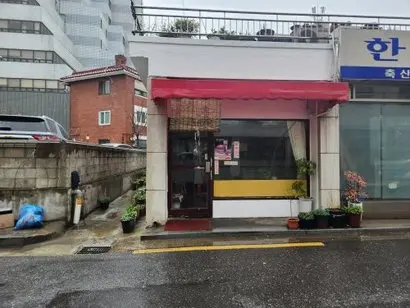
Ms. B, who runs a gimbap shop alone in Jongno-gu, took down a perfectly functional sign four years ago. The reason was delivery apps. "Because I had a sign, delivery platform companies would call to solicit registration several times a day. Once I removed the sign entirely, it became quiet." She calculated the delivery fee structure for me. If a menu item priced at 6,000 won is sold through a delivery app, about 2,000 won is deducted for platform fees and delivery agency costs. "There's nothing left. It's better to just do as much as I can handle alone," she concluded. Currently, this shop doesn't even accept takeout orders after lunch hours.
The situation was similar at a noodle shop in Mapo-gu. Mr. E, who has stayed in the same spot for 15 years, expressed it as, "Putting up a sign means being exposed to the outside." He said, "Whether it's delivery apps, advertising agencies, or sales calls for replacing card terminals, if you have a sign, they all come looking for you. I took it down because I wanted to run my business quietly." All three owners of the old-established shops shared a clear standard of "running the business only within the range I can handle."
These three local shops all maintained 'fair prices.' Ranging from 5,000 to 8,000 won per meal, they were notably cheaper than the current average lunch price in Seoul. They essentially filled the void left by saving on signboard maintenance and platform fees with price competitiveness. The low prices acted as the most powerful element in creating regulars enough to sustain the shop.
On the other hand, the average transaction amount at marketing-oriented no-sign stores was quite different from the local shops. A single drink at a store in Seongsu-dong cost over 10,000 won. It is a structure where a price is placed on an 'experience.' The inconvenience of having no sign reinforces the sense of having 'found a special place,' and that sense leads to consumption.
The identical outward appearance of a 'no-sign store' holds two completely different logics. One is a strategy of reading urban consumption trends and selling the 'experience of a space,' while the other is a way to survive day by day by blocking advertising costs, platform fees, and excessive orders. Both types of shops have no signs, but what their silence says is entirely different. For the former, the lack of a sign is a choice; for the latter, it is survival.