

[비즈한국] Negotiations between the United States and Iran to end the war concluded on the 12th (local time). Delegations from the U.S. and Iran met in Islamabad, Pakistan, on the 11th to begin talks for a ceasefire. This comes 43 days after the start of the war. While the Iranian government reported that some disagreements remain, it stated that negotiations would continue; however, U.S. Vice President J.D. Vance announced he was returning to the U.S. without reaching an agreement.
The United States and Iran agreed to a two-week ceasefire on April 8. Subsequently, the U.S. and Iran began face-to-face negotiations in Islamabad, Pakistan. The U.S. dispatched a delegation led by Vice President J.D. Vance, while Iran was represented by Mohammad Bagher Ghalibaf, Speaker of the Iranian Parliament.
The Iranian government stated via X (formerly Twitter) that “both sides’ working-level teams are currently exchanging technical documents,” adding, “although some differences remain, we will continue the negotiations.” However, Vice President J.D. Vance said at a press conference in Islamabad, “We have not reached an agreement with Iran,” and added, “The negotiating team will be returning to the United States.”
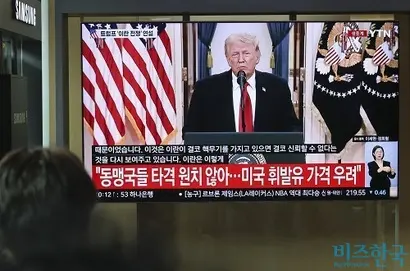
Meanwhile, U.S. President Donald Trump stated on Truth Social on the 11th, “As everyone knows, Iran is suffering a major defeat,” and added, “We are beginning cleanup operations in the Strait of Hormuz for the benefit of nations around the world, including China, Japan, South Korea, France, and Germany.”
With Vice President J.D. Vance announcing his return to the U.S., it is unclear when negotiations will resume. The U.S. is demanding the restriction of nuclear enrichment programs and the normalization of the Strait of Hormuz as conditions for ending the war. It is reported that Iran is demanding compensation for war damages and the release of frozen overseas assets.