

[비즈한국] The lunch hour in Seoul's major business districts, Gangnam and Yeouido, is changing. As office workers flock to nap cafes, book cafes, and unmanned sleep facilities instead of restaurants, the lunch hour is shifting from a time for a meal to a time prioritized for 20 to 30 minutes of recovery.
Staff at sleep spaces in Gangnam and Yeouido visited on the 9th all said, "There are no spots left during lunch hour." The demand from office workers looking to catch some shut-eye during their short lunch break was clearly evident throughout these office-dense areas. Some locations began filling up with reservations as early as the morning, making it difficult to find an empty spot by lunchtime.
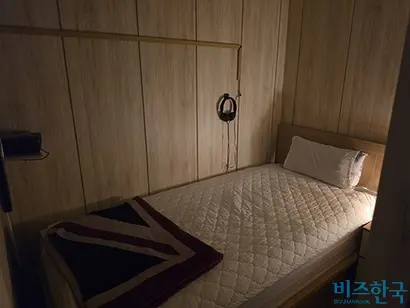
One sleep cafe near Gangnam Station is known among office workers as a "nap hotspot." The venue features 9 nap rooms and a lounge. It is equipped with rest-aiding devices such as massage chairs and noise-canceling headsets. An official there stated, "Most of our users are nearby office workers. During lunch, the nap rooms are almost always full, and when they are, many people rest in the lounge instead."
The situation was similar at a nearby unmanned sleep facility. When visited around 11 a.m., there were already rooms reserved for the lunch hour. Online reviews even included posts saying, "I use this more than twice a week."
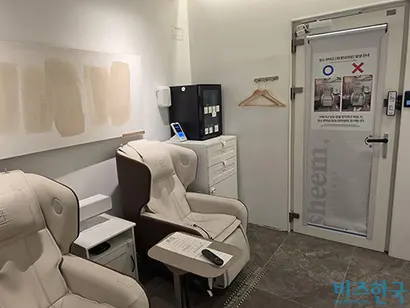
This unmanned sleep facility operates as an independent, reservation-based space targeting office demand. It has four locations centered in areas with high foot traffic, and the Gangnam branch visited that day consisted of three private rooms. Each room contained two massage chairs and was stocked with supplies to aid rest, such as eye masks and blankets. A notice inside the room informed users that a cleaning penalty of up to 500,000 won could be charged if they left the room in a mess with trash or discarded blankets. Laying on the massage chair myself, I found it relatively comfortable, making it easy to lie down and rest.
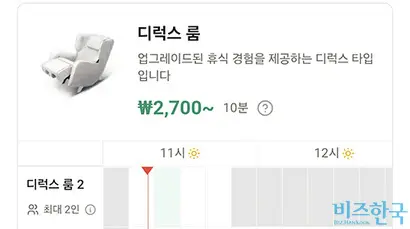
Users can book a spot for at least 30 minutes via the official website or a reservation platform and enter the room using a link received via KakaoTalk. Once inside, they can adjust the lighting and blinds through the same link, allowing them to change the room environment without even getting up. However, the method of opening the door via a link seemed difficult for first-time users to grasp immediately. Since there is no on-site staff, I actually saw a user wandering outside for a while that day, unable to figure out how to open the door.
There are also cases where sleep spaces have been integrated into workplaces. An overseas education agency in Yeoksam-dong, Gangnam-gu, operates a dedicated nap space for its staff and clients. This indicates that the demand for naps, which began in office commercial districts, is now spreading inside the workplace.
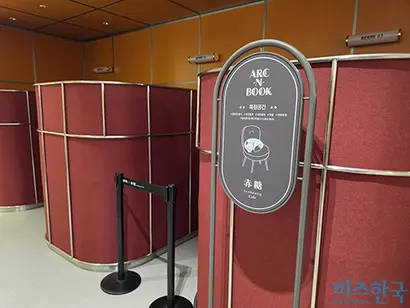
Yeouido was no different. A book cafe near Yeouido Station had a separate area for power naps, which was already full by 12 p.m. that day. A staff member at the facility said, "The nap room is always full on weekdays. It starts filling up as early as 10 a.m."
Chronic sleep deprivation is cited as the reason office workers seek out nap cafes. Koreans are known to have relatively short average sleep times. In fact, according to the '2026 Korea Sleep Report' by sleep-tech company Asleep, the total sleep time for Koreans is 5 hours and 25 minutes, significantly lower than the recommended 7–9 hours. Analysts suggest that the demand for using the lunch hour to sustain oneself through sleep has grown as people come to work sleep-deprived, compounded by long commutes and frequent overtime.
Office workers have their own reasons for seeking sleep spaces outside the office. A worker near Gangnam Station, referred to as A, said, "I'm a new hire, so the stress of wanting to do well makes it hard to sleep, which is why I started looking for places to rest during lunch." A worker met in Yeouido, B, said, "Between the long commute and frequent overtime, I choose a nap over a meal at lunchtime. It's awkward to sleep at the office, so I end up coming outside."
The choice of "sleep over food" illustrates the changing lifestyle structure of office workers. It means an increasing number of people are spending their lunch hours by skipping meals or having a quick snack to catch some rest. Statistics Korea's 2024 Time Use Survey also showed that over the past five years, sleep time has decreased and the proportion of people eating lunch on weekdays has also declined. The lunch hour is no longer a time for a leisurely meal, but is transforming into a time of recovery to endure the afternoon's work.