

[비즈한국] The government is pushing for the introduction of 'flexible operation'—the output adjustment of nuclear power plants—to resolve instability in the power grid caused by the increasing share of renewable energy. The intention is to temporarily reduce nuclear output during daytime hours when solar and wind power generation are high, thereby preventing power supply surpluses. However, political circles and civil society have raised concerns that flexible operation could compromise the safety of nuclear plants and lead to deteriorating economic feasibility due to lower utilization rates. They are calling for a complete re-examination of plans to construct new nuclear power plants based on this premise.
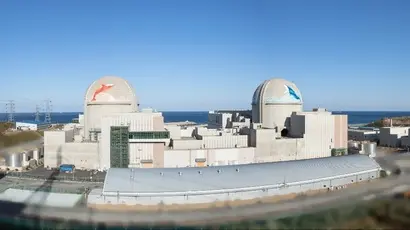
At the 'Second Policy Debate on a Desirable Energy Mix' held on January 7, flexible operation technology was discussed intensively as a way to mitigate the rigidity of nuclear power. The government explained that as renewable energy capacity grows, output restriction is inevitable to prevent the collapse of the power grid, which relies on nuclear power as a baseload source.
Korea Hydro & Nuclear Power (KHNP) presented a technical roadmap. The goal is to perform load-following operations, reducing nuclear output by up to 50% more than 100 times per year at a rate of 10%p per hour. To this end, the government is investing over 50 billion won in research and development to improve load-following technology and control systems. The government anticipates that if nuclear power achieves flexibility, a stable energy mix centered on carbon-free sources will be possible.
KHNP aims to prove the feasibility of flexible operation by citing precedents in France and Germany. Due to France's reliance on nuclear power for over 70% of its total generation, the country has utilized load-following technology since the design phase. Shin Ho-cheol, head of the KHNP Central Research Institute, explained at the debate, "Germany and France, which operate pressurized water reactors similar to those in Korea, have been performing flexible nuclear operations for decades," adding, "It is technically fully implementable in Korean nuclear plants as well."
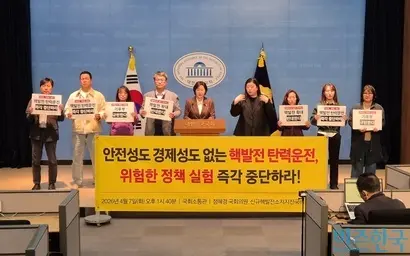
In response, political figures and civic groups raised issues. On April 7, Representative Jung Hye-kyung of the Progressive Party and the 'National Emergency Action to Stop New Nuclear Power Plants' held a press conference at the National Assembly, focusing on the safety issues of flexible operation. They reminded the public that nuclear power plants are baseload sources designed to maintain constant output, warning that frequent output fluctuations could impair the physical stability inside the reactor.
The most prominent technical concern is the 'Xenon Oscillation' phenomenon. Xenon, generated as a byproduct of nuclear fission within the reactor, has the property of strongly absorbing neutrons. Rapidly changing power output causes the concentration of xenon to be unevenly distributed, which increases the difficulty of reactor control and can cause localized overpower, leading to potential nuclear fuel damage.
Lee Heon-seok, a policy committee member of Energy Justice Actions, pointed out, "While coal and gas power plants adjust output in minutes, nuclear power is limited to hourly adjustments, showing a significant performance gap. Rapid power changes can trigger safety issues such as xenon poisoning. This is not merely a technical problem, but a matter of overall safety regulation."
Physical fatigue of facilities is also a factor that cannot be ignored. Experts point out that power changes generate mechanical stress on piping and reactor vessels, which can cause micro-cracks or metal fatigue in the long term, potentially leading to equipment accidents.
The issue of declining economic feasibility is also a key point of contention. Nuclear power has a structural characteristic of high construction costs and low fuel costs. Therefore, maximizing the utilization rate is essential to lower the cost of electricity. If the introduction of flexible operation causes the nuclear utilization rate to fall below 80%, it will inevitably lead to an increase in the Levelized Cost of Electricity (LCOE).
Civic groups question whether nuclear power plants with lower utilization rates are truly an economical source of power. They argue that the act of stopping nuclear plants to supplement renewable energy contradicts the very claim of nuclear power's economic utility. They emphasized that if the logic that nuclear power is cheap energy no longer holds, the justification for constructing new nuclear plants, which requires massive capital, also disappears. The analysis suggests that the burden of funds to compensate for losses incurred during flexible operation or the pressure to raise electricity rates will ultimately fall on the public.
A recent internal document from the Ministry of Climate, Environment, and Energy, reported by Newstapa and titled 'Summary of Major Issues Regarding Nuclear Flexible Operation,' suggests that even within the government, the realistic limitations of flexible operation are recognized. According to the document, the Ministry of Climate analyzed that an '-80% reduction'—drastically lowering nuclear output to 20%—is necessary to cope with specific times when the share of renewable energy rises sharply.
This figure is much higher than the 50% reduction targeted by KHNP. Experts worry that if this level of flexible operation is accompanied, ensuring safety will become extremely difficult, and output fluctuations exceeding 200 times per year could fatally shorten the lifespan of the equipment.
Civil society argues that pushing ahead with new nuclear plant construction as outlined in the 11th Basic Plan for Electricity Supply and Demand while the uncertainties of flexible operation remain unresolved is inconsistent administration. Voices are calling for prioritizing infrastructure investment that can directly resolve the intermittency of renewable energy, such as expanding Energy Storage Systems (ESS) and building intelligent power grids, rather than relying excessively on nuclear power to construct a carbon-free energy mix.
The controversy surrounding nuclear flexible operation is expected to be a key variable in the construction of new nuclear power plants and the upcoming 12th Basic Plan for Electricity Supply and Demand. Representative Jung Hye-kyung emphasized, "Flexible operation shakes the premise that nuclear power is a cheap source of generation, and the losses due to lower utilization rates are highly likely to be passed on to the public in the form of electricity bills. If the government and KHNP cannot guarantee safety and economic feasibility to the people, the nuclear flexible operation policy should be completely re-examined."