

[비즈한국] Hanwha Solutions009830 is taking a series of follow-up measures to restore market confidence following the announcement of a large-scale rights offering. On March 26, the company approved a rights offering worth 2.3976 trillion KRW. The issuance involves 72 million new common shares, with the proceeds divided into approximately 1.5 trillion KRW for debt repayment and 907.7 billion KRW for facility investments. The company explained that the purpose is to repay debt and secure investment funds to strengthen the competitiveness of its solar energy business.
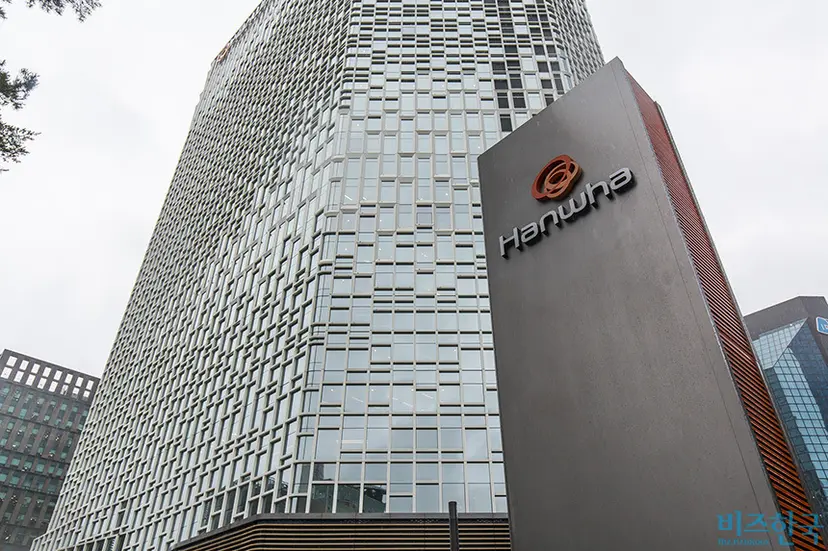
The problem was the market reaction immediately following the announcement. After the news of a capital increase amounting to 42% of the issued shares broke, Hanwha Solutions' stock price plunged 18.22% on the day of the disclosure. While the company cited factors such as changes in U.S. solar energy policy, expansion of domestic manufacturing facility investments in the U.S., and equipment defects during the test operation of U.S. solar cell facilities, concerns among investors regarding the dilution of existing shareholder value grew rapidly.
Starting the day after the announcement, Hanwha Solutions unveiled plans for executives to purchase company stock. Vice Chairman Kim Dong-kwan announced plans to buy approximately 3 billion KRW worth of shares, while Nam Jung-woon, head of the Chemical Division, and Park Seung-duk, head of the Qcells Division, each pledged to purchase about 600 million KRW worth. The company described this as a measure of 'responsible management.' Subsequently, on March 30, all four outside directors, including Board Chair Jang Jae-soo, also expressed their intention to purchase shares.
The board members' stock purchases actually took place. According to the Financial Supervisory Service's Data Analysis, Retrieval and Transfer System (DART) on April 6, Vice Chairman Kim Dong-kwan purchased a total of 3 billion KRW worth of stock in the open market over three days from April 1 to 3. Nam Jung-woon and Park Seung-duk each purchased 600 million KRW worth, and the four outside directors reportedly bought 2,000 shares each.
The company also held an information session for individual shareholders. Chief Financial Officer (CFO) Jung Won-young explained at the session on April 3 that capital procurement was inevitable, stating, "Despite our proactive self-rescue efforts of 2.3 trillion KRW carried out before the rights offering, we faced pressure for a credit rating downgrade." At the same meeting, Hanwha Solutions presented a mid-to-long-term financial roadmap, promising no further rights offerings at least until 2030. The company explained that it had previously implemented self-rescue measures totaling about 2.3 trillion KRW through asset sales and the issuance of perpetual bonds.
However, remarks regarding the Financial Supervisory Service (FSS) made during the session sparked a new controversy. At the time, CFO Jung Won-young stated to the effect that, "We communicate with the FSS and discuss our rights offering plan before submitting the securities registration statement." This comment was interpreted as if Hanwha Solutions had engaged in prior consultation or coordination with the FSS during the rights offering process, escalating the controversy.
On April 4, Hanwha Solutions issued a clarification and an apology to correct the statement. The company stated that while it had verbally notified the FSS in advance of its intention to submit a securities registration statement, it had never held prior consultations regarding the content of the statement, nor did it seek prior understanding regarding the rights offering. The company explained that there was an error in expression during the explanation, which led to the misunderstanding that the rights offering plan had been discussed with the FSS in advance.
The controversy also led to personnel changes. It was reported on April 6 that Hanwha Solutions had placed CFO Jung Won-young on leave. Although the company did not disclose the specific nature of the disciplinary action in a separate official statement, it is interpreted as a measure to hold him accountable for his remarks at the recent shareholder meeting.
This case is noteworthy in that the responses Hanwha Solutions released after the rights offering announcement proceeded in the order of stock purchases by management and outside directors, a promise to limit additional offerings, an official apology, and the CFO being placed on leave. The remaining variable is how the company will follow up with explanations and improve performance while balancing the dual challenges of massive capital procurement needs and managing investor trust.