

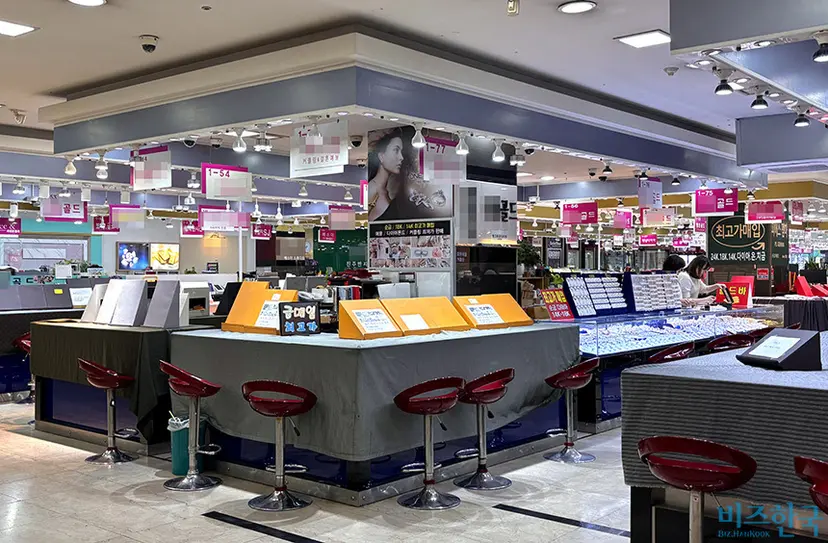
[비즈한국] On the afternoon of the 3rd, the jewelry district in Jongno-gu, Seoul, was quiet despite it being midday. Some shops had their displays covered with fabric and lights turned off, closing early, while others shuttered well before the 8:00 PM closing time. In many places, business owners were left to man their shops alone after laying off staff. The atmosphere is one of heavy wait-and-see caution as gold prices fluctuate in the wake of the US-Iran conflict.
Following the US-Iran conflict, uncertainty has mounted as gold prices fail to find a clear direction. Typically, when wars or economic crises occur, prices of safe-haven assets like gold rise while risky assets plummet. Recently, however, a trend of simultaneous weakness has emerged where asset prices swing in tandem, leading investors to postpone both buying and selling.
A shop owner who has run a jewelry store here for 20 years sighed, "The number of customers buying gold has dropped significantly compared to last year. Since the US-Iran conflict, gold prices have fallen, but people aren't buying because they think it might fall further, and the prevailing sentiment is that it's a waste to sell now, so there are hardly any transactions at all," explaining, "In terms of store foot traffic, the number of customers has been cut in half."
B, who works at a nearby gold exchange, also reported, "During the gold price surge last October, daily sales reached between 1 billion and 10 billion won, but now they have returned to the levels of previous years." He added, "Now that demand for both gold and silver has faded, daily sales have fallen back to around 200 million won."
In most of the shops visited that day, employees were seen sitting in chairs, looking at their phones or chatting to pass the time. It is a far cry from last year, when they were busy attending to customers. Occasionally, when a potential customer passed by, store owners would gesture for them to come in, but it was rare for anyone to actually step inside.

A shop owner in his 50s, while organizing his store, confessed, "In the past, even if gold prices dropped slightly, there were customers ready to buy immediately, but these days, most just inquire and leave. There are days when we don't have a single transaction all day long." The volatility in gold prices has completely stifled customer foot traffic.
Only the occasional couple buying wedding gifts entered the arcade. A couple in their 30s met there said, "We came to look at rings and necklaces while preparing for our wedding, but we're worried about whether it's the right time to buy. We plan to look around a bit more before deciding."
Meanwhile, investing in physical gold is often used as a long-term investment strategy for inheritance or gifting, as there is no capital gains tax upon sale. Recently, gold purchase reviews and transaction videos have spread across social media. However, as gold price volatility has increased, this demand has also shifted toward a wait-and-see stance.
According to the financial sector, international gold prices reached a peak of $5,375.24 per ounce on January 29 and have been fluctuating since. Last month, gold prices fell by more than 13%, marking the largest drop since October 2008, during the global financial crisis. As the market reacts sensitively to every statement regarding the war, gold prices are also showing repeated short-term spikes and crashes.
However, the securities industry maintains a positive long-term outlook on gold. Jeon Gyu-yeon, an analyst at Hana Securities, forecasted, "While a short-term phase of volatility is inevitable as funds from retail investors who fueled the market overheating pull out, emerging market central banks will continue their steady gold purchases amidst external uncertainties."
Hong Seong-ki, an analyst at LS Securities078020, also predicted, "If the war becomes protracted, gold prices will remain firm due to the decline in real interest rates, and when the war ends, they will rebound in earnest following the decline in US Treasury yields."