

[비즈한국] Marking the first anniversary of the 'Liberation Day' proclamation where U.S. President Donald Trump imposed reciprocal tariffs on the entire world, the administration has revamped its existing system. The new policy dictates a flat 25% tariff on derivative products with high steel, aluminum, and copper content, based on the product price. With concerns rising that the tariff will now be applied to the total price of the product rather than just the metal components—potentially increasing the tariff burden for certain goods—pressure on the profitability of the domestic home appliance industry is expected to intensify.

On the 2nd (local time), the Trump administration signed a proclamation adjusting tariffs on metal derivative products, which imposes a flat 25% tariff based on the product price for finished goods containing significant amounts of steel, aluminum, and copper.
The core of the revision is the simplification of the tariff calculation method. Previously, a 50% tariff was applied proportionally to the cost of metals like steel contained in finished products, but moving forward, a 25% tariff will be levied on the sale price of the finished product if the metal content exceeds 15% of the total product weight. Products with a metal content of 15% or less are excluded from this adjusted item tariff.
The U.S. administration stated that this decision was made to block practices of evading tariffs by lowering declared steel prices and to reduce the administrative costs of complex tariff calculations. According to Reuters, a U.S. government official stated, "Some importers have been artificially lowering declared steel prices to evade tariffs," adding, "As a result, we have not been able to secure the expected tax revenue."
While the 50% item tariff on steel and aluminum itself remains in place, the assessment base has been changed from the import declaration price to the U.S. buyer's 'final purchase price,' which is evaluated as an increase in the intensity of actual import regulations.
With freight costs and raw material prices skyrocketing due to the conflict in the Middle East, the added tariff burden has left the appliance industry scrambling to analyze profit and loss by product line and devise countermeasures.
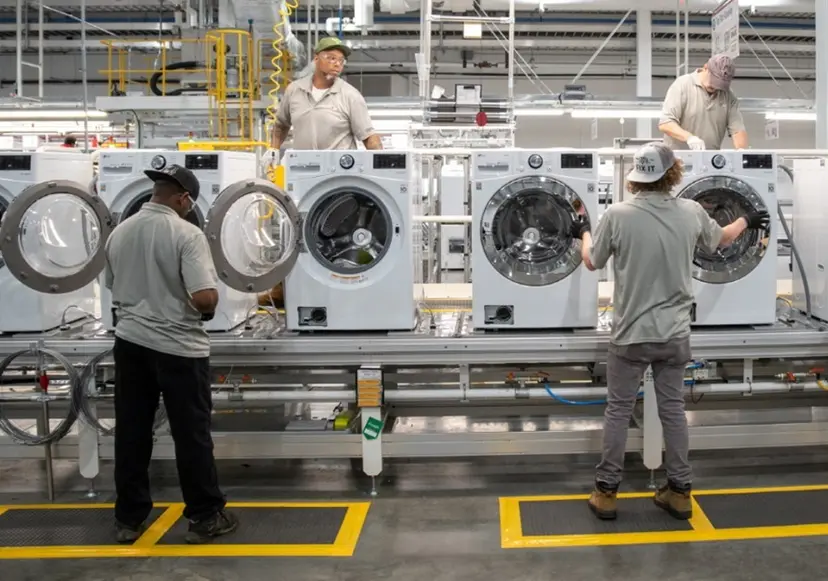
The expected impact is predicted to vary by product line. In the case of washing machines, Samsung Electronics produces them in South Carolina and LG Electronics in Tennessee, so they are excluded from the finished product tariff. Conversely, both companies manufacture refrigerators in Mexico for export to the U.S.
Small and entry-level refrigerators may face an increased tariff burden as their metal content exceeds the threshold, but large premium products with higher proportions of insulation, glass, and electronic components may actually be exempt from tariffs if their metal content falls below 15%. Some analysts suggest that the focus of Korean appliance companies on selling premium large-scale products in the North American market could work to their advantage under this measure.
There is a precedent where the market share of Korean home appliance companies in the U.S. actually expanded following the steel content-based tariff imposed in June last year. At the time, while the prices of Samsung and LG products rose, U.S. home appliance companies raised their prices by a similar margin, and U.S.-made appliances also rely heavily on foreign steel, so the competitive landscape did not change significantly.
However, since local plants do not handle all North American demand, some export volumes remain subject to tariff impacts. Companies are expected to utilize a combination of production site adjustments, cost reductions, and product mix changes to defend their profitability.
Concerns about profitability remain. The home appliance business is a sector where operating profit margins are in the single digits, so cumulative tariff burdens could increase margin pressure. On top of this, the prolonged Middle East situation has caused the Shanghai Containerized Freight Index (SCFI) to rise by 37% compared to before the crisis, and raw material costs have also increased, with naphtha prices nearly doubling to $1,171 per ton in one month. Another variable is that if tariff costs are passed on to consumer prices, it could shrink North American demand itself in the medium to long term.
In particular, given the nature of the home appliance business with its high reliance on North American revenue, any accumulation of cost burdens could lead directly to lower profitability. Consequently, the industry plans to respond by simultaneously expanding local production and optimizing supply chains.