

[비즈한국] In an era overflowing with AI and digital clones, 'Fundamentalism' is emerging as a trend, particularly among the MZ generation. As replication and modification become easier, the younger generation seems to place greater value on time accumulated over long periods, verified originals, and tangible realities that can be personally confirmed, rather than on replaceable content. A desire to find unwavering standards and authenticity amidst rapidly changing trends is spreading across consumption and culture.
On the 2nd, the National Museum of Korea in Yongsan-gu, Seoul, was bustling with visitors despite being a weekday afternoon. In various corners of the exhibition halls, visitors slowed their pace to examine the artifacts one by one. The entrance and the gift shop next to the exhibition hall were also crowded. Visitors gathered in front of shelves to purchase 'MU:DS'—goods based on traditional artifacts—while some asked staff about popular items or compared products. While people of various age groups visited the museum that day, the proportion of visitors in their 20s and 30s was particularly noticeable.

The National Museum of Korea recorded approximately 6.5 million annual visitors in 2025, marking the highest number of visitors since its opening. This is about 1.7 times the figure from the previous year. Although we live in an era where artifacts can be easily accessed through digital images and videos, the trend toward seeing the physical object in person and consuming the experience itself has become stronger.
What is noteworthy is that while they pause before the artifacts, they also stop in front of the MU:DS shop. They verify the original and immediately purchase products that reinterpret it in a modern way. Although it may seem contradictory at first glance, these two actions stem from the same psychology. To them, the 'fundamental' is not a preserved past, but a starting point for new variations. It is the sense that one can only fully consume the meaning of something modified after verifying the original with their own eyes. In an age where AI can instantly create any image, the act of verifying the actual object that serves as the basis for modification has itself become a value.
A similar atmosphere can be detected at Haklim Dabang, a representative old-fashioned tea house in Seoul. Opened in 1956, it is considered one of the oldest tea houses in Seoul. When visited around 2 PM that day, the interior of the shop contained the intact traces of time, blending old wooden decor with vinyl records covering the walls. Most of the customers in the shop were in their 20s and 30s, and customers waiting to enter were also visible.
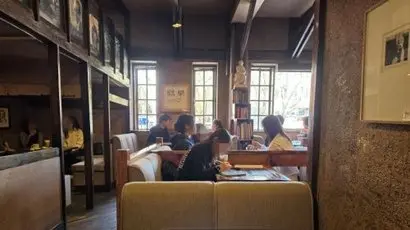
Interpreting the search for old shops simply as a retro preference is superficial. What they are consuming at Haklim Dabang is not coffee or parfaits, but time itself. In an era where AI can recreate any space as an image, the only thing that cannot be digitally replicated is the 70 years of physical time that the place has actually endured. The texture of the old wood, the fingerprints left on the vinyl records, and the scent of the space accumulated over decades cannot be imitated by any sophisticated reproduction. The fact that the younger generation is willing to line up for that space is proof that their sense for the non-reproducible has become keen. Paradoxically, the more sophisticated replication technology becomes, the clearer the value of what has not been replicated becomes.
The flow of seeking the 'fundamental' also continues in the publishing industry. According to online bookstore Yes24053280, sales of world literature series from January to September 2024 increased by 5.8% compared to the same period the previous year. In particular, the purchase ratio by those in their 20s increased significantly from 7.5% in 2019 to 14.3% in 2024. In the 'Reading Trend Report 2025' by online reading platform Millie's Library418470, the age group that read classic literature the most was also revealed to be those in their 20s and 30s. In fact, many classic literary works such as 'Siddhartha', 'Bonjour Tristesse', and 'No Longer Human' were at the top of the overseas novel sales list at the Kyobo Book Centre Gwanghwamun branch.
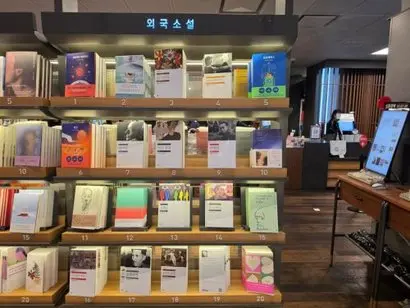
The rise of classic literature is not unrelated to information overload. In an environment where algorithms analyze tastes and endlessly recommend content, the sense of not knowing what to read paradoxically grows stronger. This is because the more choices there are, the greater the anxiety of selection. In this case, classics offer a different kind of trust than algorithmic recommendations. The very fact that they have survived for decades or centuries is a verification in itself. Texts that have survived despite changing platforms and passing trends give a stronger conviction that they are 'worth reading' than any algorithm. As the fatigue of content selection grows, the psychology of relying on standards verified by time is natural.
As such, a paradox is emerging where the value of the original becomes clearer the easier it is to replicate. The interest of the younger generation in museum artifacts, the time of old shops, and the sentences of classics cannot be explained as a simple retro trend. What they are looking for in the original is not the past, but a standard by which to judge the constantly changing present. Whether Fundamentalism is a temporary fad or a structural sense of the digital age is difficult to conclude yet. However, the current trend shows that as the speed of replication and modification increases, questions about the original will not disappear.
This trend has a different texture from the retro trends of the past. If retro is driven by nostalgia for a specific era, the motivation for Fundamentalism is closer to a reaction to uncertainty. In an era where anything can be created and modified, it is the desire to personally verify the state before modification. Lee Eun-hee, a professor of Consumer Science at Inha University, explained, "We live in an age where everything is easily modified. As a result, we can feel a sense of floating around without being able to put down roots," adding, "The more that happens, the greater the psychology of trying to grasp what the fundamental is, even if one makes modifications."