

[비즈한국] A hangar on the outskirts of Zurich, Switzerland. A 24-year-old in sunglasses shouts to the crowd, "Let’s get ready to rumble." The speaker is Declan Shine, president of the Robotics Club at ETH Zurich. At the end of last March, the first-ever robot boxing event in Europe was held here. Two humanoid robots stepped into the ring, each accompanied by a human operator controlling them via gamepads.
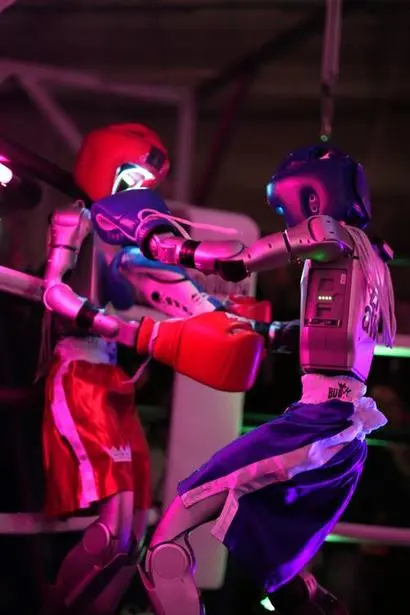
However, the robots in the ring were not Swiss-made. They were products from the Chinese company Unitree. This event is a scene that most concisely captures the current reality of the humanoid industry.
Manufacturing in China, Application in Europe
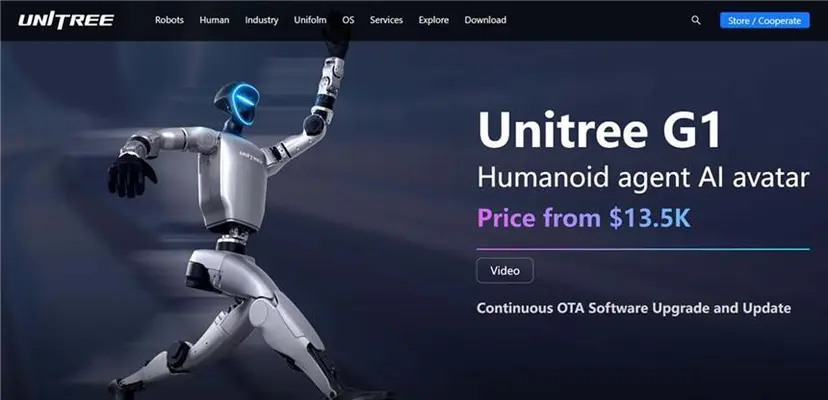
Unitree shipped 5,500 humanoid robots in 2025 and is expanding volume in 2026. The official price of the G1 model starts at $13,500 (approx. 20.36 million KRW). China already holds a significant advantage in the game of rapidly lowering hardware unit costs and increasing shipment volumes.
Europe has not jumped head-first into this hardware competition. In Zurich, what the students focused on was not the robot body itself, but what kind of actions they could make the robot perform.
The event consisted of two pillars: the boxing tournament and a hackathon that took place starting 48 hours prior. The scale of the hackathon highlights the nature of this event. 500 students from major European engineering schools applied, and 50 were selected. Sponsors included OpenAI, Hugging Face (the symbol of open-source AI platforms), and Silicon Valley's leading VC General Catalyst, with total prize money amounting to $10,000 (15 million KRW). The stage was graced by figures representing the investment, research, and operational pillars of the European tech ecosystem, such as Sebastian Novotny, co-lead of European VC START Foundation; Melanie Gabriel, co-director and COO of the ETH AI Center; and Edo Treccani, a partner at the Swiss VC firm Founderful.
The participants' level of immersion was also striking. Some students saved time by sleeping in campers outside the hangar. Air mattresses were laid out in a corner of the venue, and techno music blared until 3 a.m.
Eight teams spent 48 hours experimenting with adding new features to the robots. One team created a system to control the robot via WhatsApp commands, while the winning team spent the night training the robot to pick up a soda can. On the day of the demo, the robot successfully picked up the can but dropped it shortly after. Another team developed an open-source pipeline called DreamMotion, which converts voice and text commands into diffusion models, allowing the humanoid to perform actual motions. One team pitched a scenario where a robot runs errands for the elderly. Although the robot didn't move on the day of the demo, the idea itself was serious.
Similar conversations occurred in the audience during the match. People were saying things like, "If robot boxing becomes popularized, we'll need cooling solutions," and "We could attach a betting platform to this." This attitude of calculating applied business while watching the robots is the current atmosphere in Zurich.
The list of sponsors for the Robotics Club that hosted the event shows how seriously the ecosystem takes this. Nvidia, OpenAI, and Tesla were among the names listed, and one of the sponsors, the Swiss delivery robot startup Rivr, was acquired by Amazon just days before the event.
Zurich, the Hottest Stage for European Robotics
ETH Zurich is one of the top universities in Europe for producing spin-offs. Robotics companies originating from this school include the quadruped robot firm ANYbotics for industrial facility inspections, Mimic Robotics, which develops precise movements for humanoid hands, and Flink Robotics, which builds logistics robot solutions. According to Sifted, a media outlet specializing in European startups, 12 robot-related company deals have been recorded in Zurich alone since the beginning of 2025—the highest number among all European cities. While Zurich may lag behind Cambridge, Munich, and Paris in terms of total investment, it is garnering the most attention as a city where investors go to scout for deals.
One of the most noteworthy companies in this ecosystem is ETH Zurich's Flexion Robotics. Founded by researchers from Nvidia, this startup raised $50 million in Series A funding with the goal of building the 'brains' for humanoid robots.
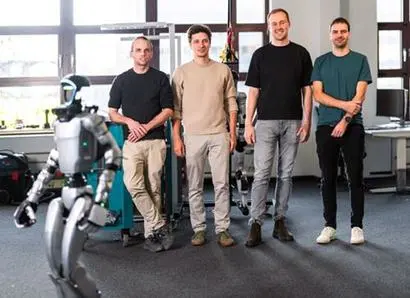
Their strategy is simple. Use existing hardware like Unitree's products as they are, and create only the software intelligence that goes on top. The idea is that once hardware becomes a generic platform, the real competition will be about who can supply the functional brains for those millions of robots first. This company was also a sponsor of this hackathon (HACK2026).
What was most impressive at the venue, however, was a robot that didn't even participate in the competition. In a kitchen on one side of the hangar, a refrigerator-sized crepe-making robot produced over 100 crepes throughout the day without failure. This robot was developed solely by Robert Hennig, an inventor based in Basel, Switzerland, starting last August; it wasn't just a prototype, but a machine ready for immediate field deployment. While universal humanoids were still repeating unstable motions, this scene showed that robots specialized for specific tasks are already at a practical stage.
Beyond a Single Event to a Pan-European Network
One of the most notable results left by this event was not the robot boxing itself, but the birth of an organization. Following HACK2026, the 2,500-member European Student Robotics Association (ESRA) was launched. A pan-European network was formed, connecting student robotics communities at over 10 universities across 8 countries, including ETH Zurich, TU Munich, EPFL, KTH, TU Wien, and Politecnico di Milano. It is a signal that Europe's robotics student ecosystem has begun to move away from fragmented, university-level activities and is creating a cross-border cooperative structure.

Questions Posed by Europe's Strategy to Korean Companies
Summarizing what happened in Zurich, Europe's humanoid strategy has a relatively clear direction. It is a method of first capturing detailed application areas such as industrial inspection, logistics automation, last-mile delivery, and human-friendly interfaces rather than mass-producing general-purpose robots. The software-first strategies of Rivr, which was acquired by Amazon, and Flexion are two expressions of this trend. The hardware is already there. The problem is what functions can solve actual customer problems on top of it.
When Korean companies look at the European robot market, it is easy to miss this point. Europe is often perceived as a place where "technology is good, but commercialization is slow." However, what the Zurich venue showed was different. It is not that commercialization is slow, but that the market entry grammar is different. Explaining the site of use is more important than explaining the technology, and it must first be explained under what regulatory environment a robot replaces which worker and which operational KPIs it improves. Without understanding this flow—from university labs to student clubs, hackathons, spin-offs, VCs, and industrial pilots—the European market will always seem closed. It is also a notable change that this flow is now expanding beyond single universities to the level of pan-European student networks.
For Korean companies planning to enter Europe, it would likely be more realistic to approach it not as 'complete robot manufacturers,' but as operators who add industry-specific software, AI, and operational systems onto the global hardware that is already being deployed. Fields such as industrial site safety inspection, warehouse picking, vision-based inspection, and industry-specific data management platforms are candidates. As Flexion showed in Zurich, software brains that move hardware can actually gain traction in the European market much faster.
As the event drew to a close, Florian Schroeders, co-founder of the TU Munich Robotics Club, shouted, "We are the people who will build the next unicorn." Even if the robots in the ring were Chinese-made, the people who were calculating applied business and coding open-source pipelines all night using those robots were European college students. Now, those students have begun to connect across borders.
Author Lee Eun-seo majored in law in Korea and studied theater in Berlin. Based in Berlin, a city of art and a European startup hub, she leads 123factory, which connects the Korean and German startup ecosystems while growing alongside the city.