

[비즈한국] Pharmaceutical company Boryung003850 (formerly Boryung Pharmaceutical) is pursuing a mid- to long-term project to develop and build its own life science research module within the International Space Station (ISS). This is interpreted as a move beyond simple equity investments or partnerships with overseas space companies, signaling their intent to take direct responsibility for building proprietary hardware infrastructure.
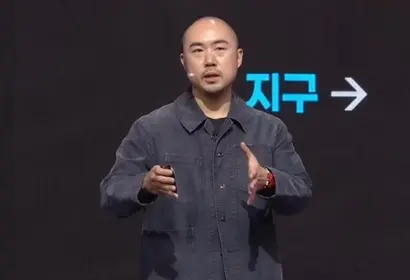
After finishing his lecture at the science and technology forum 'SBS X Space' held at the SBS Prism Tower in Mapo-gu, Seoul, on the 2nd, Boryung CEO Kim Jung-kyun met with reporters and stated, "We have secured space to build a space medicine laboratory on Axiom Space's commercial space station, and we are ultimately even considering developing the research module itself to strengthen our competitiveness." This means they plan to secure an independent space research platform that goes beyond simply loading protein analysis equipment onto the space station Axiom Space will launch.
CEO Kim also expressed his intention to introduce an automated system that fuses physical AI and robotics into this laboratory. The strategy is to overcome the constraints of a space environment, where direct human physical access is limited, through cutting-edge AI robot technology. CEO Kim said, "The number of astronauts currently in space is too small, limiting the types of research that can be conducted. If a system capable of automated research using AI-based robotics is created, demand will explode, and new technologies will be developed through it." However, he asked for encouragement and support, noting that this is not a short-term task but one that requires long-term investment.
Boryung has been actively pushing its space business since he took office as CEO in 2022. In February of that year, the company invested 12.1 billion won in Axiom Space, a Houston-based leading ISS company, followed by an additional $50 million (64.9 billion won) investment in December. In December 2024, they also invested $10 million (14 billion won) in Intuitive Machines, a U.S.-based lunar lander development company.
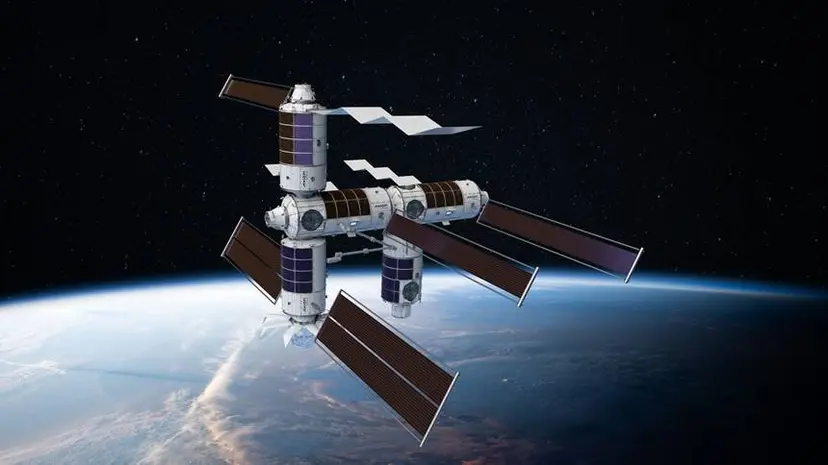
In January 2024, Boryung established 'BRAX,' a joint venture with Axiom Space, in South Korea, securing exclusive domestic rights and priority rights for business in the Asia-Pacific region utilizing Axiom's technology and space station infrastructure in Low Earth Orbit (LEO). CEO Kim said, "BRAX is showing gradual progress in commercialization, such as participating in space demonstration programs through the Ministry of Health and Welfare's 'ARPA-H' project," adding, "We believe we can grow together by continuing to participate in national projects."
CEO Kim also expressed a unique sense of calling to contribute to the nation and society as we enter the era of the great space voyage. The 'HIS (Humans In Space) Youth' program, which supports future generations in continuing their challenges toward space, is a prime example. Through this program, Boryung sent 20 drawings created by Korean children, capturing their dreams of space, to the ISS last year. They plan to pursue a mission in the first quarter of next year to send a time capsule containing children's wishes to the lunar surface. CEO Kim revealed his anticipation, saying, "I hope that in 10 years, the students will be able to go to the moon themselves, take out the USB containing the time capsule, connect it to a computer, and open it."