

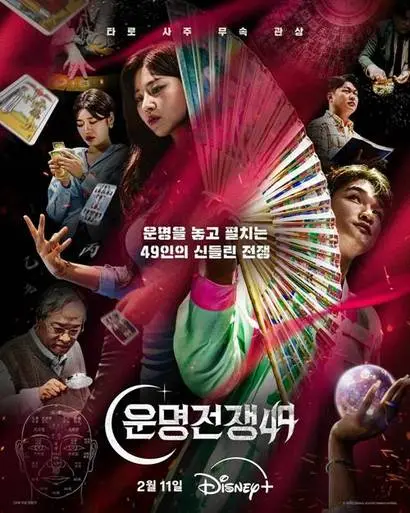
[비즈한국] Fueled by the popularity of the film 'Exhuma' and the animation 'K-Pop Demon Hunters,' the variety show 'Fate War 49' has sparked controversy. Nevertheless, it seems to clearly illustrate the global trend of attention toward K-shamanism. The focus on elements such as gut (shamanic rituals), shamanic attire, grim reapers, character designs, fashion, and ritual tools likely represents only the superficial aspects. In particular, K-shamanism is appealing to the younger generation. The reason for this should first be approached from the perspective of youth psychology.
During adolescence, individuals form their worldviews and values while exploring and experiencing the outside world. Because it is a process of establishing independent subjectivity, teenagers may temporarily view the reality differently, deny it, or dream of other worlds. In other words, they are highly interested in exploring different facets of the reality they face. The genre that represents this can be called occultism. Through occult content, they seek to encounter another world that is unscientific or irrational. That world is a place inhabited by beings such as ghosts, evil spirits, and creatures.
In socialist countries like North Korea or China that follow materialism, such content cannot be produced or enjoyed. Japan also has a stronger culture of yokai (supernatural monsters) than shamanism. Generally, Western occult works follow a dichotomous structure, where the main plot revolves around defeating evil spirits, exorcising demons, and destroying alien entities. To do this, criteria for value judgment between good and evil are necessary. The perception that 'I am right and the other is not' is very primitive. On the other hand, our shamanism reflects a relative perspective. 'K-Pop Demon Hunters' received a warm response in this regard. Anyone can become an evil being, and an evil being can become a good one.
From the perspective of the soul, Korean shamanism has the beneficial function of resolving the han (deep resentment) of the deceased. By making the core concept the idea that the deceased, often in the position of the weak, were unable to properly convey their unfair stories, it plays a role in easing the emotional burden of the survivors. It suggests that the vengeful spirit harming people turns out to have had a painful past. Even the moral of rewarding good and punishing evil leaves a sense of social healing. This has generally been accepted through forms like possession or shamanic rituals. Regardless of whether it is truly resolved, it has continued because it can produce a psychological healing effect.
Above all, the hallmark of Korean shamanism is that it is not about being subordinate to fate or feeling helpless, but rather about being able to respond according to human will and achieve a hopeful outcome. When one reads a Saju (fortune-telling based on birth date), it tells them that although their innate destiny is one way, it can change depending on how they cope. People consult Saju not to know and accept fate, but to respond to it and create change. Therefore, it is positive and hopeful. Since it identifies 'me' and communicates accordingly, one can also gain psychological comfort. It is human because of the emotional intimacy and mutual interaction.
Moreover, the characters in shamanic content appear very young or trendy. This does not necessarily mean the modernization of shamanism, but at least it evokes a contemporary sensibility rather than an old one.
Of course, it is true that overseas audiences project an orientalist perspective when viewing Korean shamanism. A kind of 'Eastern mystery' is at work. When trapped in such mystery, a backlash in the post-truth era can occur. If it is not the truth, one is bound to be hit by a boomerang of distrust. Demanding things outside their realm from shamans requires caution. Requiring shamans to have the competencies expected of forensic experts, scientists, or medical professionals hinders their strengths and possibilities, and makes it difficult to gain empathy from viewers. Therefore, like foreign programs, we should also present scientific, rational, and objective arguments or opinions in parallel. Furthermore, forcing competition over specific missions can lead to overacting. It seems necessary to first create a positive, virtuous cycle regarding the strengths and possibilities of K-shamanism.
The author, Kim Heon-sik, has been walking through or navigating the forest of pop culture phenomena since his 20s, driven by the expectation that there is a way to make the world a better place through culture. He continues on the same path in the 21st century, where AI and quantum computers are active, with the same belief.