

[비즈한국] A legal dispute has emerged between investors and Gopax (operated by Streami) over 'GoFi,' the virtual asset deposit service of the KRW-based virtual asset exchange. This follows a recent civil lawsuit filed by an individual investor demanding that Gopax return the Bitcoin they had deposited into GoFi. With the timeline for the recovery of GoFi damages remaining unclear even after Binance's acquisition of Gopax, attention is turning to the potential impact of the litigation.
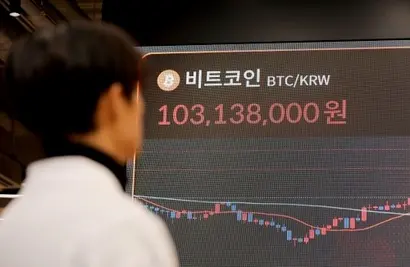
On January 30, GoFi investor 'A' filed a lawsuit against Gopax demanding the principal of the Bitcoin deposited in GoFi and damages for delay. The amount of Bitcoin A has not recovered is approximately 5.32 units, which is worth about 549 million KRW based on the closing price on March 31 (103.27 million KRW per unit).
GoFi is a virtual asset deposit service operated by Gopax that offers fixed interest and principal returns if assets are stored for a certain period. Investor A signed up for two GoFi products (131st and 132nd rounds) in October 2022. The 131st round offered a 1.25% annual interest rate for a 31-day Bitcoin deposit, while the 132nd round offered 5% for a 183-day deposit. A deposited 3.2 Bitcoins in the 131st round and approximately 5.07 Bitcoins in the 132nd round, but failed to recover both the principal and interest due to the non-repayment crisis. Although Gopax repaid a portion (37.3%) of the GoFi deposits and interest in August 2023, approximately 5.32 Bitcoins remain unpaid to A.
"I decided to sue because the repayment of GoFi deposits seemed to be delayed time and again even after the Binance acquisition," A stated. "Gopax was acquired on the condition of recovering the damages, so why is the story different now? I intend to have my claims legally recognized."
Gopax, which received the complaint in early February, was confirmed to have submitted an answer to the court on March 6, requesting that "all claims be dismissed." A date for the hearing has not yet been set. However, it is uncertain whether A will be able to recover the damages even with a lawsuit. An industry insider remarked, "If damages are repaid only to specific investors, issues regarding breach of trust could arise."
The GoFi non-repayment crisis occurred in November 2022 when the global virtual asset exchange FTX filed for bankruptcy due to liquidity issues. Genesis Global Capital, which operated GoFi deposits through FTX, went bankrupt in the wake of the FTX collapse, leaving Gopax to lose the deposits and bear the responsibility for repayment. It is known that nearly 3,000 investors have their deposits locked up due to this crisis.
Binance, a global virtual asset operator, stepped in to acquire the struggling Gopax. Seeking entry into the Korean market, Binance acquired a 67.45% stake in Gopax in February 2023, contingent on the repayment of GoFi damages. However, it was not until October 2025 that they received approval for major shareholding, as financial authorities delayed the acceptance of the report on board changes. In the meantime, Binance stated its policy to repay the remaining damages after the report was accepted.
While Binance has shown willingness to repay the damages, it has also mentioned constraints. At 'Binance Blockchain Week' held in Dubai, UAE, in December 2025, SB Secker, General Manager of Binance APAC, stated that "the renewal of Gopax's Virtual Asset Service Provider (VASP) license is a mandatory prerequisite for resolving the GoFi crisis," adding that a restructuring of shareholders and corporate governance is also required for the acquisition to be completed. Under the Act on Reporting and Using Specified Financial Transaction Information, VASP licenses must be renewed every three years; Gopax has been awaiting renewal since receiving its license acceptance in December 2021.
As interest in the repayments grew, Binance disclosed details of funds designated for GoFi repayment. On January 29, Gopax announced the holdings of 11 types of virtual assets, including approximately 775 Bitcoins, 5,766 Ethereums, and 1,493 Solanas, through a guide on the status of GoFi deposit assets. The day after the wallet disclosure, General Manager Secker told an overseas blockchain media outlet that "the goal is to complete GoFi repayments within 2026."
Industry experts interpret the repayment delay as evidence of problems in the virtual asset distribution process. They explain that while Binance considered methods such as transferring coins between wallets or converting them to fiat currency and back into coins, the massive sum—exceeding 100 billion KRW in total—is subject to constraints such as payment entities, taxes, and foreign exchange regulations, making it difficult to execute.
Some point out that the delays might also be linked to regulations on major shareholding limits for virtual asset exchanges. This follows discussions during the legislative process of the Digital Asset Framework Act (the second phase of virtual asset legislation) to limit major shareholder stakes to 20-34%. For Binance, it took nearly three years just to get approved as a major shareholder of Gopax, and if such regulations were implemented, they might be forced to sell their stake. Regarding this, General Manager Secker stated in an interview with domestic media that the company "would fully comply if regulations are finalized.".