

[비즈한국] On the 31st, the new CEO Park Yun-young regime was officially launched at the KT030200 regular general shareholders' meeting. Amid a trend of personnel reforms featuring internal candidates, a major organizational restructuring was carried out immediately following the meeting. While expectations for management normalization are growing, issues such as controversies over the board of directors' operations were also raised, highlighting future tasks that need to be addressed.
The Beginning of the ‘Park Yun-young Era’, Accelerating Organizational Stabilization
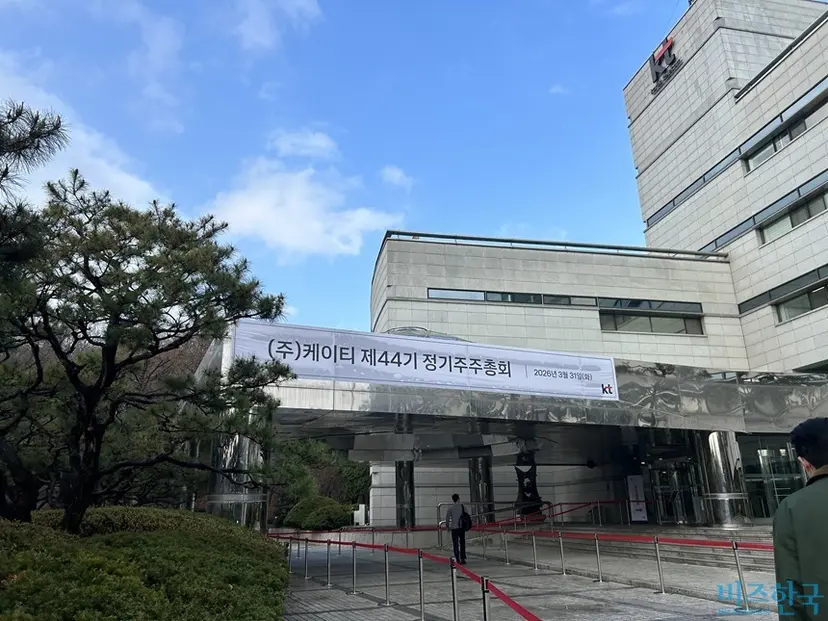
At the 44th regular general shareholders' meeting held at the KT R&D Center in Seocho-gu, Seoul, on the morning of this day, the appointment of Park Yun-young as CEO was passed with 97.3% in favor. His term is for three years, until the regular shareholders' meeting in 2029. Alongside this, Park Hyun-jin, CEO of KT Milli, was appointed as an internal director, and three outside directors—Kim Young-han, a professor at Soongsil University's School of Electronic Engineering; Kwon Myung-sook, former CEO of Intel Korea; and Seo Jin-seok, a non-executive advisor for OCI Holdings010060 and Bukwang Pharmaceutical003000—joined the board.
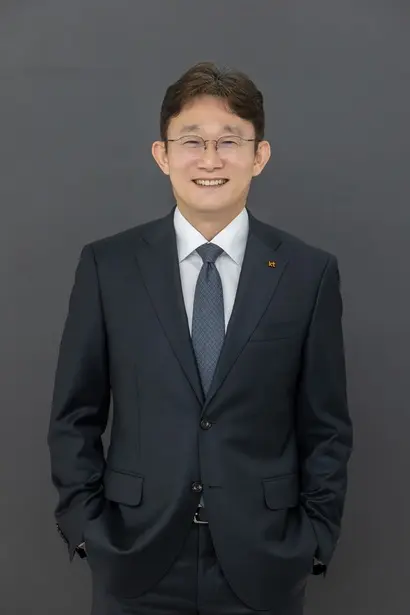
CEO Park is an internal figure who served as head of KT’s Enterprise Business Division, Future Business Development Unit, Convergence Research Institute, and Home Customer Headquarters; he is credited with contributing to the shift in KT’s growth axis by expanding the proportion of B2B business. The board of directors expects CEO Park’s AI transformation (AX) capabilities and DX strategy to play a key role in enhancing corporate value.
Without a separate inauguration ceremony, CEO Park revealed his vision as an AX platform company through a letter to employees, emphasizing that this year will be the starting point of the transformation. CEO Park stated, "A network customers can trust, stable service quality, and seamless information security are the reasons for KT's existence," adding, "We will not make any compromises in these areas and will not spare necessary investments."
Regarding security governance and operational systems, he promised, "We will reorganize more meticulously and re-examine IT and network infrastructure from the ground up." He added, "In the B2C area, we will evolve beyond simple telecommunications into a lifestyle AI service that permeates customers' daily lives," and, "We will strengthen 'B2B AX' that practically solves problems at industrial sites such as public, finance, and manufacturing sectors, and expand our internal innovation experiences into repeatable success models."
Given that this is the appointment of an insider rooted in KT, even the union, which had been vocal in its criticism of the previous management and the board, appears to be adjusting its level of opposition. In a statement released just before the meeting, the KT Democratic Comrades Association stated, "We do not ignore the fact that there is a certain level of expectation for CEO Park among our members," adding, "That expectation is not trust in the individual CEO, but an expression of desperation born from disillusionment with the long-standing parachute management system and the pain of restructuring experienced under the former CEO Kim Young-seop regime."
Last year, KT suffered through hacking incidents and allegations of concealment. Large-scale restructuring pushed by the former CEO Kim Young-seop regime sparked backlash from the union. At the end of 2024, KT conducted restructuring targeting approximately 5,800 people, including head office network management personnel, and reassigned about 2,500 people who refused resignation or transfer to the 'Total Sales Center (Total Sales TF)', which handles mobile phone sales and other tasks.
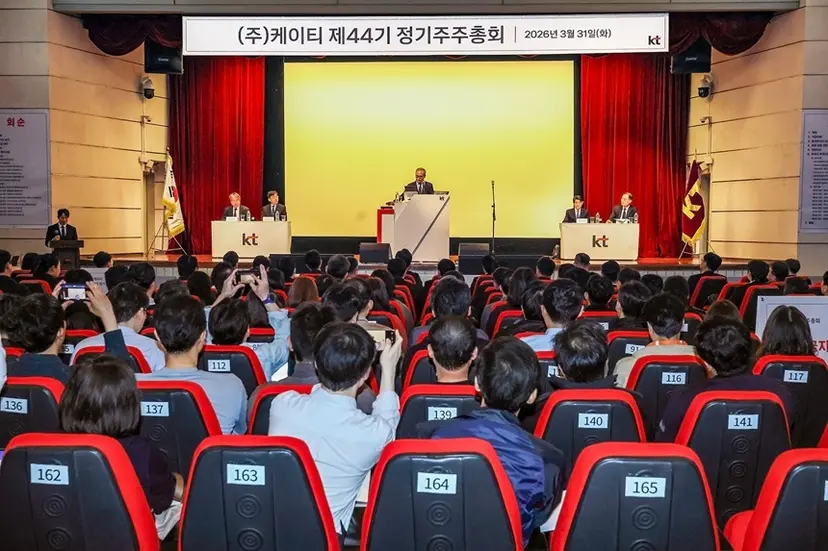
Former CEO Kim stepped down from his position on this day. Former CEO Kim Young-seop, who presided over the meeting, bowed his head and said, "I deeply apologize for the concern caused by the cyber security incident that occurred last year," adding, "I will do my best for the company-wide reorganization of the security system and innovation in information security based on Zero Trust." He continued, "The board of directors finalized the final CEO candidate through a transparent process."
Large-Scale Organizational Restructuring and Abolition of Total TF… 'Aiming' for Personnel Reform
The top priority for the Park Yun-young regime is organizational stabilization. As the personnel appointments, initially expected at the beginning of the year, were delayed due to the handover process with the previous management, KT carried out high-intensity organizational restructuring and executive appointments immediately after the shareholders' meeting.
First, it embarked on personnel reform by reducing executive-level organizations by about 30% and completely replacing heads of major departments. Executive Vice President Kim Bong-kyun (born in 1972) will oversee the B2B business, and Executive Vice President Ok Kyung-hwa, the first female executive to reach the EVP position, will head the IT technology field. The organizational structure was also reorganized. The Information Security Office was integrated and strengthened, and Executive Director Lee Sang-woon was recruited as the new Chief Information Security Officer (CISO). The plan is to focus on securing technical leadership by restructuring the 'AX Future Technology Institute', which is dedicated to AI R&D, and establishing a new IT division.
Field organizations will also be streamlined. The current 7 regional headquarters will be integrated into 4 regions, and the AI-related organization will be elevated to be directly under the CEO. In particular, the Total Sales TF, which was criticized as a product of large-scale restructuring under the previous regime, will be abolished, and related personnel will be reassigned to field-centered organizations that can enhance experienced quality, such as customer service support and information security inspections.
Union Criticism Continues Over Board Management Failures
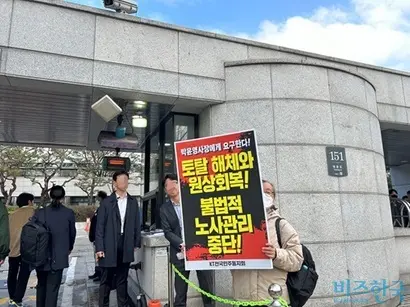
Even though major reform measures were announced ahead of the meeting, criticism toward the board and management continued on-site. Kim Mi-young, head of the KT New Union (2nd Union), pointed out after the chair's remarks, "The board of directors failed to perform its check and balance functions and instead became a den for an interest cartel. Without innovation in the board of directors, there is no way to overcome the current crisis." Arguments were also raised on the floor, such as "Director Cho Seung-ah's remuneration should be returned" or "Directors who violated the articles of association should resign."
The main topic of discussion was the failure of board management. It was belatedly confirmed that former Director Cho lost her qualification as an outside director after the largest shareholder of KT changed to Hyundai Motor Group last March, as she concurrently served as an outside director for Hyundai Steel, a Hyundai Motor Group subsidiary. Beyond the controversy over former outside director Cho Seung-ah’s concurrent position, allegations of personnel and contract solicitation by some outside directors, and conflicts of interest were also brought to the table. Regarding this, former CEO Kim explained, "I apologize for not checking thoroughly in advance regarding issues such as the disqualification controversy," and added, "(Regarding the request for salary return) I was reported that it will not be returned as there is a Supreme Court judgment stating that the portion actually worked cannot be returned."
During the meeting, which lasted about 90 minutes, all nine agenda items, including approval of financial statements, amendments to the articles of association, appointment of directors, and approval of the director compensation limit, were passed as proposed. The treasury stock disposal plan, which the National Pension Service opposed, was also approved. Consolidated revenue for 2025 was approved at 28.2442 trillion won, with an operating profit of 2.4691 trillion won. The dividend per share was finalized at 600 won and will be paid on the 15th of next month.