

[비즈한국] It has been found that the usage rates of smart libraries installed across Seoul remain at a low level. Although introduced during the COVID-19 pandemic to improve library accessibility, they have failed to lead to actual use, raising concerns about the need for revitalization.
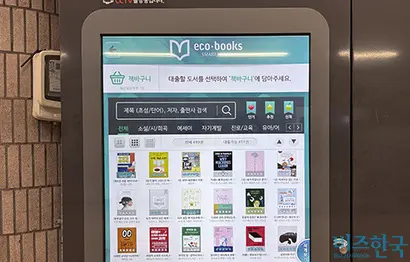
“Smart library? I’m not really sure where it is.”
On the afternoon of the 23rd at Chungjeongno Station in Jung-gu, Seoul, most citizens shook their heads when asked about the location of the smart library near the entrance. Out of 15 people met that day, only two knew the exact location, and even they said they had never actually used it.
The smart library installed there showed 411 out of 499 books available for checkout. The actual utilization rate remained at around 17%. Despite being installed in the heart of a subway station with high foot traffic, it was difficult to spot anyone actually using the facility.
The Ministry of Culture, Sports and Tourism allocated 1 billion won for smart library support in 2020 and expanded it to 2 billion won in 2021 to support installations. Consequently, about 130 smart libraries have been installed across Seoul’s 25 autonomous districts, with 86 located within subway stations.
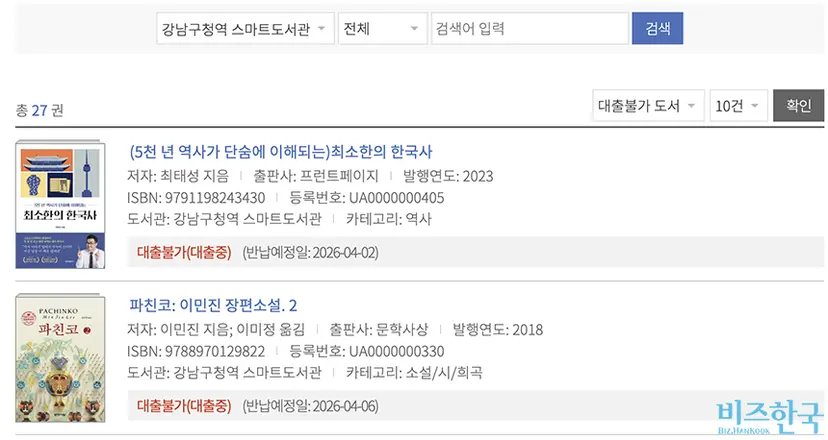
However, it was found that some facilities see very low usage, with some recording only single-digit daily checkout counts. Looking at the usage status of smart libraries in each district, as of the 23rd, the checkout rate at the Hapjeong Station smart library was 34%, Mapo Station was 23%, and Cheongdam Station was 17%. Gangnam-gu Office Station showed a particularly low usage rate of 9%.
The usage rate of smart libraries installed in community centers was even lower. The smart library in Nonhyeon 1-dong, Gangnam-gu, showed only 23 books checked out out of 405, a rate of just 5.7%. In some facilities, most of the books remain on the shelves without being checked out.
However, it should be noted that the rental rate is calculated based on the proportion of books currently checked out among the total collection. Since smart library books can be kept for up to 14 days, the actual daily usage might be lower than the total rental figures. Some libraries were even found to contain books that had not been returned for a long period.
A resident of Guro-gu, Seoul, surnamed A (24), said, “I know there is a smart library, but I’ve never used it. It’s inconvenient because it’s hard to find the books I want right away, and sometimes the books aren't updated on time,” adding, “When I lived in Gyeonggi-do, the book lists changed periodically, but I’m not sure if that’s the case in Seoul.”
B (23), who resides in Eunpyeong-gu, Seoul, also said, “I use the subway often, but I’ve never used the smart library. There isn't much variety, and I don't know if the book I want is there, so I’d rather just go to a real library.”
In this way, although smart libraries were introduced for citizens who have difficulty visiting libraries, it was found that a combination of low awareness, limited book selections, and poor installation locations has prevented actual usage. The evaluation is that, contrary to the original policy goal of expanding accessibility, the perceived utility remains at a low level.
In response, many autonomous districts seemed concerned that low usage figures could be interpreted negatively. Most officials were reluctant to provide data related to usage rates, showing a passive attitude toward disclosing information regarding operations.
An official from one of Seoul’s autonomous districts explained, “Since the usage rate is on the low side, we consider it to be in the early stages of operation,” adding, “It is difficult to disclose average annual checkout volume or the number of daily users.” Another district official also stated, “Because it is currently an election season, there is a concern that if we provide data on usage rates, it could be reported negatively.”
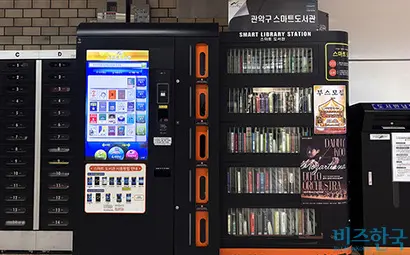
Experts pointed to an operational method that relied only on one-time promotion as the reason for the low usage of smart libraries. They criticize the project, saying that while guidance was provided at the time of installation, the lack of continuous promotion and management afterwards led to a failure in securing citizen awareness.
The Book Culture Foundation stated, “Since there is no continuous promotion after installation, many citizens don't even know the location of the smart libraries,” adding, “Constant guidance and promotion are needed so they can be recognized as library services within daily life.”
They continued, “The current method of stocking limited books, mainly bestsellers, inevitably narrows the range of choices for users,” and emphasized, “We need to shift to a reservation-based checkout system where users can apply for the books they want in advance and pick them up at a nearby smart library.” They added, “It is more likely to lead to actual usage if they are installed in stay-type spaces where people spend some time, such as parks, cultural facilities, or hospitals, rather than in spaces with high foot traffic like subway stations.”