

[비즈한국] The growth of independent bookstores, which once increased rapidly as a symbol of cultural trends, is hitting a wall. According to the '2025 Neighborhood Bookstore Trend Report' published by 'Dongne Bookstore,' a platform that has been guiding Korea's independent bookstores for 11 years, the number of new annual openings dropped significantly from 143 in 2018 to 36 in 2025. Industry experts believe independent bookstores have passed their expansion phase and entered a period of survival and turnover. With the reading population shrinking and book purchases shifting toward online platforms and large-scale chain bookstores, neighborhood bookshops are now facing the reality that they can no longer survive by selling books alone.
Even in this environment, bookstores that have held their ground are no longer just spaces for displaying and selling books. They have expanded their utility by incorporating reading groups, exhibitions, local collaborations, and community exchanges. The key has become creating a 'reason to visit the bookstore' rather than just stocking many books.
Small Bookshops in the Alley, Living with the Neighborhood
‘Changsin Bookshop’ in Changsin-dong, Jongno-gu, Seoul, is a case that illustrates this trend well. Located in a narrow alley of Changsin-dong, this small shop is more of a space to stay and spend time than just a place to buy books. Nam Yong-seop, the owner of Changsin Bookshop, said, "I hope it becomes a space where people can gather and spend time rather than just a place that sells books." In fact, when the reporter visited at around 4:00 PM on March 23, the table, which could seat about eight people, was mostly filled with people chatting or holding meetings.
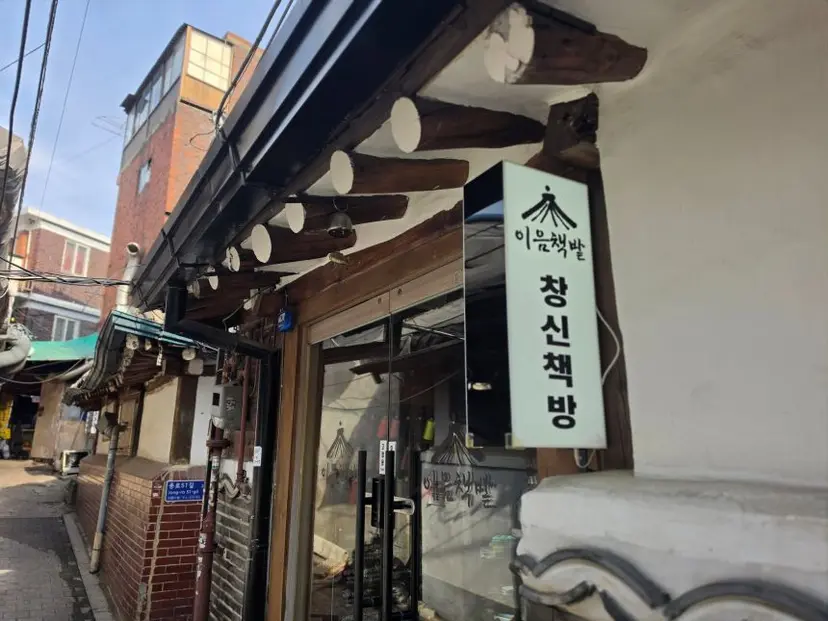
Changsin Bookshop actively utilizes this 'sense of space' in its operations. Beyond book sales, it generates revenue through space rentals and book concerts. The rental space is not limited to book-related events; it is open for various activities, such as foreigner meetups and wine classes. Nam explained, "In addition to book concerts and author exhibitions, we are opening up the space for various other events."
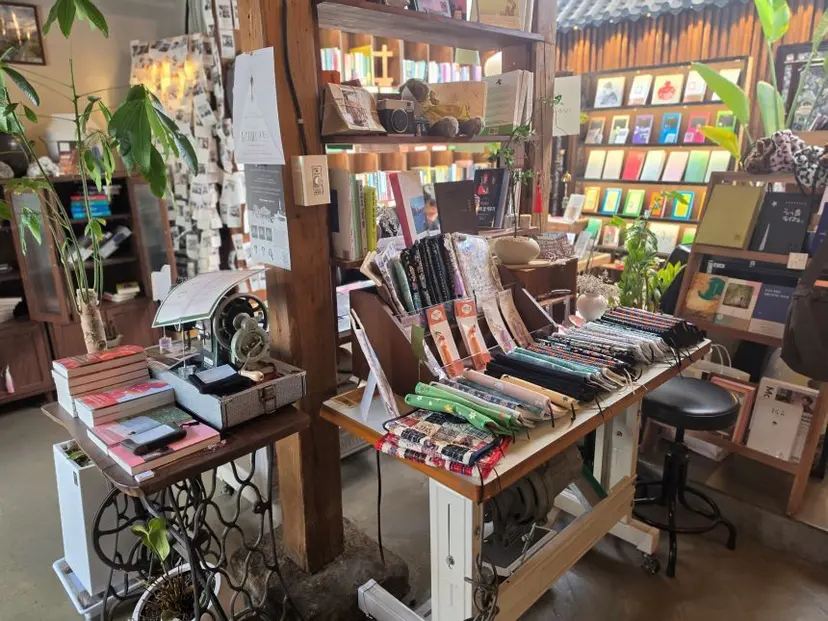
Coexistence with the local region is also a major source of revenue for Changsin Bookshop. They create and sell goods like book covers and pouches using leftover fabric from the garment district in Changsin-dong, and retired garment workers participate in the production process. They also collaborate with nearby guesthouses to provide food, sourcing ingredients from local markets and planning menus that don't overlap with existing local businesses. They have woven the remnants of local industry and neighborhood resources into the shop's products and services.
A Neighborhood Hangout Built by 10-Year Regulars
‘Jigu-bulshichak’ (Earth Crash Landing), located on a corner of a residential street in Nowon-gu, Seoul, is a bookstore maintained more by the power of long-term relationships than by expansion. Highly popular on the 'Dongne Bookstore' platform, it has held its place in the same neighborhood for nearly 10 years, becoming a space where regulars and residents naturally drop by. Owner Kim Taek-soo described the place as having "a neighborhood hangout feel." He said, "Since I see the same faces every time, the customers eventually all get to know each other. I like that." Neighbors drop by once in a while to see if the bookstore needs anything, and Kim maintains his relationship with the neighborhood by drawing posters or banners for community events.
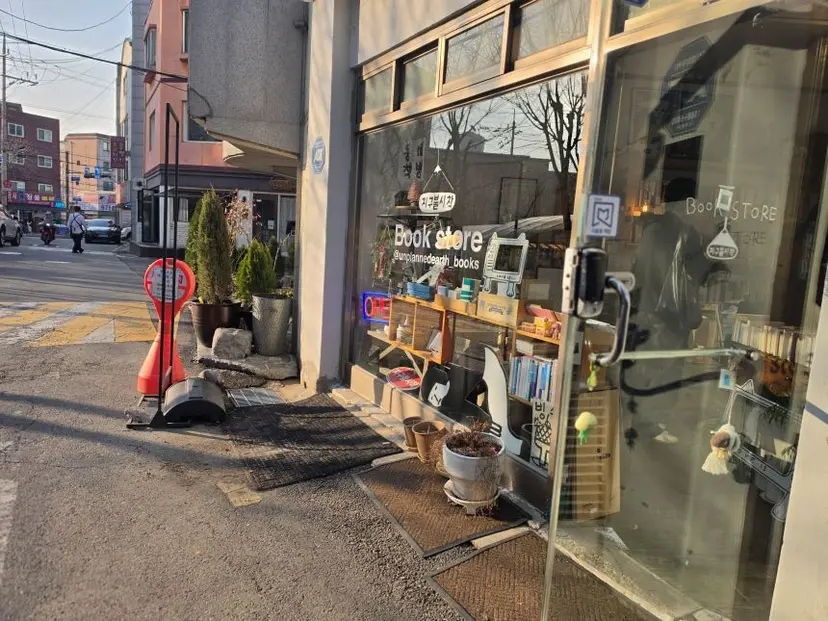
This hangout-like space is also a source of revenue. At Jigu-bulshichak, programs like reading clubs, writing workshops, and Japanese language classes are held regularly for a fee. They also organize unique events like 'Silent Tteokguk Reading,' where they sometimes require the purchase of a book as a condition for participation instead of an entrance fee.
Fun Things Happen There
When I visited ‘Seochon That Bookstore,’ a hanok bookstore in Chebu-dong, Jongno-gu, Seoul, on the 24th, a one-day guest manager was on duty. This is a bookstore specializing in reading groups, and the owner, Ha Young-nam, has long been active as a reading group moderator. The guest manager on duty that day was also a member of a reading group.
The guest manager described the bookstore as "a space where many interesting things happen." Reading groups that read one book a month are held regularly, often followed by sessions where authors are invited to speak with readers. Small parties, writing groups, and book-making workshops are also held frequently. Participants range in age from their 20s to 70s. It is not just a place for locals; the guest manager shared, "The furthest participant came from Gyeongju once a month." The bookstore also continues an initiative where adults pre-pay for books to gift them to students.
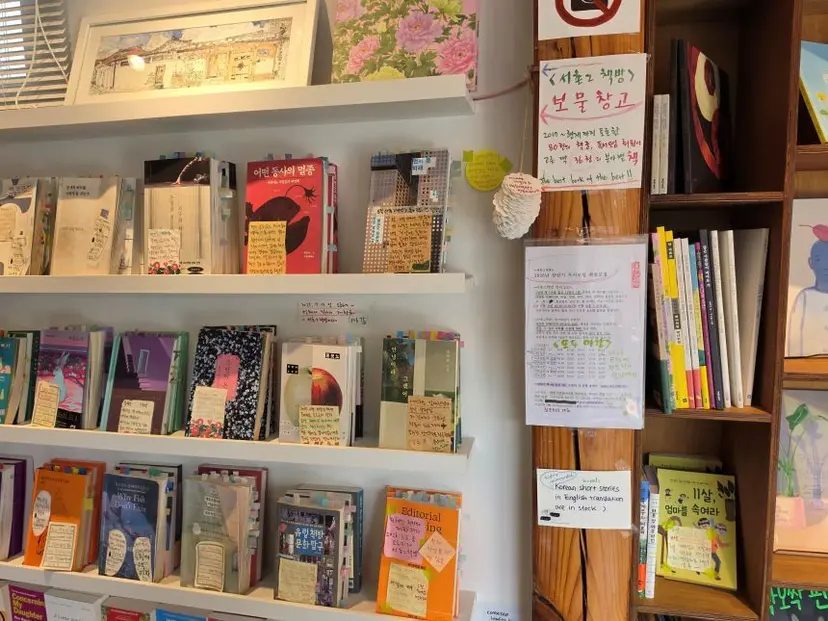
Participation fees and membership dues from reading groups, book concerts, and cultural classes like drawing or bookmark making have become steady sources of income alongside book sales. The guest manager said, "The maintenance of this space is thanks to the hearts of the people who share it," adding, "It's good enough as it is now, but I hope this balance of various elements is maintained for a long time." Each independent bookstore has its own way of surviving. Some seek differentiation through unique concepts, while others gather people through clubs and curation. However, bookstores that have lasted a long time share a common thread: they do not rely solely on book sales and instead broaden their revenue streams in various ways while never losing their own identity. For independent bookstores that have survived the post-expansion era, what matters is not how many extra books they sell, but how they translate the unique characteristics and experience of the bookstore into revenue.