

[비즈한국] Rumors of relocating the Financial Services Commission (FSC) and the Financial Supervisory Service (FSS) to the provinces are reigniting. Specific locations are even being mentioned, with claims that the FSC will move to Sejong Special Self-Governing City (Sejong City) and the FSS to Wonju in Gangwon Special Self-Governing Province (Gangwon Province). Recently, so-called 'rumor mills' containing these details have been circulating, primarily on social media (SNS). The parties involved maintain that nothing has been decided.

The Lee Jae-myung administration is showing an active stance toward relocating public institutions to the provinces. At a central-local cooperation meeting last November, President Lee Jae-myung stated, 'To improve the capital-centric system and realize balanced development where the entire country enjoys equal opportunities for growth, the central and local governments must become stronger and equal partners in cooperation,' adding, 'We will accelerate the transfer of national administrative duties to local governments, the expansion of fiscal decentralization, and the relocation of public institutions.'
The FSC and FSS maintain that nothing regarding a provincial relocation has been decided yet. FSC Chairman Lee Eok-won stated at a press conference this January regarding the Sejong City relocation rumors that 'there are no specific details.' An FSS official explained, 'Since we are not the ones making the decision, it is difficult to grasp the exact details.'
There is significant concern regarding the FSS's potential relocation to Wonju. While Sejong City houses numerous government ministries, Wonju does not have as many public institutions compared to Sejong. Furthermore, the headquarters of most major financial firms, including the four major financial holding companies (KB, Shinhan, Woori, Hana), are located in the capital region. Critics point out that since the FSS must supervise them, moving to Wonju could lead to increased operational inefficiency due to the distance.
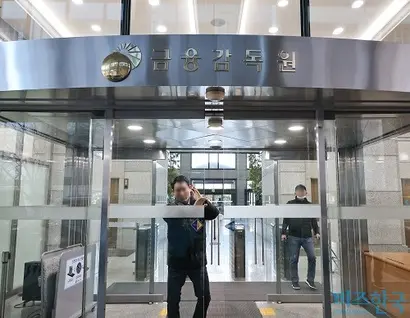
Some analysts suggest that the FSS might relocate to Sejong City along with the FSC. The reasoning is that it would strengthen cooperation with the FSC and allow for smoother communication with the government. The Lee Jae-myung administration also appears to favor concentrating institutions in specific regions rather than dispersing them across the country. At a town hall meeting held at OSCO in Cheongju, North Chungcheong Province, on March 13, President Lee Jae-myung remarked, 'In terms of balanced regional development, we must gather the energies that create growth vitality, as they gain strength like a campfire when brought together. If you place one piece of firewood here and another there, you end up in a situation where they cannot be used.'
However, if both the FSC and FSS move to Sejong, it will be difficult to avoid criticism from Gangwon Province's political sphere. Gangwon Province identified 32 target institutions for attraction in 2023, and the FSS was included among them. With local elections approaching, it is difficult for the government to simply ignore the requests of Gangwon's political circles. For this reason, some speculate that the concrete plans for relocation will only emerge after the local elections.
The National Assembly could also be a variable, as the law must be amended to relocate the FSS. The Act on the Establishment of Financial Services Commissions (Financial Services Commission Act) explicitly states that 'the principal office of the Financial Supervisory Service shall be located in Seoul Special City.' Since the ruling Democratic Party holds a majority in the National Assembly, amending the law would not be difficult if the relocation of the FSS becomes a party platform. However, it is difficult to assert that the Democratic Party is unconditionally in favor of relocating the FSS. In particular, it is reported that politicians in the Chungcheong region secretly hope for a move to Sejong City.
Another variable is the FSS employees. Whenever rumors of relocating public institutions arise—not just for the FSS—they have faced fierce opposition from staff. The previous Yoon Suk-yeol administration also attempted to move the Korea Development Bank (KDB) to Busan, but the KDB labor union strongly resisted, and a significant number of employees resigned.
An FSS employee confided, 'They say local relocation is important, but there are far more employees who prefer to stay in Seoul as it is now. Since there is nothing decided and only rumors are rampant, employees are unable to make any countermeasures and the atmosphere remains restless.'