

[비즈한국] The primary agenda item for Lotte Corporation004990's annual general meeting of shareholders is shifting away from the reappointment of Chairman Shin Dong-bin as an internal director to the proposed amendment of the articles of incorporation regarding the retention and disposal of treasury shares. With the revised Commercial Act taking effect on March 6, which mandates the retirement of acquired treasury shares in principle—allowing retention or disposal only as an exception with shareholder approval—this agenda item is drawing attention as a test case for how the permitted scope of such exceptions will be handled in practice under the new law.
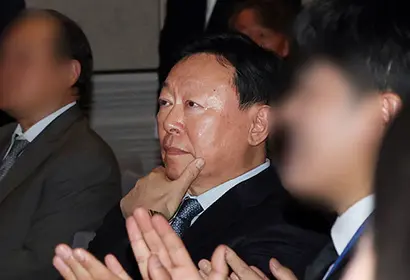
Lotte Corporation will discuss proposed amendments to its articles of incorporation and the appointment of directors at its general meeting on the 24th. Market interest is concentrated on the provisions regarding treasury shares within the amendments. While the company is incorporating the principle that 'the company must retire treasury shares within one year of acquisition,' it has also included a clause allowing for the retention or disposal of such shares upon obtaining shareholder approval, provided a plan is prepared for 'management purposes such as the introduction of new technologies or improvement of financial structure.'
Lotte Corporation is known for its high proportion of treasury shares. As of the end of last year, its treasury shares accounted for 27.5% of total common shares. The company previously announced on March 9 that it would retire 5,245,461 common shares on March 31. This amount represents 5 percentage points of the total 27.5% in treasury shares, with an estimated retirement value of approximately 166.3 billion won based on the closing price on March 6. Even after this retirement, the proportion of treasury shares will remain at approximately 22.5%.
The National Pension Service (NPS), which holds a 6.4% stake in Lotte Corporation, has decided to oppose this amendment to the articles of incorporation. The NPS stated, 'Due to the company's ownership structure, a plan to hold or dispose of treasury shares could be approved at the general meeting solely by the votes of major shareholders, and there are no confirmed measures to reflect the opinions of minority shareholders.' As of the end of last year, the stake held by special related parties, including Chairman Shin Dong-bin, was 43.5%. Consequently, market analysts suggest that the agenda could pass with the support of the majority shareholders alone.
This agenda item from Lotte Corporation is interpreted as an attempt to leave the door open for utilizing remaining treasury shares for management purposes, even while retiring a portion of them. Last year, Lotte Corporation sold 5% of its treasury shares to Lotte Property & Development to improve its financial structure and invest in new projects, and in March of this year, it decided to retire another 5%. Under the revised Commercial Act, continuing such activities now requires the establishment of a plan subject to shareholder approval.
The focus of this general meeting is not on how many treasury shares are being retired, but on the extent to which 'management purposes' will be recognized as legitimate grounds for retaining or disposing of shares as an exception. In its 'Guide to the Revised Commercial Act' released on March 11, the Ministry of Justice explained that the system has been fundamentally restructured so that treasury shares are retired in principle, with retention or disposal allowed only as an exception through shareholder approval. The Lotte Corporation agenda is one of the first cases to put these criteria to the test at an actual shareholder meeting.