

[비즈한국] It has been confirmed that 'Phi Institute of Design,' a design education subsidiary established by Viva Republica, the operator of Toss, has opened a design school and is currently recruiting students. Attention is focused on the background of why Toss, which set trends in the financial industry with user-friendly apps and innovative services, opted not to include 'Toss' in the name of its specialized design education institution, as well as the details of its curriculum.
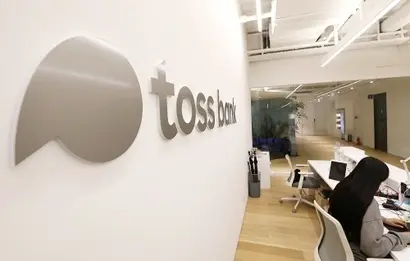
Toss's subsidiary, Phi Institute of Design, has recently launched the 'Phi Design School' and is recruiting students. Phi Institute of Design was founded in October 2025 under the name 'The Rise Institute of Design,' but changed its name to the current one on January 9. The initial representative of Phi Institute of Design was Kim Ji-hong, an internal director and former UX designer at Samsung Electronics005930. CEO Kim has a history of founding the design community platform 'Design Spectrum.'
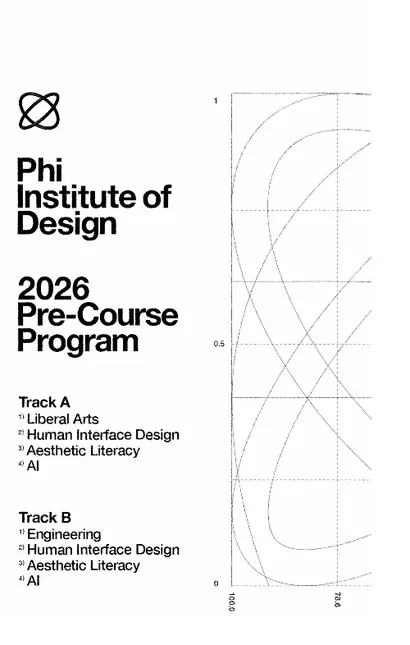
Phi Institute of Design describes itself as a 'design education institution that teaches ways of thinking rather than just technology.' Ahead of the launch of its regular curriculum in September 2026, Phi Design School is recruiting students for a 'Pre-course' program consisting of core subjects. Classes will run for 8 weeks starting April 20, with registration beginning March 25. Classes will be held at the Presence Building near Ttukseom Station in Seongdong-gu, Seoul, which is the same location as the company.
The pre-course program is largely divided into two tracks: 'Liberal Arts' and 'Engineering.' Both tracks share common modules, including 'Human Interactive Design,' which focuses on designing human-computer interactions; 'Aesthetic Literacy,' which helps students discover their own aesthetic standards; and an Artificial Intelligence (AI) workshop. However, they differ in that the Liberal Arts track offers liberal arts classes to cultivate humanistic thinking, while the Engineering track provides technical classes to learn computational thinking.
Interestingly, there is no mention of Toss or Viva Republica in the program descriptions, social media, or the website of Phi Institute of Design. Toss explained that it was "not intentionally hidden." This is interpreted to mean that the primary purpose of the education business is not to generate profit, but rather to strengthen expertise in the design industry and foster UI (User Interface) and UX (User Experience) designers.
Toss, which entered the financial market with a focus on user-friendly UI/UX, attracted users in a short period and created a trend of app simplification in the industry. Previously, Toss stated that the reason for establishing a design education company was "to foster designers who will contribute to the development of the domestic UI/UX industry" (Related article: Toss, which changed financial UI, creates a design education company).
Toss has been engaging in branding and marketing in ways that appear unrelated to its core business of financial services. For instance, its YouTube channel 'Moneygraphy' produces talk show content on investment, consumption, and culture rather than promoting the company. It has also been active in publishing; in 2024, it published the book 'The Money Book' and participated in the Seoul International Book Fair, and in November 2025, it launched a magazine titled 'The Money Issue.'
At the end of 2025, it unveiled 'Toss Impact,' a framework for practicing social values. Toss Impact is a system for conducting its services and business under three standards: 'Everyone's Experience,' 'Safe Technology,' and 'Foundation for Growth.' Holding the 'Toss Bittersweet Market,' an offline dessert market in Seongsu-dong, Seoul, for three days in December 2025 was part of its Toss Impact activities. The event involved small business owners using payment terminals from subsidiary Toss Place and sellers listed on Toss Shopping. At the time, Toss explained, "Toss Impact is not just a campaign, but a way to bundle our efforts to create positive changes in society beyond mere technology and service innovation into a single flow.".