

[비즈한국] The BTS concert at Gwanghwamun is no ordinary performance. The return of a complete BTS, fresh from their military service, performing a free concert at Gwanghwamun—the heart of Seoul—and streaming it live worldwide via Netflix, is poised to become a historical moment. The symbols of K-pop, the landmark of Seoul, and the interests of a global platform are converging on a single stage. It is not difficult to guess why the Seoul Metropolitan Government authorized this performance. The decision was rooted in the judgment that the benefits—urban promotion, tourism inflow, stimulation of consumption, and an uplift in national image—outweigh the impact of handing over the center of Seoul, from Gyeongbokgung Palace to Gwanghwamun, to a private corporation.
The revenue structure also differs from traditional concerts. There is no ticket fee for the live audience. Instead, Netflix secured the exclusive live broadcasting rights, effectively purchasing the value of the broadcast and the global promotional impact. For BTS and HYBE352820, this marks the starting point of a larger profit chain that leads to new albums, world tours, merchandise, and the consolidation of their fandom, far beyond simple ticket sales. It is a free event that simultaneously serves as a showcase to open a massive paid market.
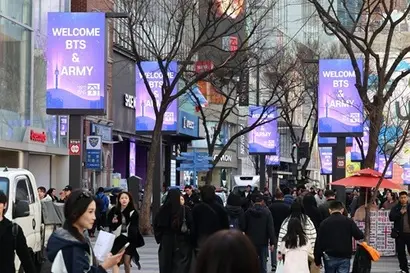
Bang Si-hyuk, Chairman of HYBE, stated, "If BTS, who started in Korea and became superstars, are to make a comeback, the starting point must be Korea, and it must be at the most symbolic space in Korea." The members will make their entrance along the 'King’s Road,' where Joseon Dynasty kings once walked, accompanied by 50 dancers and a 13-member Arirang traditional music ensemble. The BTS Gwanghwamun concert has quietly evolved from a simple comeback into a national-level event.
Therefore, there is absolutely no reason to criticize the performance itself. Most would agree that for an event with this level of symbolism and economic impact, the Seoul Metropolitan Government—and by extension, the national government—should provide administrative support. It is natural that traffic control, crowd management, and safety measures are required when holding an event that draws hundreds of thousands of people in the middle of downtown Seoul. This public intervention is less of a special favor to a specific company and more a public responsibility to manage a situation of large-scale crowd density.
The problem lies in what follows. If an event involves such significant public resources and citizen inconvenience, the numbers, at the very least, should be clear. It is only right that there be an explanation regarding how much was paid to use the plaza, what other costs were borne besides the usage fee, how safety management costs were divided, and the breakdown of public versus private funding. Even more curious is the deal with Netflix. How much Netflix paid HYBE for this exclusive live broadcast, and to what extent they covered production and marketing costs—these core figures remain undisclosed.
Of course, I am not saying that every detail of a contract between private companies should be laid bare. However, it is a different story when the event uses downtown public spaces that attract hundreds of thousands, when citizens endure traffic control and congestion, and when massive public power and administrative resources are deployed. Even if the entire contract is not released, HYBE should be able to explain the core figures and the cost-sharing structure that influenced public decision-making. That is the minimum courtesy to the citizens who willingly endure downtown traffic jams and congestion while wishing for the success of the BTS concert.
Tonight, I hope the hundreds of thousands gathered at Gwanghwamun enjoy the concert and return home safely without incident. I sincerely wish for the safety of the stage, the audience, and the city. And after the concert concludes, I look forward to the numbers being revealed just as naturally as the applause that will pour out.