

[비즈한국] Since the outbreak of war in Iran and the subsequent blockade of the Strait of Hormuz, the surge in international oil prices has become alarming. It is increasingly being pointed out that the cost burden of high oil prices is being passed on to small and medium-sized enterprises (SMEs) and end consumers, the weakest links in the industrial ecosystem. Plastic manufacturers and the gas station industry, which have to bear the rising costs of raw materials, are appealing that they have reached their limit. In response, the SME sector has begun demanding that the government and large corporations step up to share the burden.
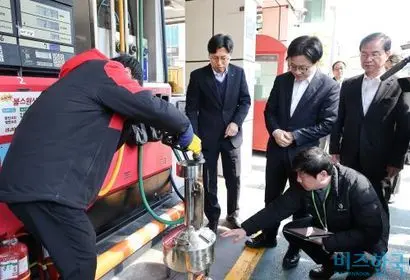
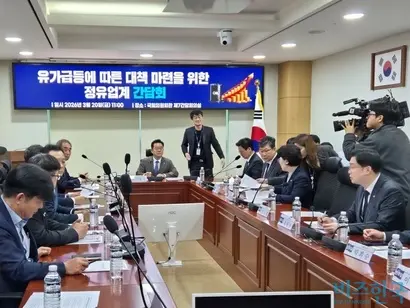
The Democratic Party of Korea's Euljiro Committee has held a series of meetings with the petrochemical and refining industries to prepare measures for the sharp rise in oil prices. The refining industry meeting held at the National Assembly on the 20th was attended by the four major refiners—SK Innovation096770, GS Caltex, S-Oil010950, and HD Hyundai Oilbank—as well as representatives from the gas station industry and the government. During the meeting, concerns were raised that refiners are raising sales prices without fully reflecting the "lag effect" of inventory costs, concentrating the burden on gas stations and consumers.
The gas station industry highlighted the rapid rise in fuel prices despite remaining inventory and stockpiles as a problem, and demanded solutions for issues such as exclusive trading contracts, post-settlement practices, and credit card commission fees.
The gas station industry pointed out that price competition cannot function because most gas stations have exclusive trading contracts with specific refiners. They also appealed that, with uncertainty increasing due to post-settlement practices, there is a significant risk that gas stations will have to shoulder the losses.
Ahn Seung-bae, Chairman of the Korea Oil Station Association, stated, "Due to issues like exclusive trading and post-settlement, gas stations are in a position where they cannot decide prices on their own. In a structure where credit card commission fees increase as oil prices rise, we cannot ignore a situation where the burden falls on gas stations and the public while profits are concentrated elsewhere."
Consequently, proposals were made to change the oil price calculation method and to provide preferential card commission rates for small merchants and small business owners. Kim Hee-joong, Head of the Economic Policy Division at the Korea Federation of SMEs, said, "It would be helpful to calculate domestic oil prices based on the cost of crude oil imports rather than Singapore futures prices. The average profit margin for gas stations is about 1.3%, but credit card commissions are reaching 1.5%, which raises concerns about reverse margins."
It is reported that the refiners expressed that exclusive trading was inevitable for quality control purposes. In response, the Euljiro Committee announced that it would establish a social dialogue body next week involving refiners, the gas station industry, consumers, and government ministries.
The petrochemical industry meeting held at the National Assembly on the 19th was attended by the plastics industry and representatives from major petrochemical firms such as LG Chem051910, Hanwha Solutions009830, Lotte Chemical, and Yeochun NCC. During this meeting, criticism was also raised that prices are being raised unilaterally without considering the time lag in reflecting crude oil prices into production costs.
Small plastic manufacturing firms appealed that they are facing a "double whammy," receiving raw materials from large petrochemical companies at increased prices while their own customers do not reflect those increases in their supply contracts.
Chae Jung-mook, Chairman of the Korea Plastics Industry Cooperative Federation, stated, "Raw material costs account for 83% of the plastics industry, so the industry is currently bleeding every single day. Adjustments are needed to prevent supply prices from skyrocketing in a short period, and measures from the government and large corporations are required to implement a price-linkage system where increases in raw material costs are immediately reflected in sales prices."
Rep. Kim Nam-geun of the Democratic Party said, "There are also claims that it is unfair to raise prices for materials made from crude oil imported before the price hikes. I will also push for separate meetings with large corporations in the future."