

[비즈한국] "Excuse me, is this the fry meetup?"
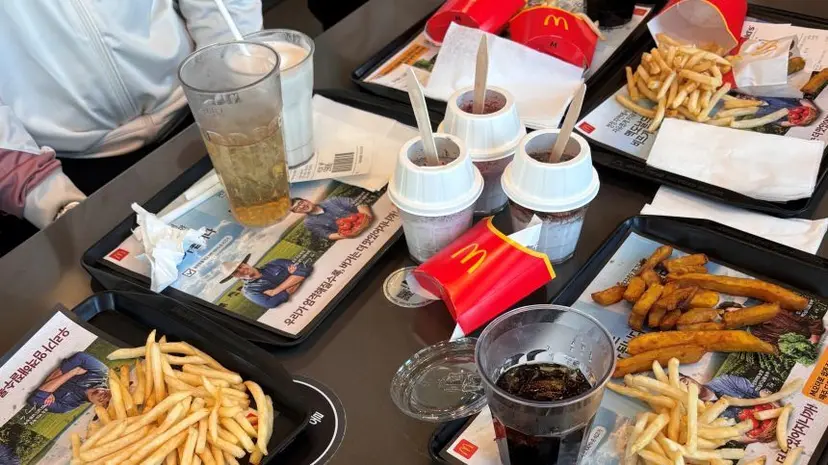
At 1 p.m. last 14th, people began gathering one by one at a franchise burger joint in Cheoin-gu, Yongin. Although they were strangers, the awkward atmosphere didn't last long. After briefly introducing their ages and where they lived, the conversation naturally drifted to French fries. With fresh fries placed in front of them, small talk began to flow between the strangers.
'Police & Thieves', French fries... 'Short encounters' with strangers are trending
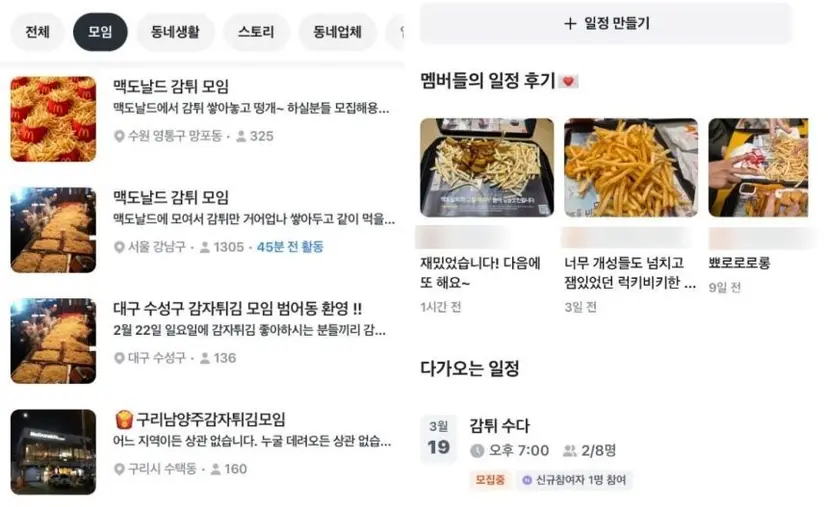
Recently, one-off offline meetups organized through second-hand trading platforms have become a trend. Among them, "Police & Thieves" (a tag-like game) and "French fry meetups" are particularly popular. Unlike traditional clubs, these are defined by their one-time nature, requiring no commitment to an ongoing relationship. Ultra-short-term meetups with strangers are spreading rapidly, centered around the 2030 generation, who prefer efficient and lighthearted interpersonal relationships.
Meetups are being held successively across the country, from Seoul's Gangnam and Songpa districts to Yongin and Goyang in Gyeonggi Province, and in cities like Daegu and Busan. Most operate on a first-come, first-served basis online; once the organizer announces the time and location, applicants flood in. Participants typically gather at the promised time, interact briefly, and then disperse naturally. The lack of separate registration processes or membership fees, keeping entry barriers low, is one of the key factors for their popularity.
Most of the attendees that day were meeting for the first time. They shared their hobbies while eating fries, and later moved to a nearby café to continue the conversation. While their reasons for participating varied, everyone agreed, "It's nice because there's no pressure."
A (27), who lives in Giheung-gu, Yongin, said, "I usually only used Danggeun (second-hand platform) for trading items, but I was curious because I saw many people in the 'meetup' tab, so I decided to come out. It's comfortable because it's a one-time thing; if we don't click, we can just go our separate ways." B (21) also added, "With clubs, you have to attend on specific days, which feels burdensome. I prefer meetups where I can participate lightly whenever I have time."
The lonely yet relationship-fatigued 2030s choose 'light connections'
The psychology behind the spread of these short-term meetups goes beyond simple curiosity. It is analyzed that the sentiments of the 2030 generation—who want to meet people but lack the confidence to maintain long-term relationships, and who dislike being lonely but also hate feeling emotionally drained—are fueling these ultra-short-term encounters like the fry meetups.
A survey on "perceptions of interpersonal relationships and dating" conducted last year by market research firm Embrain Trend Monitor clearly showed this trend. About 77.3% of respondents said they would distance themselves or end a relationship if it caused more stress than satisfaction, and 69.4% expressed a desire to keep a certain distance even from close friends. This shows a growing tendency to reduce emotionally taxing relationships and connect only when necessary.
This contrasts with the club-centered social style of older generations. Clubs are built on continuous participation, such as regular meetings, membership fees, and group chats. While intimacy deepens as the relationship grows, so does fatigue, and internal conflicts can become a new barrier to entry.
In contrast, ultra-short-term encounters like fry meetups are much lighter in that there is no obligation to sustain the relationship. Participants connect loosely while engaging in a specific activity and then naturally go their separate ways afterward. This is why some interpret the essence of these meetups not as the fries themselves, but as the short, pressure-free way of connecting.
Changing the way we relate
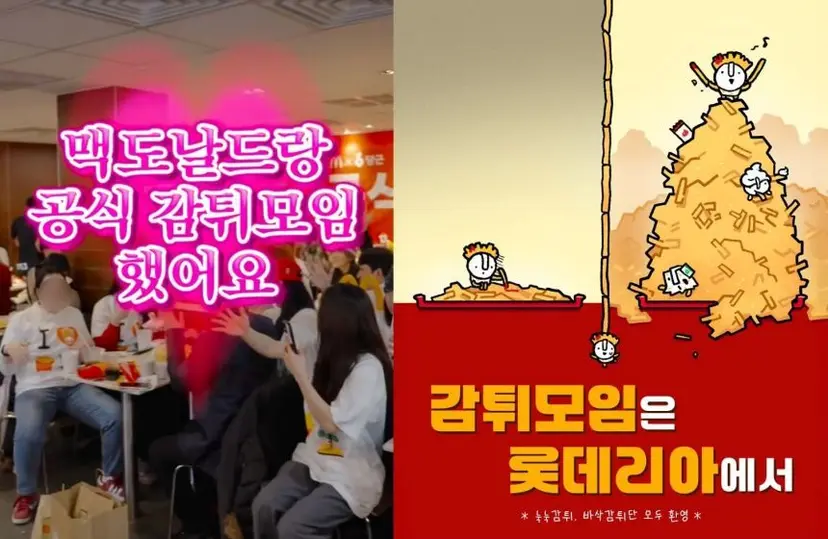
The trend of brief, lighthearted meetups is spreading across various platforms. Similar services are gaining attention, such as 'Munto', a one-off meetup platform based on interests, and 'Meating', where strangers share a meal. A new term, 'Short Socializing', has emerged to describe this flow.
Lee Hye-won, a research fellow at the Trend Korea Consumer Trend Analysis Center, explained, "Today's 2030 generation is constantly connected via social media and messengers, but most of these remain non-face-to-face relationships. There is a growing desire to confirm real presence through physical contact, like feeling the breathing or laughter of a stranger in person."
Lee analyzed, "They want a sense of connection but tend to avoid the responsibility and burden that come with serious relationships. A way of confirming their own existence through light interactions within short meetings is becoming increasingly preferred." She predicted, "Future interpersonal relationships are highly likely to be restructured around experiences and activities rather than emotional bonds. Methods of sharing experiences and performing specific activities together will become more important than building intimacy through conversation."