

[비즈한국] Customers who have inquired with sellers about damaged or missing K-pop merchandise are increasingly reporting that they are being required to provide an "unboxing video." In the past, the Korea Fair Trade Commission (KFTC) issued corrective orders to the four major entertainment agencies' merchandise retailers, stating that requiring an unboxing video as a condition for returns restricts consumers' right to withdraw their orders. However, such demands continue to persist in the fandom merchandise market.
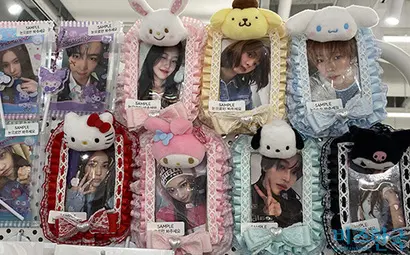
Attaching Unboxing Videos… Onerous Refund Conditions
A, an individual who purchased an album of their favorite idol, discovered that the photocard was missing as soon as they opened the product. When A requested a refund, the seller replied, "We can only verify it if you have an unboxing video." Because A did not record an unboxing video, they were unable to get a refund. One netizen reacted by saying, "We aren't vloggers, so why do we have to record an unboxing video every single time?"
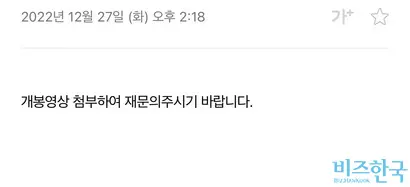
There are also cases where refunds are denied not just because of the absence of a video, but because of problems with the filming method or video quality. Even though B submitted an unboxing video after discovering damage to their merchandise, their request for an exchange was rejected. The seller deemed the video "unclear," arguing that the tracking number was not visible enough to be accepted as evidence. Even when consumers do film the process, the guidelines set by sellers act as a de facto barrier to refunds.
This practice is intertwined with fandom culture. In the idol merchandise market, a culture known as "album-ppang" (bulk-buying albums) is well-established, where fans purchase multiple copies of the same album to get their "bias" photocard. In this process, "unboxing videos"—where the opening process is recorded to verify the contents—are commonly filmed.
However, as some merchandise sellers incorporate this culture into their exchange and refund procedures, unboxing videos have transformed from joyful records into evidence required for refunds. Consumers who fail to film these videos may find themselves in a disadvantageous position.
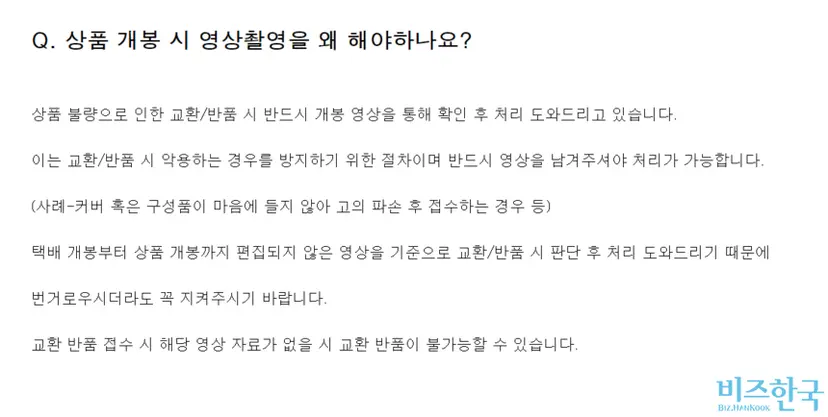
A notice about filming unboxing videos is posted on the bulletin board of an online mall that sells merchandise for popular idol groups. The seller stated that it is a "procedure to prevent abuse during exchanges and returns" and warned that "exchanges and returns are impossible without video documentation."
C, who was unable to get a refund for a missing item because they hadn't recorded an unboxing video, has been filming every time they open merchandise since. They said, "I always record unboxing videos just in case. It's become something of a custom among fans as well."
Under the current Electronic Commerce Act, consumers can request to withdraw their order within 3 months of receiving the product, or within 30 days of becoming aware that the product is defective or does not match the order specifications. Furthermore, businesses are prohibited from obstructing a consumer's right to contract cancellation through deceptive means.
"Preventing Abuse" vs. "Obstructing Withdrawal": What is the KFTC's Stance?
Previously, the Korea Fair Trade Commission (KFTC) issued corrective orders to the four major agencies (HYBE352820, YG, SM, and JYP) regarding such terms and conditions. The KFTC judged at the time that "the term that denies a refund if there is no video recording of the product opening process constitutes an act that hinders a consumer's right to withdraw their subscription."
An official from the KFTC's Consumer Policy Division explained in a phone call with the reporter, "Businesses also need a way to verify whether there is an actual defect, so requiring a procedure to check the state of the goods cannot be immediately judged as a violation of the law." Regarding whether requiring an unboxing video can be seen as unfairly shifting the burden of proof onto the consumer, the official explained, "Because the law does not explicitly define specific methods of proof or where the responsibility lies, judgments can vary depending on the specific case."

However, the official added, "If the requirement unfairly hinders the withdrawal of a subscription—such as requiring a video even when it's impossible to film because the unboxing is already finished—it could be a problem," and noted, "If the demand for an unboxing video is excessive or practically makes it difficult for a consumer to withdraw their order, there could be grounds for a violation of the law."
Even after the KFTC's judgment, similar refund practices persist. The fandom merchandise market grew by 62% year-on-year to 264.8 billion KRW cumulatively as of the third quarter of last year. The primary consumers are young fans between the ages of 13 and 24. As the market expands rapidly based on a highly loyal fandom, it seems necessary to check whether the standards to protect adolescent consumers are actually functioning.
Meanwhile, a request for comment regarding the KFTC's past decision was sent to HYBE, but no response was received.